DAS Day 2: Another SEC move and more exec predictions
Ripple CEO Brad Garlinghouse got a standing ovation on the DAS stage when he shared that the SEC plans to drop its appeal against Ripple
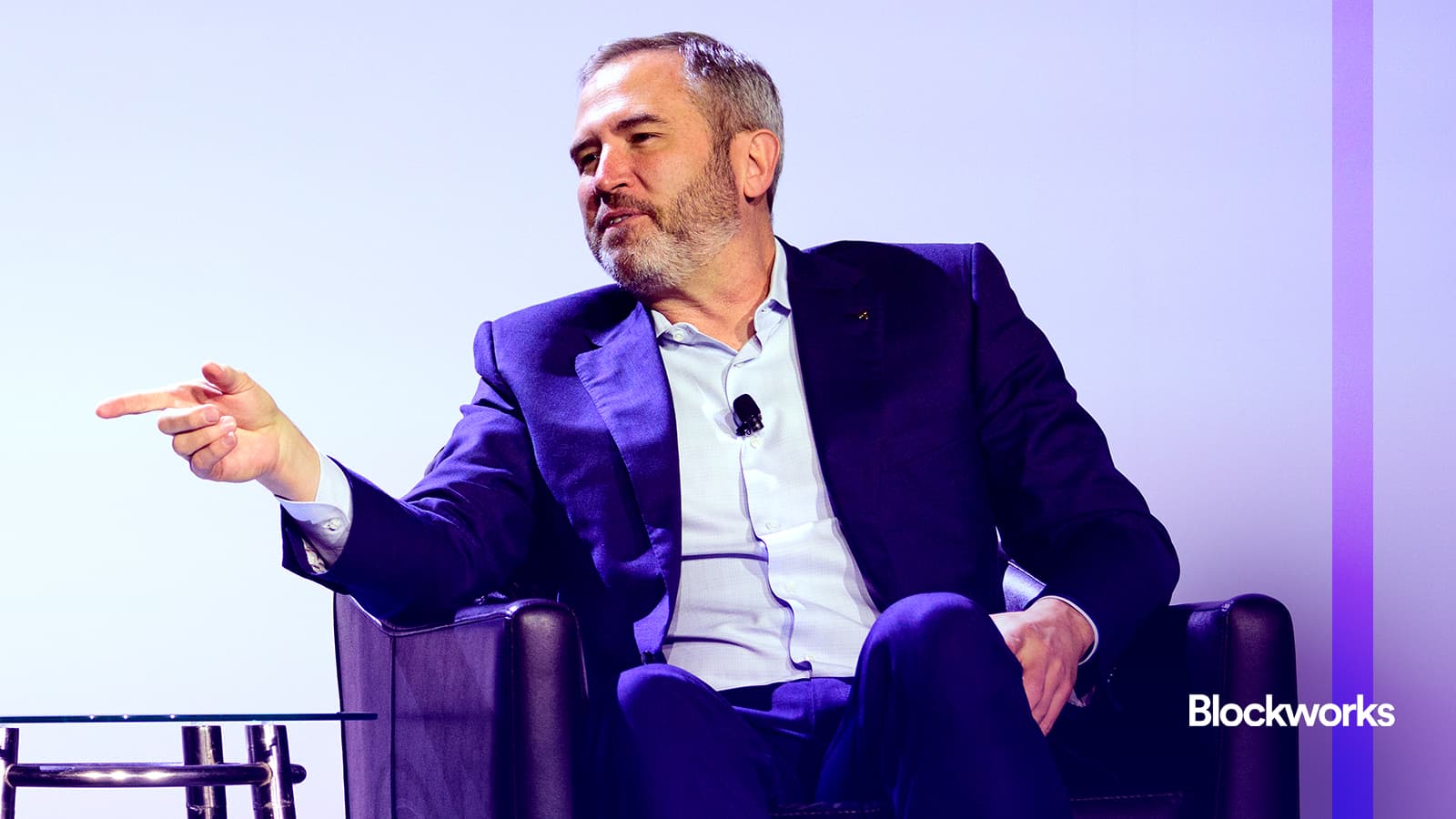
Ripple CEO Brad Garlinghouse | DAS 2025 New York by Mike Lawrence for Blockworks
This is a segment from the Forward Guidance newsletter. To read full editions, subscribe.
When Ripple CEO Brad Garlinghouse shared on the Digital Asset Summit stage that the SEC plans to drop its appeal against Ripple, attendees in North Javits’ main auditorium gave a standing ovation.
The SEC’s appeal was one of the remaining major legal cases against a crypto player after the revamped securities regulator dismissed its suit against Coinbase and ended probes into other segment firms.
It was “a painful journey,” Garlinghouse noted, spurred by an agency “trying to bully” companies in the segment.
“As we said then…I really, deeply believed that we were going to be on the right side of the law and on the right side of history,” he added.
BTC is up nearly 2% over the past 24 hours (~$84,250 at 2 pm ET). XRP surged 12% over the timeframe to $2.50.
Later on at DAS, ParaFi founder Ben Forman asked 10T Holdings CEO Dan Tapiero if the US’s change of administration (and what that could affect within crypto) is overrated by the market. “A bit more sizzle than steak,” perhaps?
Tapiero’s response was clear: “I think it’s the single most important change in the history of crypto after the Satoshi whitepaper.”
Another way of putting it? “It’s been the most dramatic about-face that I can recall in any subject,” he said.
On people thinking bitcoin dropping to $80,000 means the bull market is over, Tapiero could only say: “It’s very funny.”
Bitwise CIO Matt Hougan noted during a Tuesday afternoon panel that he remains “very confident” in his $200,000 bitcoin price prediction by the end of 2025.
He cited the “structural mismatch between demand and supply” before throwing out some numbers. There’s to be ~165,000 BTC mined this year. ETFs and companies bought 500,000 BTC and 250,000 BTC, respectively, last year — buying levels Hougan expects to persist in 2025.
Then there are governments, who could purchase anywhere from zero to a million bitcoin.
The way $200k doesn’t happen by December? “If we fall into a significant recession and the government doesn’t blink and forces us to go through an austerity period,” Hougan said. “Because that would keep pressure on risk assets.”
Eric Peters, who leads Coinbase Asset Management and One River Asset Management, said there is likely to be a FOMO aspect to consider as institutional investment committees weigh crypto assets.
They’ll look at a US bitcoin reserve, see sovereign funds investing, see more being built on Ethereum, and hear more about tokenization.
“And, [they’ll say] ‘Oh my God, we actually own nothing,’” he said, mimicking how some institutions could react. “‘Nothing is the wrong number.’”
Get the news in your inbox. Explore Blockworks newsletters:
- The Breakdown: Decoding crypto and the markets. Daily.
- 0xResearch: Alpha in your inbox. Think like an analyst.
