NFT Royalties Top $1.8 Billion: Galaxy Digital
Royalties are not currently programmed into smart contracts, putting the responsibility on marketplaces to collect the fees for artists
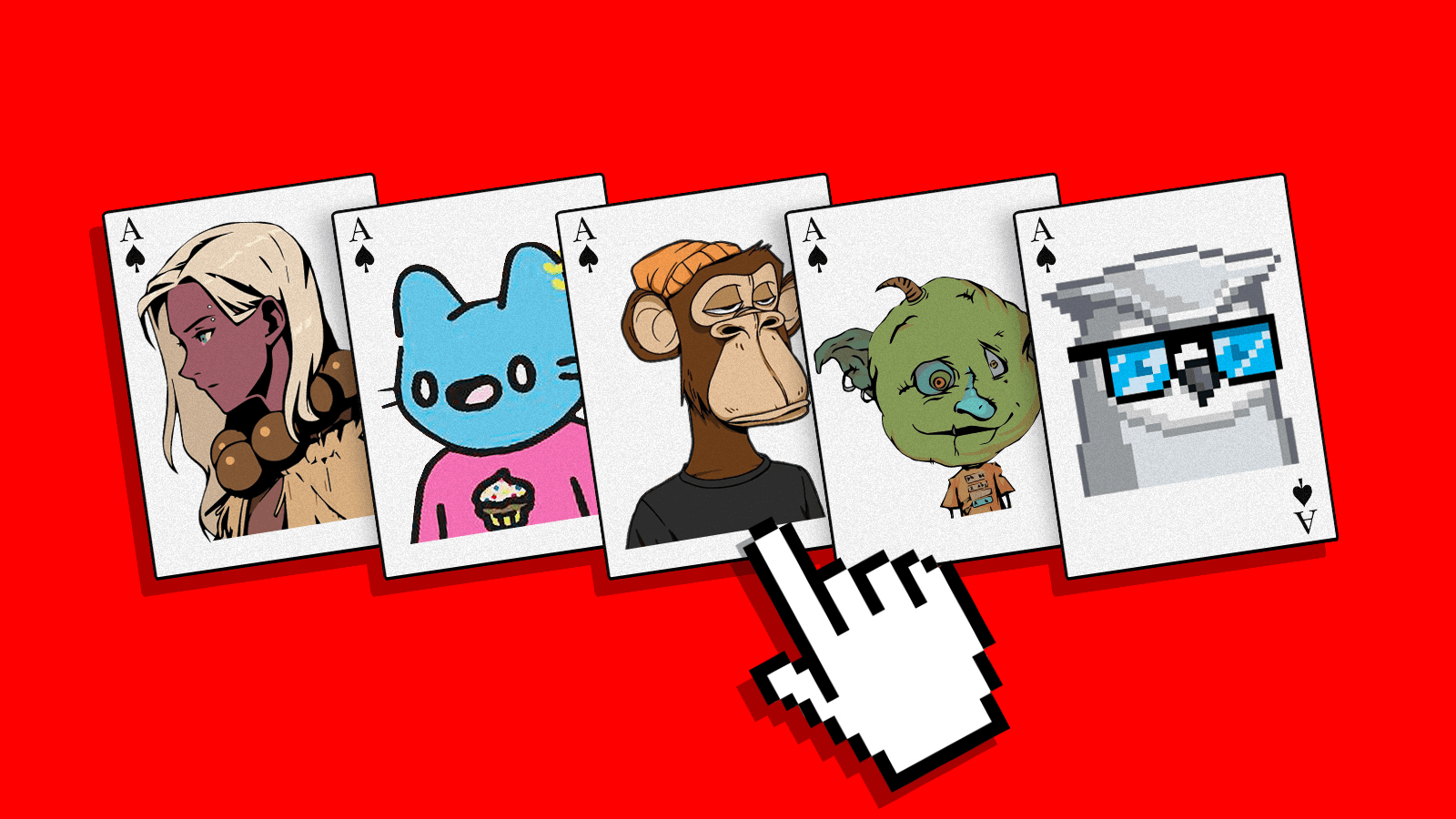
Blockworks exclusive art by Axel Rangel
- More marketplaces are leaning toward the zero-royalty model
- Sellers are responsible for paying the artist’s cut for secondary sales
To date, Ethereum-based NFT creators have raked in more than $1.8 billion in royalties, according to data compiled by Galaxy Digital.
Royalty payments, the percentage that creators collect on secondary sales, are mostly concentrated to a select number of NFT projects, with 428 collections accounting for 80% of the royalties earned.
The highest-earning entity, according to Galaxy, is Yuga Labs, the blockchain company behind the Bored Ape Yacht Club and Otherside NFT collections, among others. Yuga Labs collections have earned a total of more than $147.6 million in royalties.
Read more: How NFT Royalties Work – And Sometimes Don’t
“Until recently, NFT royalties have been an opaque aspect of NFT trading,” Galaxy researchers wrote in a report published Friday.
NFT creators receive their royalties from the seller, not the buyer, similar to real estate transactions in traditional markets.
Royalties are not currently programmed into smart contracts, making it difficult to track payments. Smart contract transfer mechanisms cannot be relied upon to calculate royalty payments because these functions also are used when collectors transfer NFTs between their own wallets.
“The only way an NFT royalty could be programmed into a smart contract is if the program somehow knew precisely when an owner is transferring an asset between his/her own wallet or selling an NFT to a buyer,” the researchers noted.
Because a decentralized royalty payment system is not yet functional, NFT marketplaces have taken on the role of facilitating royalty payments.
OpenSea only began showing royalty amounts during the checkout process in October 2021. The popular NFT marketplace has also doubled its average royalty payout in the past year, increasing from an average of 3% to 6% paid to artists.
Other marketplaces, such as Sudoswap, pay artists no royalty fees at all in an effort to appeal to sellers and attract traders.
“Buyers often need a price increase of 10% to just break even,” Sudoswap said on Twitter in response to the decision to move to a zero-fee structure. “Trading on sudoswap means you only pay a 0.5% fee versus the usual 7.5% (2.5% + 5% royalty) fee on other platforms, enabling better price discovery.”
DeGods, the most popular NFT project on Solana, became the latest to join the no-royalties club earlier this month when the team decreased its royalty payment from 9.99% to 0%.
Royalties have been touted as a reason to invest in digital art since NFTs came on the scene, Galaxy researchers point out. Removing this model would significantly change one of the defining features of the industry.
“Until NFT royalties came into the picture, artists traditionally only made money from primary sales of their works,” researchers wrote. “That restrictive economic paradigm ensures that artists, especially those whose work may be seen as too revolutionary for their time, are unable to grow their revenue stream as their work gains recognition.”
Get the news in your inbox. Explore Blockworks newsletters:
- The Breakdown: Decoding crypto and the markets. Daily.
- 0xResearch: Alpha in your inbox. Think like an analyst.
