Biden’s Crypto Executive Order May Be ‘Watershed Moment’ Despite Lack of Specifics
Crypto legislation will likely play out over years, rather than months, industry participants say
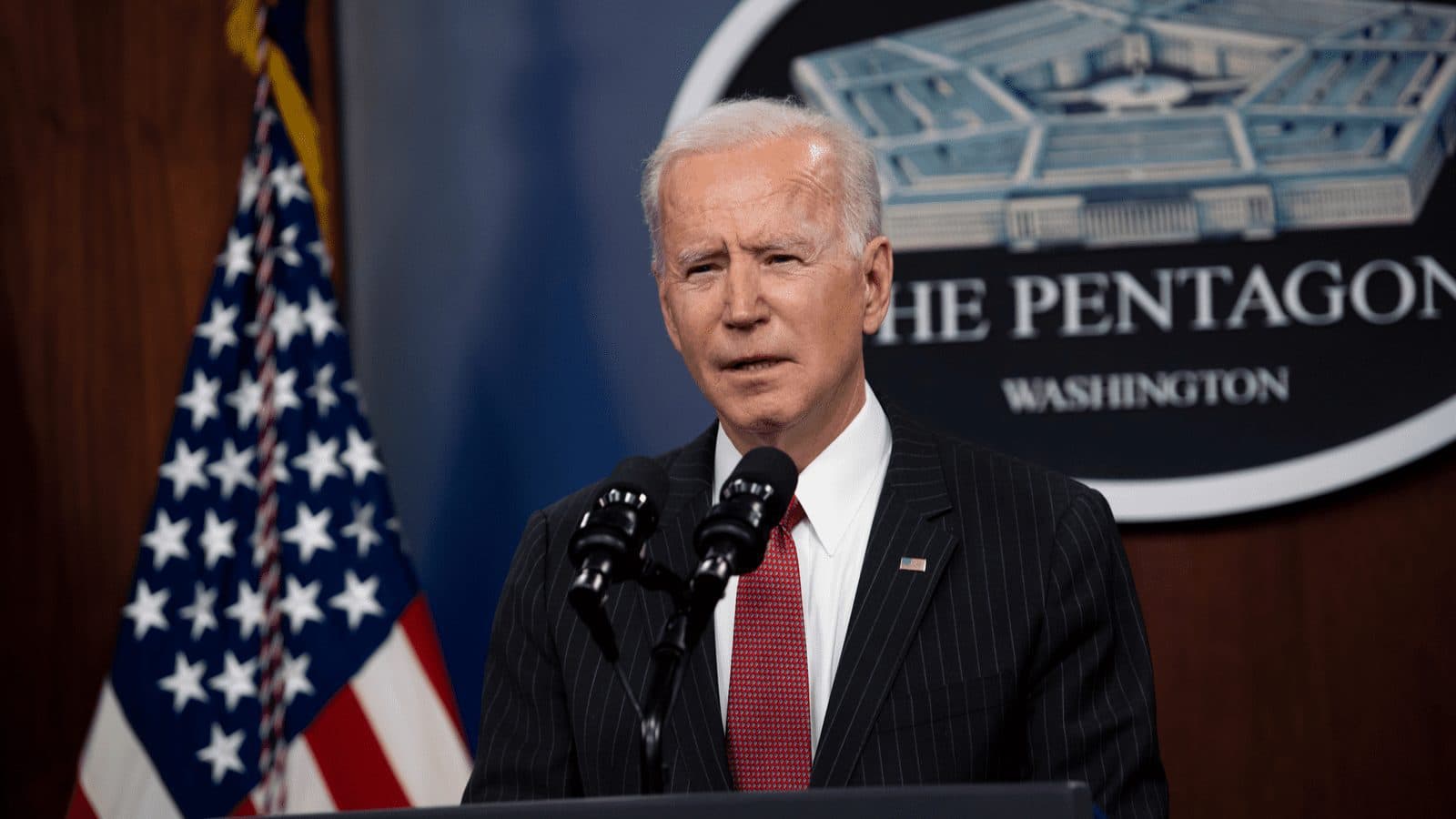
US President Joe Biden | Source: Shutterstock
- The Biden administration’s roadmap shows the US wants to be a leader in digital assets, says former Coinbase policy head
- The executive order calls for “placing urgency” on the research and development of a potential US CBDC, but does not mention stablecoins
The new executive order on digital assets from President Biden is an important step in the policymaking process, according to industry watchers, though concrete legislation could take years.
Biden signed the executive order Wednesday, which outlines the government’s approach to digital assets and their underlying technology, according to a White House statement.
John Collins, partner at advisory firm FS Vectors and former policy head at Coinbase, said while Biden’s executive order held few surprises, the fact that the administration is stepping in is a net positive for the industry.
Collins compared the executive order to the Clinton administration’s “Framework for Global Electronic Commerce” released in the 1990s, which studied the future of the internet.
“It’s clear that the administration realizes that this is not going away and that they really stress the critical importance of the technology in various applications to the benefit of the financial system going forward,” Collins said. “They want to make sure that the US is ahead of it.”
The price of bitcoin was roughly $41,840 at 4 pm ET — up 8.6% in 24 hours.
“An effort to establish more clarity to the regulatory framework will definitely bring more confidence to investors and welcome more Americans to the crypto ecosystem,” said Thomas Hook, Bitstamp’s US chief compliance officer. “While crypto markets may continue to be volatile, today’s news shows that recognition from the Biden administration is encouraging to the market.”
What’s next?
The order outlines its focus on crypto regulation around consumer protection, financial stability, risk mitigation, the US’s financial leadership, financial inclusion and responsible innovation.
There will likely be requests for information, roundtable discussions and working groups formed in coming months, though concrete actions will take time, Collins said.
“Throughout there’s a recognition that there needs to be more clarity,” he said. “Maybe it’ll be on securities issues, maybe it’ll be on illicit finance, maybe it’ll be on other things — probably all of them, and I think that’s good.”
Kristin Smith, executive director of the crypto lobbyist Blockchain Association, told Blockworks the start of fact-gathering and research around these topics is “a really healthy first step in a policymaking process.”
The order calls for agency reports to be completed within six months, with lawmakers and the public then having the chance to weigh in.
“Obviously we’ve got a lot of work ahead of us, and we may not like every single policy proposal that’s put forth six months from now, but at least we can think methodically about this and engage with the government,” Smith said.
A call to further study CBDCs
Among the more surprising pieces of the order, Smith said, was the focus on central bank digital currencies (CBDCs).
It calls for “placing urgency” on the research and development of a US CBDC — though that’s not a guarantee it would ever be rolled out — as well as assessing requisite technology.
In its January Central Bank Digital Currency report, the Federal Reserve declined to make policy recommendations.
The Blockchain Association is neutral.
“I think the important thing for us is we want the ability of private organizations and individuals to build technology around the dollar, and that’s what we’ve seen with dollar-backed stablecoins,” Smith said.
Stablecoins are conspicuously absent from the executive order. Treasury Secretary Janet Yellen and Federal Reserve Chair Jerome Powell have both expressed concern over their security and safety.
“It’s not surprising that stablecoins are not mentioned, because Yellen is already working on it in detail,” John Belizaire, founder and CEO of Soluna Computing, said. “Also, a US digital currency is a competitor to stablecoins.”
Congress is looking to tighten its reins on stablecoins. Bills along those lines will likely be introduced by US lawmakers later this month, Blockworks reported.
Jeremy Allaire, CEO of Circle, the issuer behind the largest stablecoin, USD Coin (USDC), called the executive order a “watershed moment.”
“The US government now has a whole-of-government approach for supporting the open, internet-native economic infrastructure ushered in by new Web3 technologies — bringing the country a step closer to ensuring the US dollar remains the currency of the internet and that the US remains the home of principled innovation and competition,” Allaire said.
Get the news in your inbox. Explore Blockworks newsletters:
- The Breakdown: Decoding crypto and the markets. Daily.
- 0xResearch: Alpha in your inbox. Think like an analyst.
