‘It’s out of reach of the autocrat’: How Cypherpunk Phil Zimmermann feels about Bitcoin
PGP creator Phil Zimmermann’s connection with Bitcoin is complicated
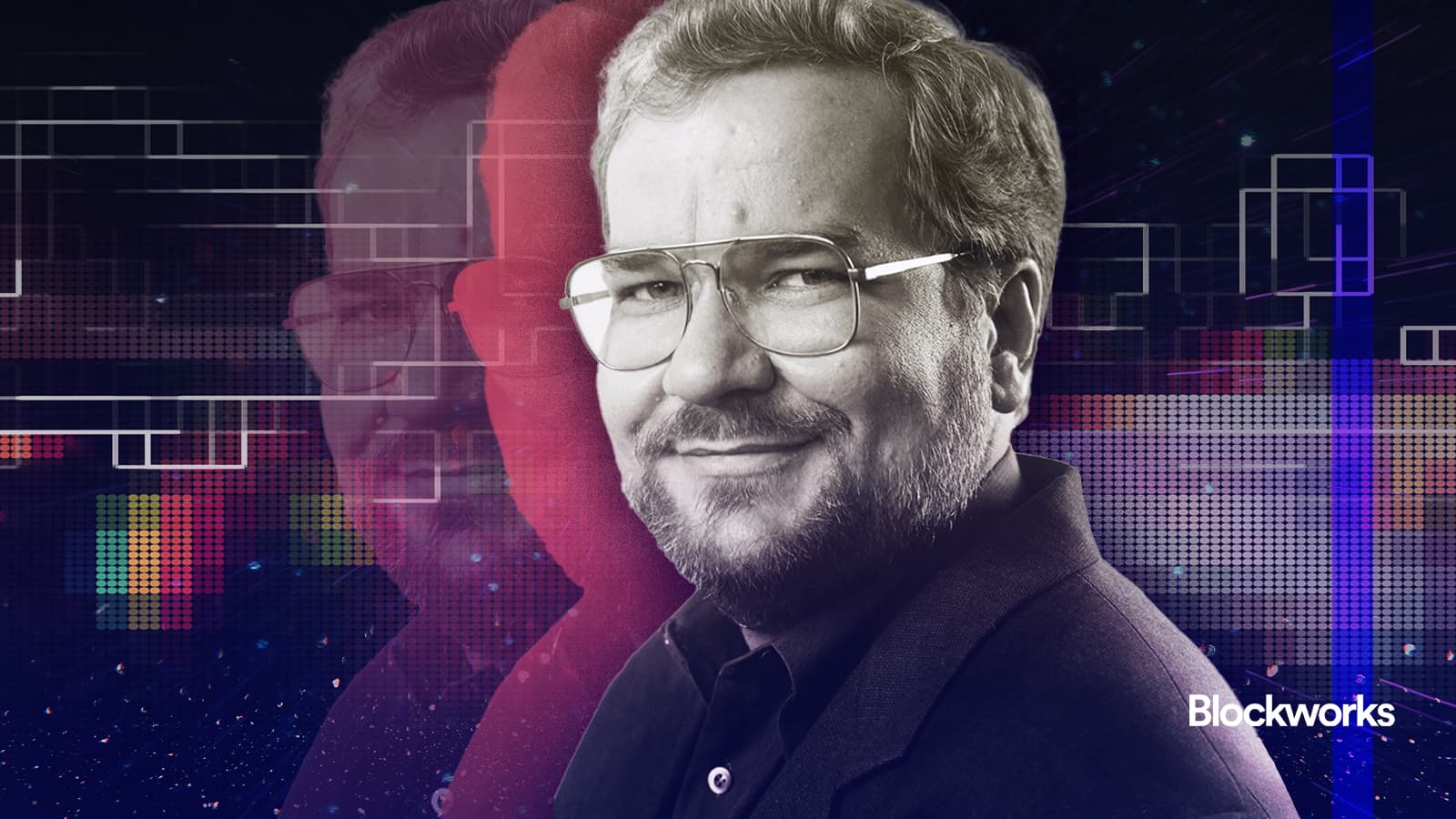
PGP founder Phil Zimmermann | Matt Crypto/”PRZ closeup” (GNU license, and tomertu/Shutterstock modified by Blockworks
This is a segment from the Supply Shock newsletter. To read full editions, subscribe.
Money is speech.
Those three words are arguably the most succinct way to express the importance of Bitcoin.
To the idealist, Bitcoin is an obvious frontier in the war for personal freedoms. It embodies the freedom to transact in the same way that art and newspapers represent freedoms of expression and speech.
Today’s Supply Shock episode features legendary Cypherpunk Phil Zimmermann, the creator of Pretty Good Privacy (PGP) who fought tirelessly for our freedom of digital privacy during the 1990s. Check out one of our previous retrospectives for a primer on Zimmermann.
Who better to ask, considering his long-term collaboration with Bitcoin pioneer Hal Finney: If PGP was the frontline for the first Crypto War, is Bitcoin the battleground for Crypto War II?
From The Pod
Phil Zimmermann formally hired Hal Finney in 1996, almost a decade and a half before Bitcoin — back when “crypto” only really meant “cryptography.”
Hal had spent years developing PGP with Zimmermann officially as a volunteer, partly because PGP was not yet a company, and partly to avoid drawing the ire of the US government that had rained down on Zimmermann.
Zimmermann told Supply Shock host Pete Rizzo that he knew Hal was exploring proof-of-work projects, and said he himself found Bitcoin technically intriguing. However, he was working on other things at the time, which kept him from becoming wrapped up in early Bitcoin development in the same way Hal was.
“For the first time, you actually had a feasible electronic money scheme that was decentralized,” he said. “I mean, we’ve had electronic money for a long time just by banks…I think [Bitcoin] was a very creative breakthrough in the development of digital money.”
More recently, Zimmermann has been a headline feature of the Bitcoin conference circuit, appearing on stage last October alongside Adam Back at the Plan B Forum in Lugano, Switzerland.
Bitcoin events have shown Zimmermann the positives of Bitcoin, particularly for those living under autocracies, as is the case across Latin America.
“The dictator executes his control over the population in a variety of ways. Some of them are violent, but sometimes he just takes their money,” he said. “Singapore has a high standard of living, high salaries and high percentage of home ownership. Everybody gets a pension when they work and the government there has control of that pension. If you criticize the government, you might lose your pension.”
“And so, if you live in an autocracy, it would be useful to have some of your assets in bitcoin so that it’s out of reach of the autocrat. I met a lot of people in Argentina at the Bitcoin conference there that had stories to tell about the places where they had used Bitcoin to protect some of their assets.”
Still, Zimmermann’s relationship with Bitcoin is complicated, in many of the same ways that his connection with his own creation, PGP, was conflicted. Zimmermann lamented that he knew for a fact that PGP was in Al-Qaeda training manuals, for instance, but at the same time, the technology was a force for good elsewhere in the world.
“In the 90s, when we were engaging in the debate about strong cryptography and especially PGP…Some advocates for strong cryptography were denying that criminals use PGP — they were denying that terrorists were using PGP.”
He continued: “[PGP was also] used in lots of environments where there was great danger to people who lived in wartime conditions. I got letters from people who lived in places where people were being killed by oppressive governments or war, and PGP was saving lives. So these technologies quite often have mixed effects on society, and that includes Bitcoin. I would like to see more examples of Bitcoin being used for good.”
Check out the full episode of Supply Shock on YouTube, Apple Podcasts and Spotify.
Get the news in your inbox. Explore Blockworks newsletters:
- The Breakdown: Decoding crypto and the markets. Daily.
- 0xResearch: Alpha in your inbox. Think like an analyst.