Why Aren’t There More Public Crypto Companies? The SEC
Crypto companies including Circle and Bullish have scrubbed plans to go public following a lengthy SEC screening process
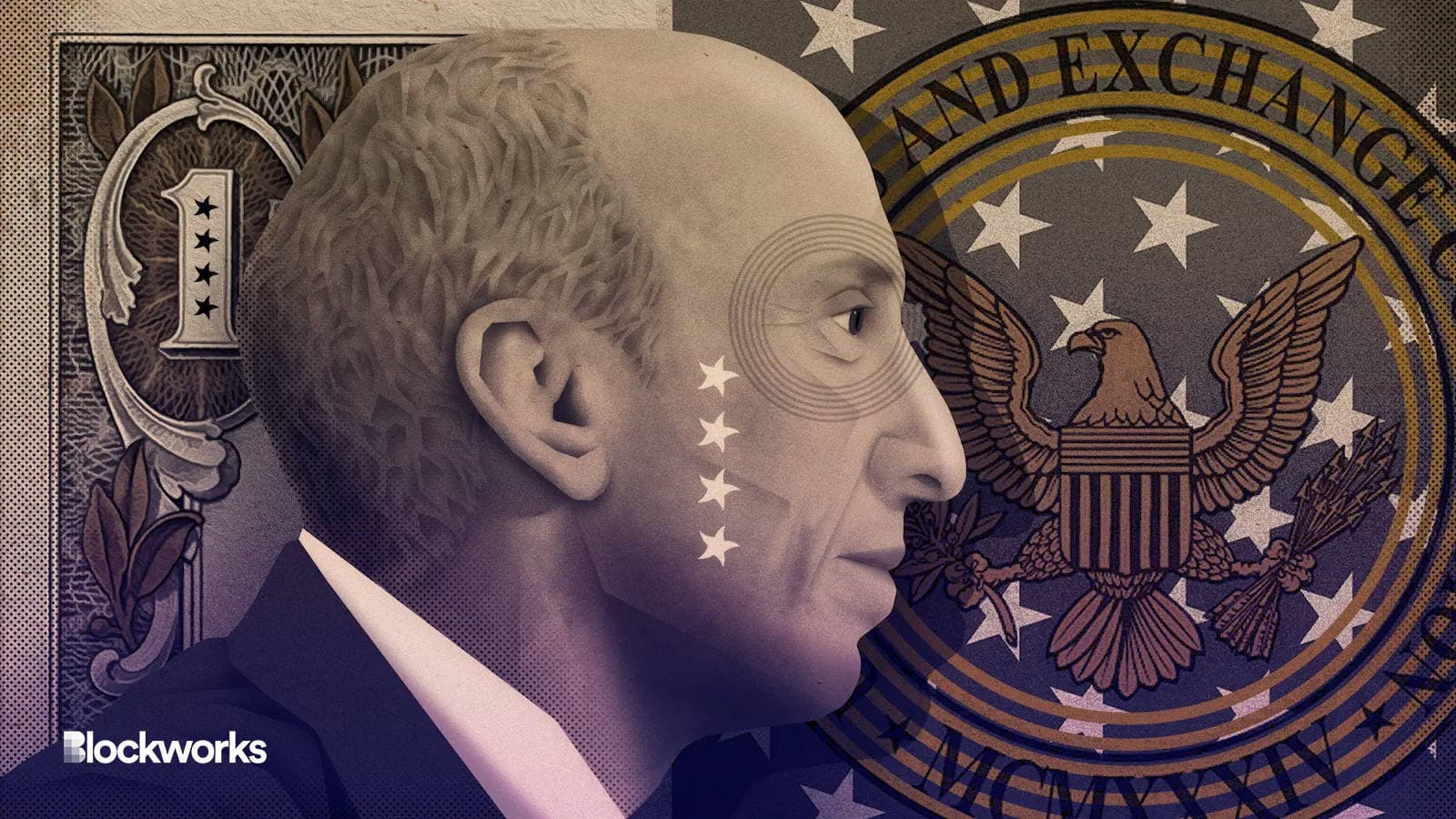
Gary Gensler, US Securities and Exchange Commission Chair | Exclusive art by Axel Rangel, modified by Blockworks
Some crypto companies seeking to go public in the US have been held back by complex assessments led by the Securities and Exchange Commission (SEC).
Recounting plights of crypto exchange Bullish, stablecoin issuer Circle and online brokerage eToro, the Wall Street Journal highlighted on Tuesday that each firm was unable to gain the required SEC approval.
They’d sought to go public via special purpose acquisition companies (SPACs) — existing “blank check” companies that merge or acquire other companies interested in assuming their public status.
The number of SPAC deals in the US exploded over the past few years, with 613 recorded in 2021 compared to 59 in 2019, per Statistica. Going public via SPACs is generally regarded as a speedier alternative to traditional initial public offerings.
While it hadn’t sought a SPAC deal, Galaxy Digital was similarly blocked by the SEC from listing on the Nasdaq, WSJ noted. Last April, a source told Blockworks that the listing process was taking longer than expected (Galaxy stock already trades on OTC Markets).
So, what’s the hold up? It’s reportedly the number of questions posed to crypto companies by SEC regulators, who have so far found responses wanting.
Coinbase — practically the only pure-play crypto firm to go public (not counting bitcoin miners) — was reportedly sent three letters containing questions leading up to its April 2021 direct listing.
But Block.one’s Bullish was sent 10 letters in a review process extending beyond a year, WSJ said. Galaxy reportedly received one letter with more than 90 questions while Circle faced more than 100 questions.
In eToro’s case, the SEC was said to have focused on the firm’s methods for accounting digital assets held by its users. “We continue to view becoming a public company as part of eToro’s future and will wait for the right opportunity to take this next step,” a spokesperson told Blockworks.
SEC chair Gary Gensler has previously echoed the stance of his predecessor Jay Clayton: regulators should consider most cryptocurrencies to be securities, and thus under the SEC’s purview.
FTX’s collapse in November also seems to have exacerbated scrutiny. The SEC issued new guidance that asked already-public companies to detail their risk exposure to the crypto sector. Circle canceled its SPAC deal in December.
The lengthy review process has ultimately dampened efforts to generate capital via public offerings in a tough bear market, and further solidified the SEC as a major thorn in the industry’s side.
Updated Jan. 25, 2022 at 9:07 am ET: Added spokesperson statement.
Get the news in your inbox. Explore Blockworks newsletters:
- The Breakdown: Decoding crypto and the markets. Daily.
- 0xResearch: Alpha in your inbox. Think like an analyst.
