Web3 Watch: Starbucks shutters its ‘Odyssey’ NFT program
Plus, memecoins are so back and NFT project Sappy Seals opens a playtest of its metaverse
pio3/Shutterstock modified by Blockworks
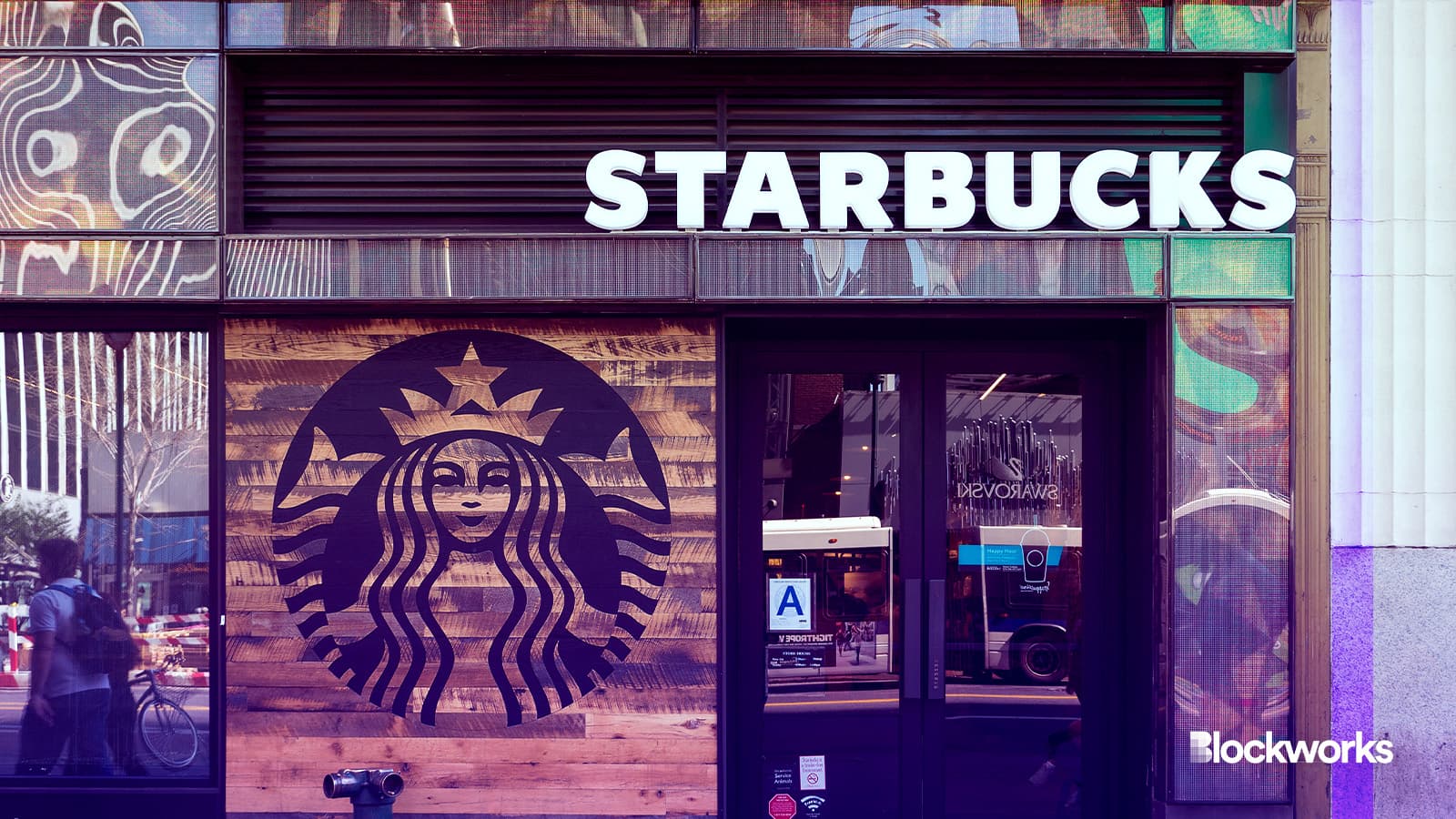
Major coffee retailer Starbucks said on Friday afternoon it will be ending its NFT-enabled customer loyalty program, dubbed Odyssey.
The program will close on the last day of March. “The Starbucks Odyssey Beta must come to an end to prepare for what comes next as we continue to evolve the program,” Starbucks said in an update to the program’s FAQ page.
The NFTs customers could earn through Odyssey, called Stamps, will be transferred to the NFT platform Nifty Gateway, where they can continue to be bought and sold, Starbucks added.
It’s the latest in a growing trend of non-crypto companies sunsetting NFT programs they started up a couple years ago. Video game venue GameStop shut down its NFT marketplace in January, citing regulatory concerns. Also that month, social media platform X discontinued support for NFT profile pictures. X competitor Meta wound down its own NFT program earlier in 2023.
Read more: X reportedly no longer supports NFT profile pictures
Starbucks Odyssey launched via a partnership with Polygon in September 2022.
Memecoin mania spawns Las Vegas Sphere ad, Franklin Templeton research
Crypto made much ado about memecoins this week as the familiar trope of overnight millionaires re-emerged.
The memecoin of the moment, dogwifhat, surged over 30% on the week. Supporters of the Solana-based token raised nearly $700,000 to put an advertisement on the Las Vegas Sphere.
Read more: A memecoin might get the Vegas treatment, but crypto ads rarely age well
The purported owners of the hat-wearing dog put an NFT of the image up for auction, and it was bid up to 30 ether (ETH) by Friday afternoon, worth roughly $113,000 at current prices.
Many of the new crop of memecoins, including dogwifhat and a slew of intentionally-misspelled politicians, live on the Solana blockchain. Solana (SOL) itself jumped 22% on the week, according to CoinGecko.
Amid the excitement, the digital asset arm of major investment firm Franklin Templeton published a paper on X titled “The Value Between Meme Coins and Their Native Networks.” The paper pointed out that the price appreciation of the Solana memecoin, BONK, and of Solana itself, happened at the same time.
One interesting stat:
- The price floor of Pudgy Penguins fell around $17,000 in the past week, from roughly $56,700 to roughly $39,700, according to NFT Price Floor.
Also of note:
- The NFT project Sappy Seals let some users into a playtest of its open world game.
- The massive multiplayer online game MapleStory is bringing a “Web3 enhanced extension” to the Avalanche blockchain.
- A trading bot on the popular-in-crypto messaging app Telegram saw more revenue than Arbitrum this week.
Get the news in your inbox. Explore Blockworks newsletters:
- The Breakdown: Decoding crypto and the markets. Daily.
- 0xResearch: Alpha in your inbox. Think like an analyst.
