Solana Foundation exec departs for ‘the most interesting experiment in crypto’
Austin Federa had been at Solana Labs and Foundation for nearly four years
asharkyu/Shutterstock modified by Blockworks
This is a segment from the Lightspeed newsletter. To read full editions, subscribe.
Solana Foundation’s head of strategy Austin Federa announced he would be departing the nonprofit to found DoubleZero, a network of fiber and subsea cables meant to establish a faster and more performant “new internet.”
Federa had been at Solana Labs and Foundation for nearly four years, becoming one of Solana’s more recognizable public figures. He’s now founding DoubleZero — which will start by supporting Solana — alongside cofounders Mateo Ward and Andrew McConnell. Jito CEO Lucas Bruder called the startup “the most interesting experiment in crypto.”
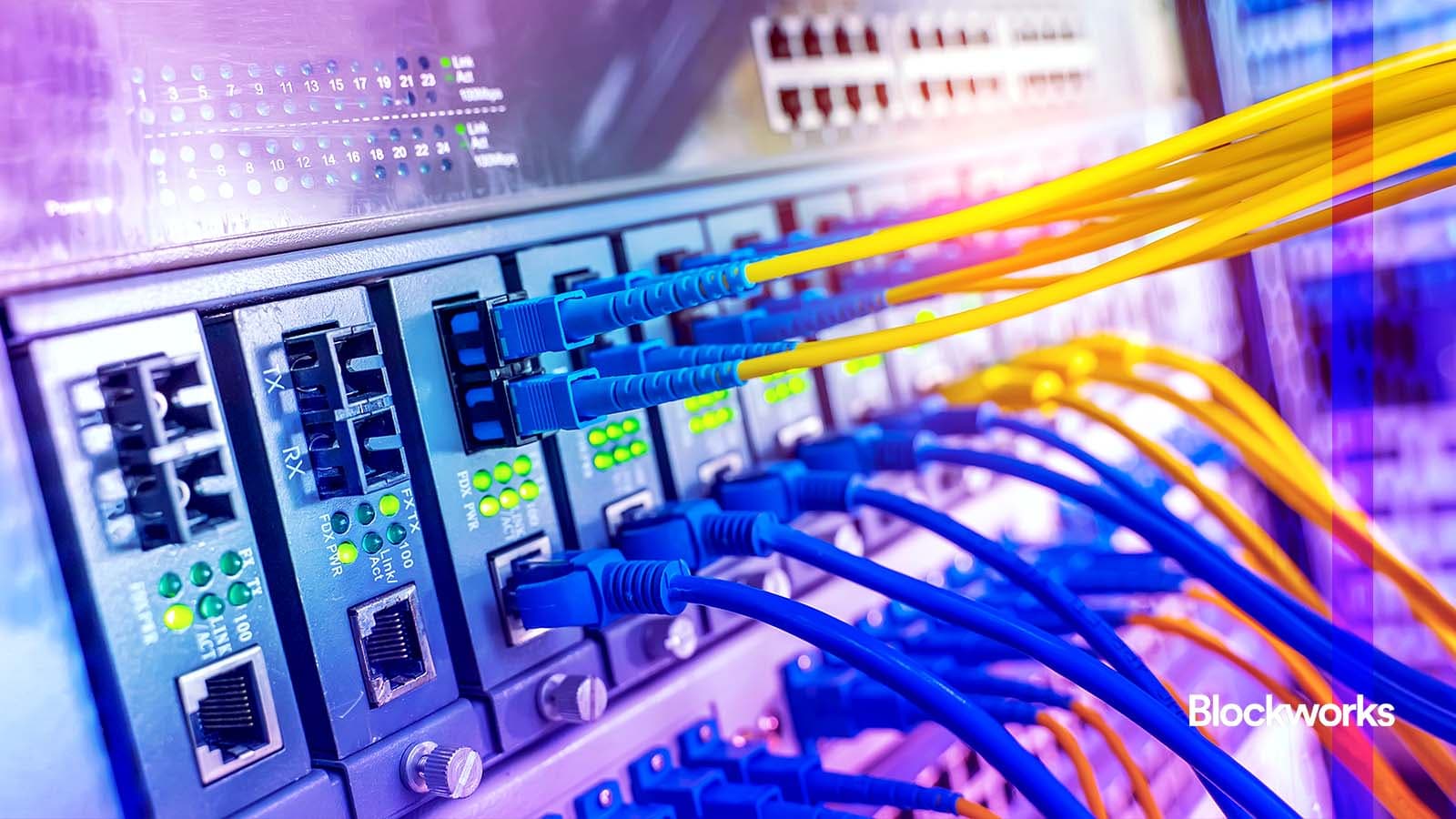
DoubleZero is an ambitious and potentially category-defining project, but I think it could be thought of for now as decentralized physical infrastructure (DePIN) for the internet. Individuals in the DoubleZero network contribute fiber optic links, which are basically cables that transmit data with light pulses, to a network that can filter out data before it gets to blockchain validators and RPCs. This all seems like it will be incentivized with a native token and enforced with proof-of-stake slashing, but DoubleZero’s white paper does not explicitly mention what form its “rewards” might take.
Where will DoubleZero find all this unused fiberoptic cable, you might ask? The project’s white paper argues that there is “substantial” spare fiber in the world. This comes from the hundreds of terabits per second modern fiber can handle, “dark fiber” that has been installed but sits unused, and enterprises purchasing more fiber capacity than they need to prepare for doomsday scenarios.
If all this unused fiber joined DoubleZero’s rewards-based network, it could build a faster new internet just with existing real-world infrastructure.
Part of the impetus to create DoubleZero is that fast blockchains like Solana aren’t slowed down by how nice of hardware the blockchain’s software is being run on — they’re kneecapped by the fact that blockchain data is sent over the public internet where it is mixed with web traffic that doesn’t need to run as fast as a blockchain.
As things stand, blockchain validators have to use some of their computing resources to filter out spam and deduplicate transactions. DoubleZero and its network of fiberoptic links will look to be a “common shield” for local validators, so all of their resources can go toward building and verifying blocks.
DoubleZero’s white paper says layer-1 blockchains are the best use case for the network, but outside of blockchain, content delivery networks, games, large language models, and enterprises could all benefit.
In recent weeks, Solana’s community has taken up that mantra of increasing bandwidth and reducing latency. To paraphrase Michael Jordan, Federa and his cofounders took that personally.
Get the news in your inbox. Explore Blockworks newsletters:
- The Breakdown: Decoding crypto and the markets. Daily.
- 0xResearch: Alpha in your inbox. Think like an analyst.
