Soccer club PSG becomes Chiliz Chain validator, pledges fan token buybacks
The club first launched its fan token with Socios in 2018
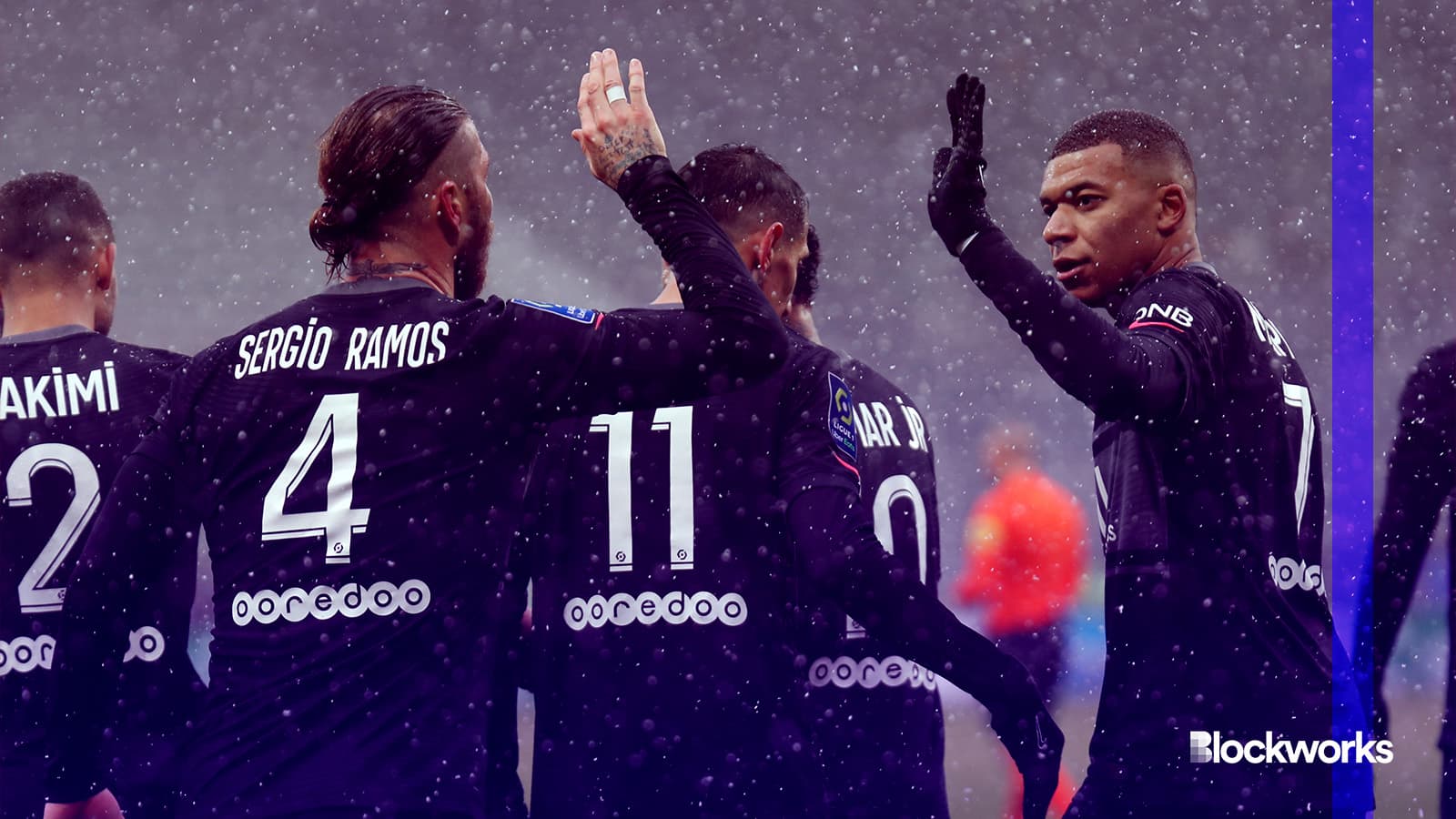
Paris Saint-German football players | Romain Biard/Shutterstock modified by Blockworks
Top-flight French soccer club Paris Saint-Germain has become a validator on the Chiliz Chain, the blockchain underpinning sports fan token platform Socios.
PSG has pledged to pour the revenue earned from validating the Chiliz Chain into fan token buybacks. The club’s announcement is the latest instance of international Web3 sports interest continuing apace even as US leagues and advertisers seemingly shrink back from crypto partnerships.
The Chiliz Chain is a layer-1 trying to become a blockchain of choice for brands like sports franchises. It’s a fork of the Binance Smart Chain and has a staking-based consensus mechanism built with its native CHZ token. The Socios app allows fans to buy fan tokens using CHZ.
PSG staked more than 10 million CHZ to become a Chiliz Chain validator, Chiliz CEO Alex Dreyfus said. That’s worth around $1.3 million at current prices.
PSG launched its fan token with Socios in 2018. It allows fans to vote on minor club decisions, like the design of a pennant advertising a match, for example. The token also gives fans exclusive access to the club. PSG’s VIP box is filled with fan token holders every game, and holders have done things like play soccer on PSG’s field, a spokesperson for Chiliz said.
The PSG token was trading for about $3.64 at press time, up around 4% on news of PSG becoming a validator. Token buybacks would theoretically concentrate supply and put upward pressure on the token’s price — which currently changes hands at a far cry from its 2021 high of nearly $60. PSG’s is still among the few largest fan tokens by market capitalization, according to CoinGecko.
Socios lists a variety of fan tokens, particularly for soccer teams. It also hosts a couple of Formula One teams and the mixed martial arts platform UFC.
Read more: Crypto Already Visible at Formula One Events. Now Cue NFT Tickets.
But it doesn’t offer fan tokens in one notable jurisdiction — the US.
“So as a matter of fact, in 2021 we signed around 80 sports franchises in the US, but due to market conditions (FTX, etc) and [a] regulatory framework that doesn’t give any visibility to product launches, we are not operating in the US for the time being,” Dreyfus said in response to a Telegram message.
US sports brands are continuing to feel the aftershocks of some ill-advised partnerships with crypto firms: The NBA now faces a class action lawsuit for not preventing the Dallas Mavericks’ promotional deal with now-bankrupt crypto brokerage Voyager Digital from going through.
Amid regulatory challenges and a flurry of lawsuits, the US sports world seems to be keeping its distance from Web3 for the time being. For the first time in three years, the Super Bowl came and went without a single crypto commercial.
Get the news in your inbox. Explore Blockworks newsletters:
- The Breakdown: Decoding crypto and the markets. Daily.
- 0xResearch: Alpha in your inbox. Think like an analyst.
