MicroStrategy stock is beating bitcoin — because it buys a lot of bitcoin
MicroStrategy executives have been well rewarded for turning the stock around, with bitcoin’s help

MicroStrategy former CEO Michael Saylor/michael.com modified by Blockworks
MicroStrategy is defying gravity. And it’s paying off massively for its executives.
The stock pumped three times harder than bitcoin at the start of the year and hasn’t yet come down.
Executive Chair and former CEO Michael Saylor has led insiders in selling hundreds of millions of dollars in stock all the while. Almost all of it went to founder Saylor, who recently said he personally owns $1 billion in bitcoin.
Read more: Who’s the better bitcoin salesman: Larry Fink or Michael Saylor?
In total, Saylor sold 400,000 shares in daily trades spread between January and the end of April, a few days after the halving.
He generated $410.8 million as MSTR tripled bitcoin’s performance — nearly half of all cash brought in by MicroStrategy insider stock sales since before the dot-com bubble.
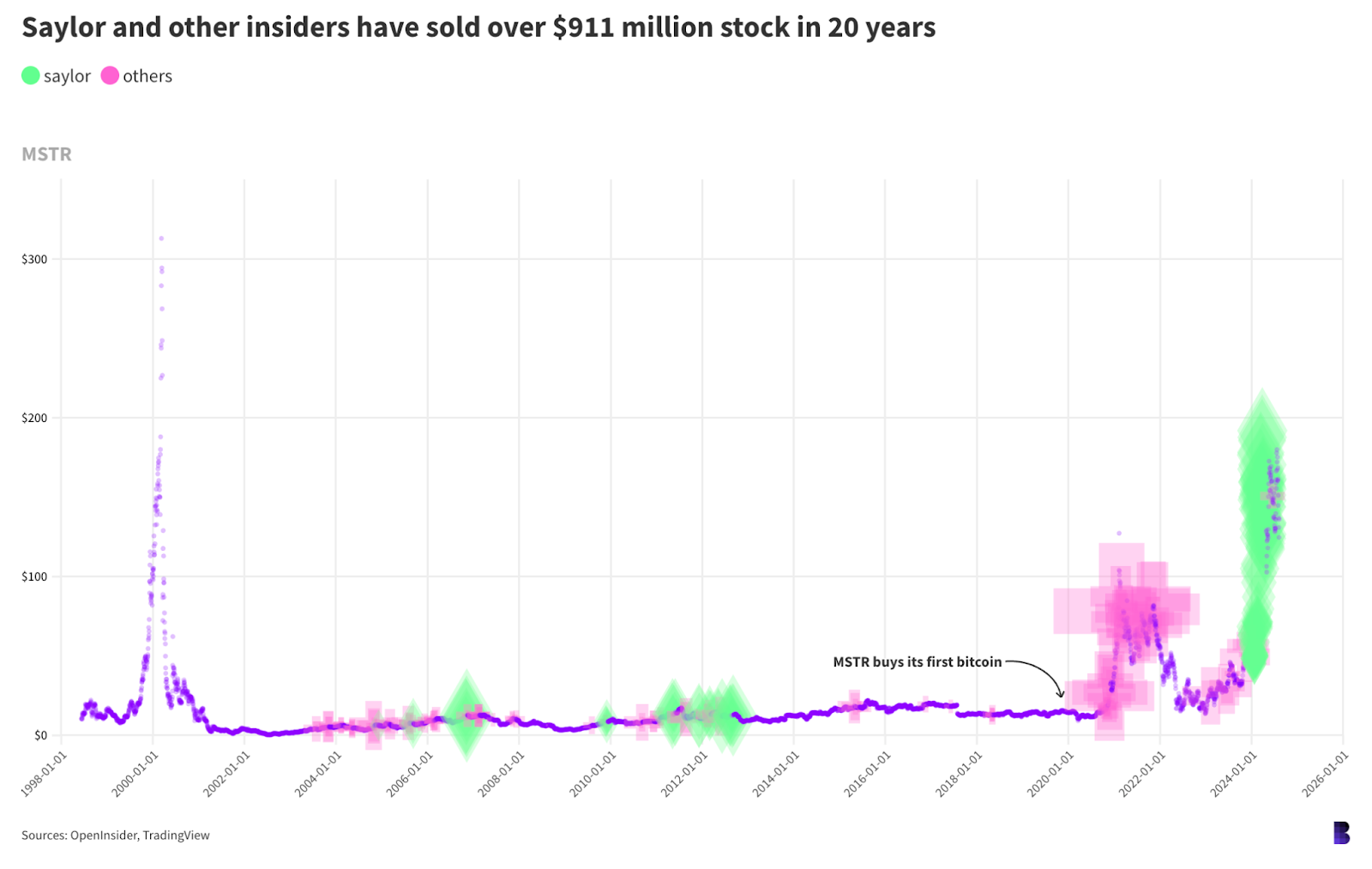 Pink plusses are sales from MicroStrategy insiders other than Saylor mapped to MSTR’s share price. Green diamonds are Saylor’s
Other insiders mostly got theirs during the last bull market while MSTR was busy collecting its own first billion in bitcoin at the time.
Between October 2020 and November 2021, bitcoin rose from $11,000 to nearly $69,000. MSTR rallied from $165 to almost $900 alongside it, while company executives other than Saylor offloaded nearly $215 million in company shares.
Read more: MicroStrategy’s bitcoin holdings are worth nearly $15B
If sold today, those same sales would’ve netted $588 million. Saylor, meanwhile, benefitted from waiting until this bull market to cash in his own chips — during his own spree earlier this year, MicroStrategy’s share price was at times double what it was when the other company insiders were selling.
More recently, MSTR rallied up to 180% between January and the end of March, around bitcoin’s all-time high. Bitcoin had meanwhile managed 60%.
February’s earnings release, for Q4 2023, appears to have made the difference. Or at least, that’s when MSTR and BTC performances separated.
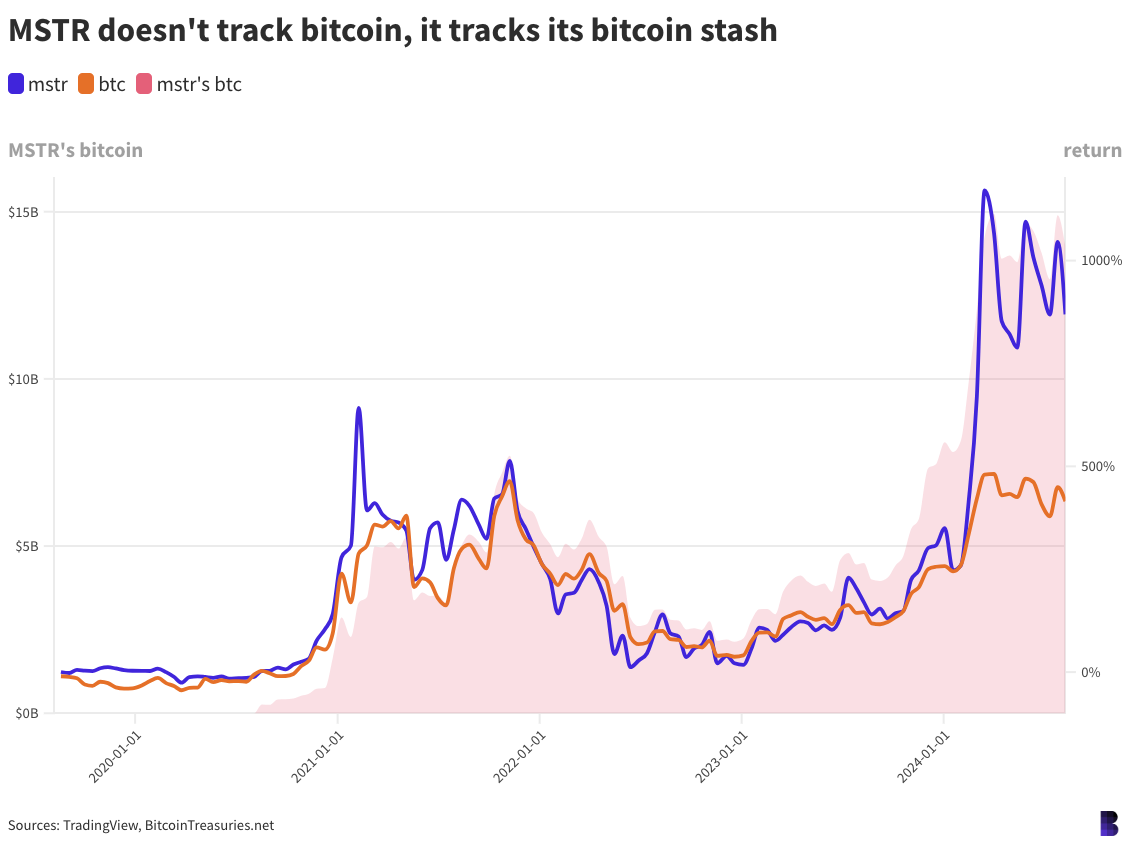 MicroStrategy’s share price is tightly correlated with the value of its bitcoin treasury
In February, the data intelligence firm turned bitcoin hoarder posted a 136% increase in net income, a 138% boost in net profit margin and a 78% rise in operating income year-on-year. But, it missed quarterly revenue expectations.
MicroStrategy’s earnings so far this year haven’t really been all that great. It has, however, been buying a lot of bitcoin — spending about $2.42 billion on 37,350 BTC ($2.26 billion) — which the market seems to appreciate.
MSTR is down on its 2024 bitcoin purchases to date, but zooming out, it’s way up. In total, it’s paid $8.35 billion to acquire 226,500 BTC over the past four years.
That same stash is now worth $13.74 billion, putting the firm almost 65% ahead, equal to $5.4 billion.
Perhaps it’s those kinds of figures that have let markets look past lackluster earnings this year. Two-thirds returns on its bitcoin purchases in four years is indeed impressive, but it’s also what the S&P 500 has done across the same period.
On the other hand, MicroStrategy reported a $3.905 billion debt on its balance sheet at the end of June, putting a damper on those gains. Still, there’s no denying its share price.
A shorter version of this article first appeared in the daily Empire newsletter. Subscribe here so you don’t miss tomorrow’s edition.
Get the news in your inbox. Explore Blockworks newsletters:
- The Breakdown: Decoding crypto and the markets. Daily.
- 0xResearch: Alpha in your inbox. Think like an analyst.
