Financial optimism is winning
If financial nihilism has driven you into memecoins, zero-day options, and sports betting, consider financial optimism instead
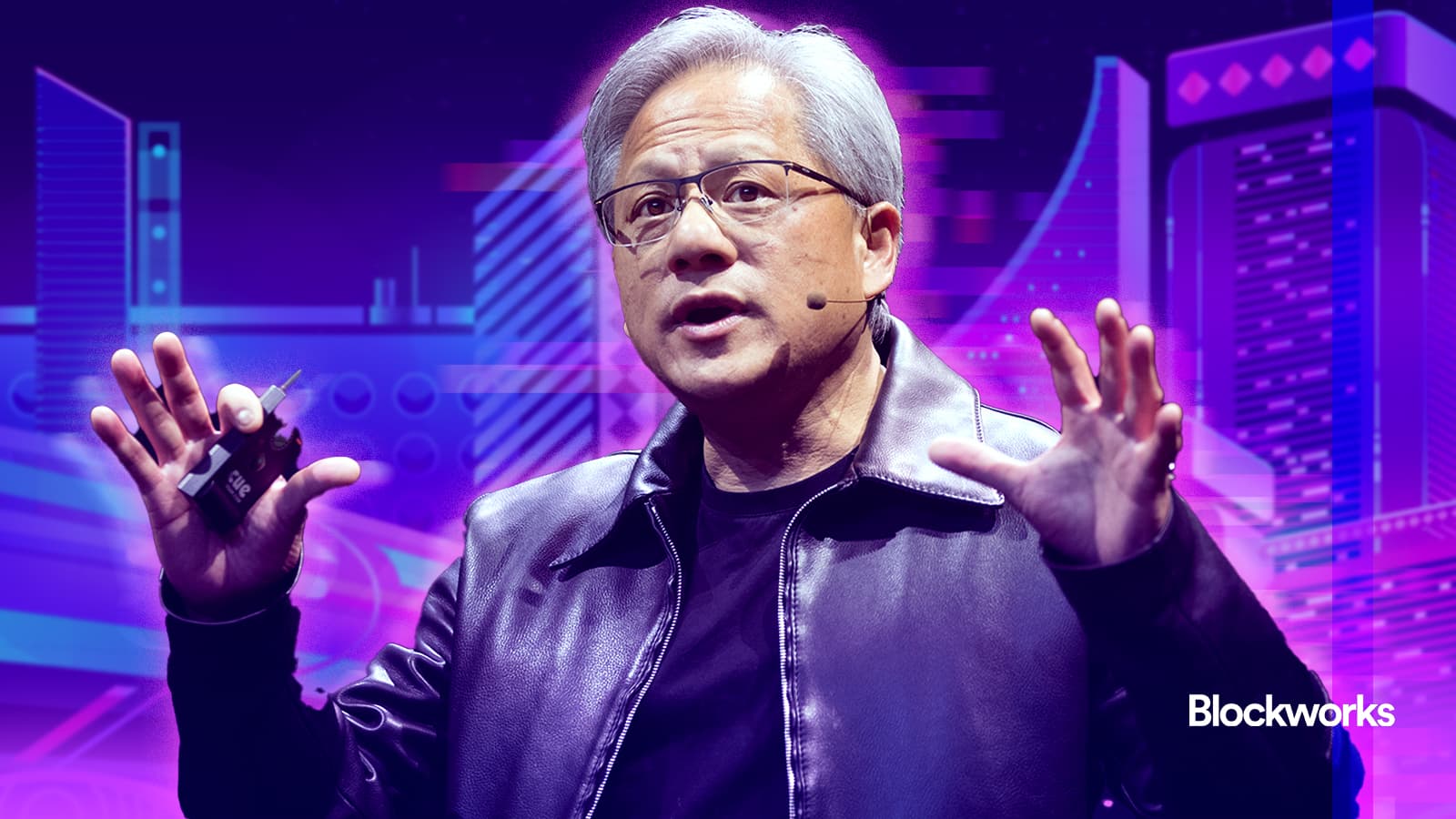
Nvidia founder Jensen Huang | jamesonwu1972/Vectorpocket/Shutterstock modified by Blockworks
This is a segment from The Breakdown newsletter. To read full editions, subscribe.
As recently as a couple of years ago, investing was in a pessimistic place.
Techno-optimist Kevin Kelly worried that “we’ve stopped making big things.”
Big Tech was pilloried for using immense profits to buy their own shares instead of building new things.
Ben Thompson’s Stratechery sounded more like a legal blog than a tech one, with his daily commentary dominated by the latest in anti-trust news.
Happily, that seems like ancient history now.
Ben Thompson seems to have some new, wildly ambitious tech venture to write about nearly every day: data centers in space, x-ray lithography, thermodynamic computing.
Big Tech has gone from returning cash to shareholders because it didn’t know what to do with it, to borrowing billions to build everything at once: OpenAI, for example, expects to make $100 billion of revenue in 2028 — and post a loss of $74 billion.
We’ve started making big things again: xAI’s million-square-foot data center in Memphis, a TSMC chip-fab occupying 1,100 acres of Arizona desert, a 400-foot-tall SpaceX rocket with 5,000 metric tons of liftoff mass.
People typically put a cynical spin on this: They see big corporations being greedy, or small investors being misled.
Kevin Kelly, however, sees a profound act of optimism.
Optimists, he says, “are willing to sacrifice immediate gains in order to postpone more gains into the future — that’s investment.”
You might be thinking, Yes, I own Nvidia shares now, so I can enjoy “more gains” next week, next month or next year.
But that’s just trading.
Kelly is talking about investing, which postpones the benefits of consumption not just years into the future, but generations.
“Right now,” he points out, “we’re benefiting from the work of previous generations, who have undertaken to create infrastructure — roads, canals, skyscrapers, telephone networks — that we are now enjoying.”
We should try not to take that for granted: People we don’t know took the risk of investing and did the hard work of building, and we get the benefits for free.
“By moving benefits to future generations,” Kelly says, the investors and builders of previous generations “have been acting as good ancestors for us.”
We, too, should aspire to be good ancestors, which we can do by moving some of our benefits into the future.
But that requires us to be optimistic about the future.
“The deep history of new ideas,” Kelly explains, “makes it very clear that the optimistic stance of believing something is possible is a requirement to make anything new.”
Kelly is particularly optimistic about the new things that AI investors will make.
“The three chief consequences of AI,” he predicts, “will be the liberation of humans from their unwanted jobs, the explosion of new services and formerly impossible products that are co-created with AIs, and new occupations and desirable tasks for humans.”
Less drudgery, more stuff, better jobs — this is the future being created by today’s most optimistic investors.
Kelly is no utopian; he recognizes the ever-growing scale of the world’s challenges: “We have a planetary economy, we have planetary problems.”
But that just means we have to think bigger: “We have to do planetary solutions.” And he thinks we will: “They’re gonna be big.”
Bigger solutions will require bigger belief: “If we can become more optimistic,” Kelly said in 2023, “we can imagine some big things, and then believe they can be made, and that will help make them come true.”
At the time, he worried that “we have an allergy to bigness right now.”
“Lots of people say they’re anti-capitalist,” he added, “but I think they’re anti-big.”
He encouraged people to rethink that: “We should be optimistic not because our problems are smaller than we thought, but because our capacity to solve them is larger than we thought.”
In 2025, it seems clear that AI has the potential to radically expand our capacity to solve even the biggest problems.
If so, it’s the optimistic act of investing in space-based data centers, x-ray lithography and giant chip fabs that will make it happen — eventually.
“In the long run,” Kelly concludes, “optimists shape the future.”
Get the news in your inbox. Explore Blockworks newsletters:
- The Breakdown: Decoding crypto and the markets. Daily.
- 0xResearch: Alpha in your inbox. Think like an analyst.
