Ethereum researcher Max Resnick makes surprise jump to Solana
Resnick has joined Solana core development shop Anza, he announced on X today
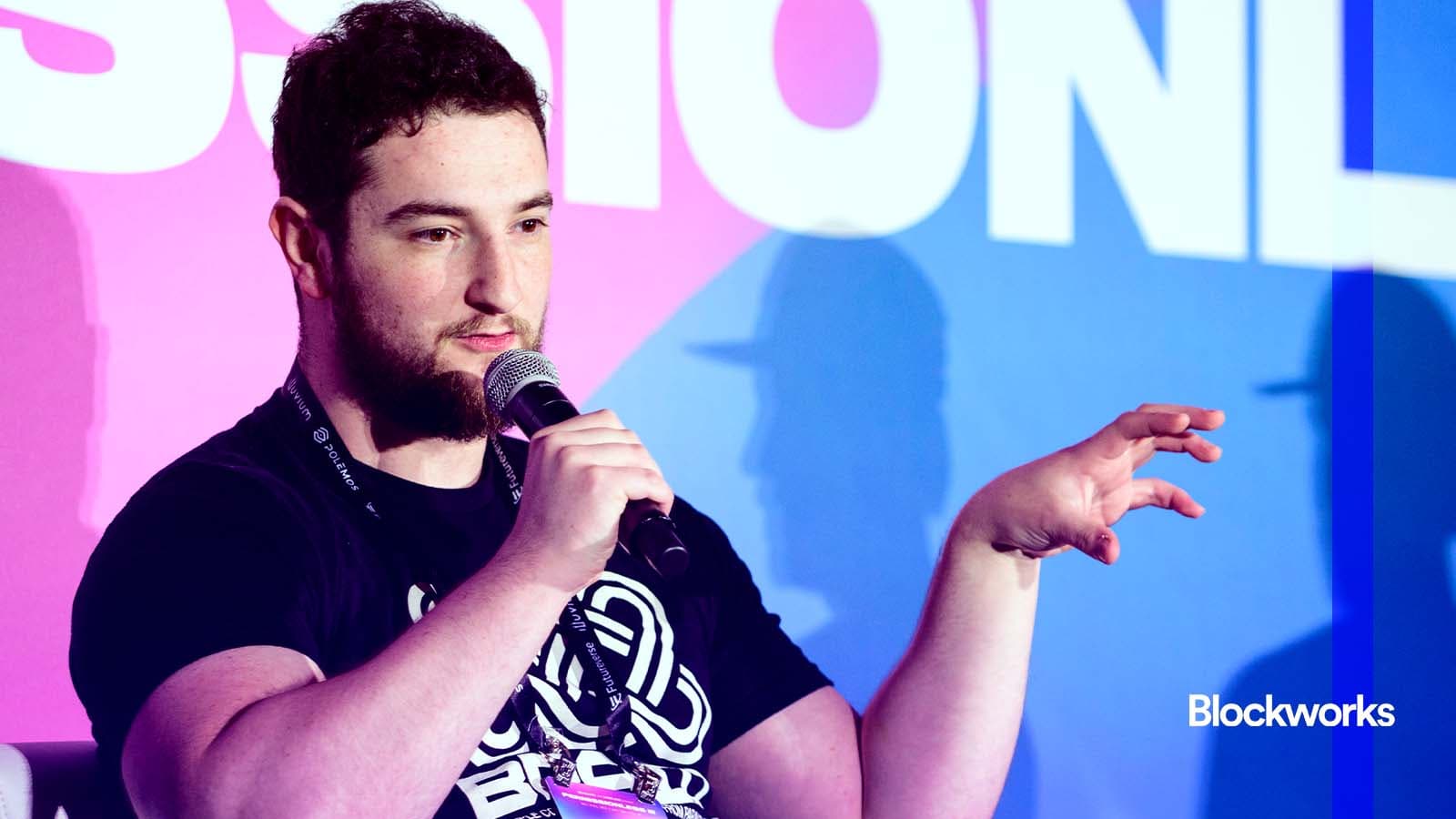
Ethereum researcher Max Resnick | Permissionless III by Mike Lawrence for Blockworks
This is a segment from the Lightspeed newsletter. To read full editions, subscribe.
Max Resnick, who has in recent months become one of Ethereum’s more notable online figures, has joined Solana core development shop Anza, he announced on X today.
Resnick previously worked at a Consensys subsidiary named Special Mechanisms Group and became known for his contrarian beliefs on Ethereum’s roadmap — arguing that some thinking around layer-2s was misguided and Ethereum should focus on scaling the base layer. In classic crypto fashion, much of Resnick’s rising star originated on X: Kaito AI ranks him as having the 40th-highest mindshare on Crypto Twitter over the past three months.
Consensys is a software company started by Ethereum co-founder Joseph Lubin in 2014, and is perhaps best known for creating the MetaMask wallet. Anza is a Solana Labs spin-out that is responsible for continuing to develop the original Solana software.
The move was celebrated in the Solana world, where Resnick’s move to Solana was viewed as something of a coup. For Ethereum, Resnick doesn’t quite reach household name status like Justin Drake or Dankrad Feist do, but another high-profile defection following Resnick’s could certainly “raise some eyebrows,” said Paul Dylan-Ennis, a professor researching crypto at University College Dublin.
Resnick’s transition to Anza was helped along by Solana co-founder Anatoly Yakovenko, who encouraged the researcher to take the leap, Resnick shared with me today. The process started around three months ago. Resnick was also considering moves to Ethereum layer-2s or non-MetaMask crypto wallets.
Resnick said on X that he would be spending his first 100 days at Anza focusing on fee markets and consensus while getting up to speed on how Solana works at a core level. On a call today, Resnick added that his “moonshot” vision for Solana would be to add “multiple leaders” to the protocol.
On Ethereum and Solana today, one so-called leader is chosen to propose a block for validators to check. Under this model, the single leader has a “ton” of economic power which makes the protocols economically inefficient, Resnick said. Having multiple leaders compete to propose blocks could put downward pressure on how much economic value leaders can extract from validators.
Resnick credits himself with widening Ethereum’s overton window to allow for more serious conversations around how the layer-1 can scale, pointing out Ethereum Foundation researcher Dankrad Feist’s recent focus on scaling the L1 as an example.
But ultimately, Resnick sees Solana’s culture as more open to unconventional ideas, such as having multiple leaders — in comparison to Ethereum, which can tend to be bogged down by “political bullshit.”
“The ETH culture is really downstream of core development, and people who actually want to get things done are changing their personality, changing what they’re suggesting in order to make sure that they preserve political capital with the core dev community,” Resnick said.
Get the news in your inbox. Explore Blockworks newsletters:
- The Breakdown: Decoding crypto and the markets. Daily.
- 0xResearch: Alpha in your inbox. Think like an analyst.
