Bitcoin and Ether Plunge as Fed Moves To Shrink Balance Sheet by $95B a Month
Central bankers move toward aggressive balance-sheet reduction and faster interest-rate rise as inflation and Russia-induced woes continue
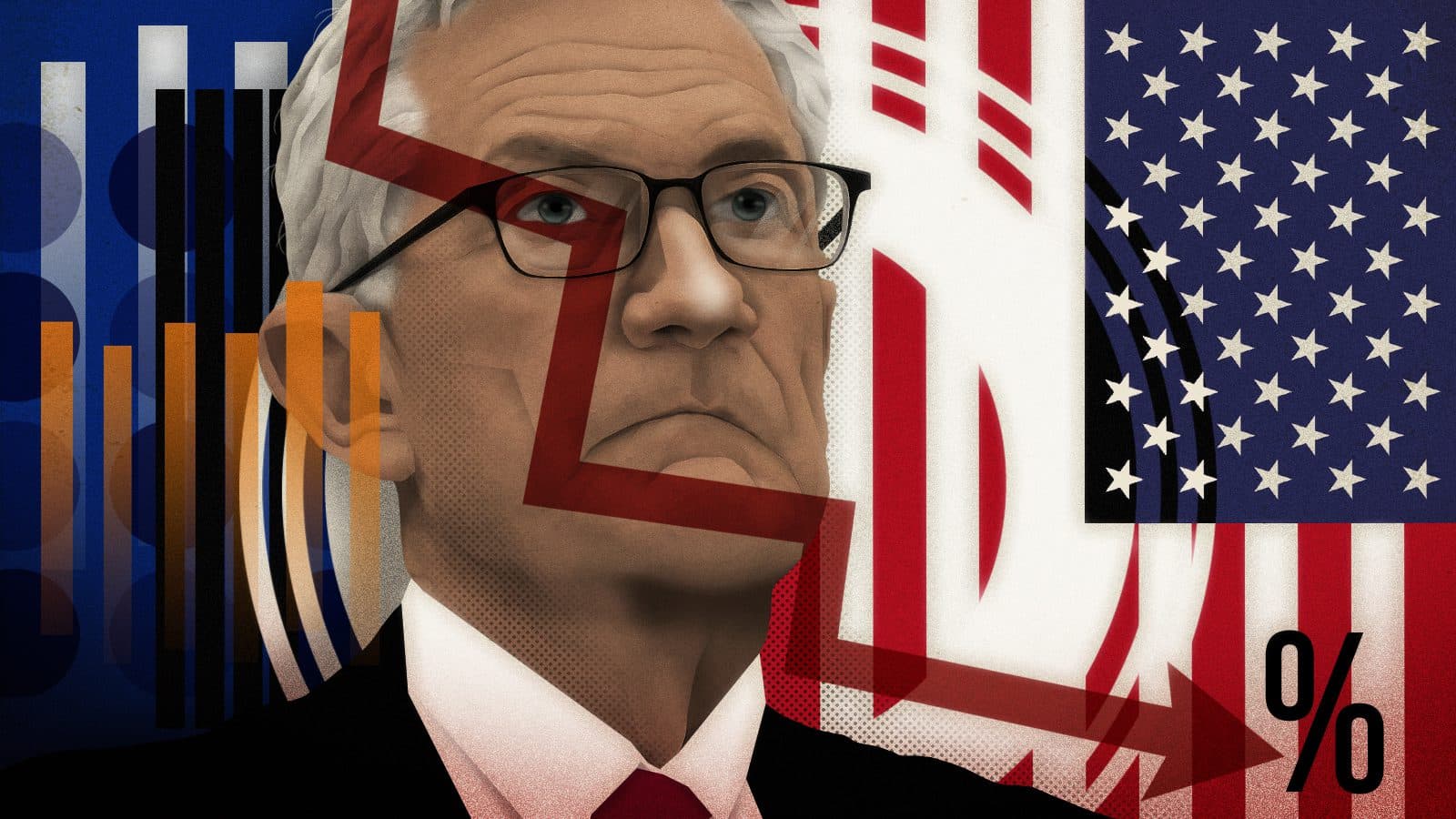
Federal Reserve Chair Jerome Powell | Blockworks exclusive art by Axel Rangel
- Fed officials plan on pulling back economic support at a faster rate than expected
- Cryptocurrencies fell on the news while stocks traded sideways
Federal Reserve officials are planning on reducing the central bank’s trillions of dollars in bond holdings by around $95 billion a month, minutes from the March meeting show.
Central bankers also plan to allow some of their government-backed holdings to expire, helping to pare down the Fed’s balance sheet, which currently stands at $9 trillion. A limit of $60 billion in Treasurys and $35 billion in mortgage-backed securities would be allowed to roll off, officials “generally agreed,” the minutes note.
The Fed voted to raise rates a quarter of a percentage point in March and officials noted that an increase in the pace of interest rate hikes may come in the near future.
St. Louis Fed President James Bullard was the only official to vote against the action, “preferring to raise the target range for the federal funds rate by 0.5 percentage point to ½ to ¾ percent in light of elevated inflation pressures,” according to the minutes.
“The Fed cannot afford, literally and figuratively, to bail out the economy from the forthcoming recession,” David Tawil, president of crypto hedge fund firm ProChain Capital. “Rates must go higher, otherwise we will have a decade of stagflation.”
The minutes come as the central bank begins to tighten monetary policy with inflation rising at the fastest pace in four decades. Russia’s invasion of Ukraine has also presented additional economic challenges, the minutes note. Commodity prices have been pushed higher, “hurting global risk sentiment, and exacerbating supply bottlenecks,” the minutes read.
Cryptocurrencies largely fell on the news, with bitcoin and ether losing about 4% and 7%, respectively. Stocks traded sideways with the S&P 500 losing close to 1% and the Dow Jones down 0.5%. The tech-heavy Nasdaq was trading almost 1% higher.
“We were having a bad day before the announcement, and it got worse,” Tawil said. “Today, crypto is trading like a technology company equity.”
Others are less certain, though, that the Fed’s current policy path will push crypto lower.
“I don’t think history supports the view that reduction of the Fed’s balance sheet is necessarily bad for crypto,” said Jack Farley, macro analyst and host of Blockworks’ Forward Guidance podcast. “The last (and only) instance of quantitative tightening by the Fed began in October 2017, and bitcoin went up 340% from then until its peak in December 2017.”
Get the news in your inbox. Explore Blockworks newsletters:
- The Breakdown: Decoding crypto and the markets. Daily.
- 0xResearch: Alpha in your inbox. Think like an analyst.
