Solana co-founder: Execution is the only moat
Mert Mumtaz recently grilled Anatoly Yakovenko on future issues that may face the Solana ecosystem
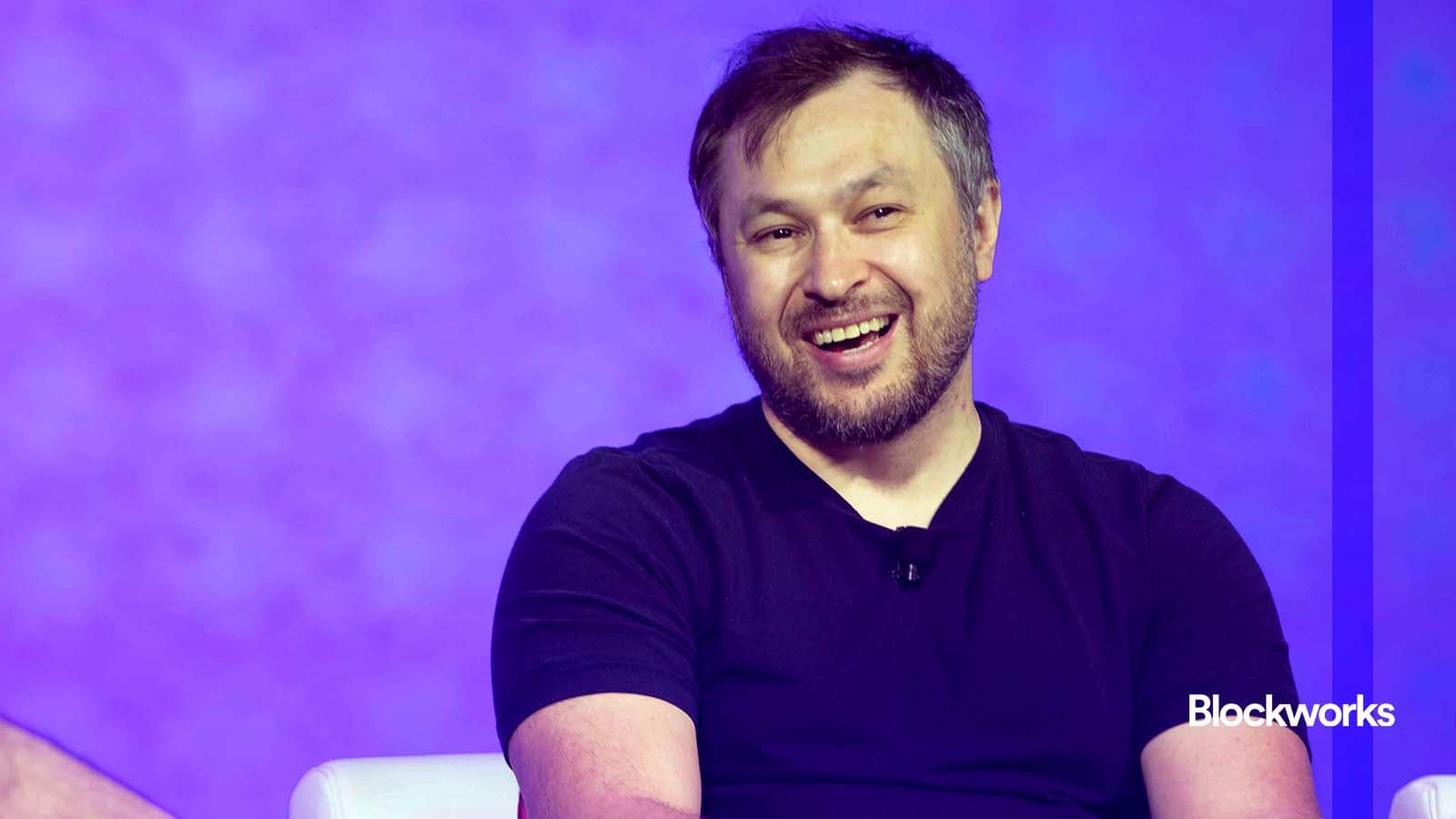
Solana co-founder Anatoly Yakovenko | Permissionless II by Blockworks
This is a segment from the Lightspeed newsletter. To read full editions, subscribe.
As some of you may know, I host the Lightspeed podcast in addition to writing this newsletter. The conversations on that show often inspire some of the things we cover here, and I want to bring Lightspeed readers in on some of those threads.
So to cap off this holiday week, here are a few recent moments from the show that have been on my mind while writing these newsletters:
- “Execution is the only moat, always.” — Anatoly Yakovenko, co-founder of Solana
My co-host Mert Mumtaz recently grilled Solana’s chief architect on looming questions and problems the network could face in the future. It’s worth a listen.
At one point in the episode, Mert asked Yakovenko what Solana’s moat could be in a world where new layer-1s and layer-2s come to market that make blockchains fast and blockspace cheap, slimming Solana’s current edge.
Yakovenko’s answer pretty much boils down to: Keep executing. He also talks about hiring at Solana for tech people rather than academics, because the former are better able to work in a pressure cooker and ship features fast.
- “We want to understand the causal connection to things, it’s in our nature to do that. But in a market there is no causal connection it’s literally like, ‘Are there more buyers than sellers?’” — Joe McCann, CEO and CIO at Asymmetric Capital
McCann said this while disagreeing with me about the impact of memecoins on SOL’s price, but since I am eminently humble, I’m including it here anyways.
I like what McCann is saying here because despite all the endless market analysis and tea leaves reading you’ll see in the media and online, sometimes it’s ultimately indecipherable why markets do what they do.
When the price goes up, it’s because the market has more buy volume than sell volume. Identifying the buyers and sellers and their motivations are an inexact science at best.
- “Issuance is a cost to non-stakers. They do not receive that [issuance]. Stakers do … there is a value transfer from non-stakers to stakers.” — Dan Smith, data lead at Blockworks Research
I’ve been growing increasingly interested in how value flows around the Solana ecosystem. When the price of SOL goes up, and as time passes, different stakeholders are rewarded differently.
Many Solana watchers, including this newsletter, have debated if SOL’s inflation should be brought down. Inflation is dilutive, and disinflation can be bullish for an asset’s price, the thinking goes — likely influenced by the Bitcoin halving.
But in Solana, issuance only dilutes non-stakers, because newly minted SOL goes to validators, and validators pass it on to stakers.
- “I always like that framing which is just create a new category and go after a small market that you think will grow” — Mert Mumtaz, CEO of Helius
The layer-1 wars and endless debates about which blockchain is best become very tiresome after a while. I liked the point Mert made on a recent episode though: To compete in crypto, you need to go after a meaningfully new market or use case.
SOL shouldn’t be cast as an ETH killer. It’s a different blockchain that makes different tradeoffs. And Monad, Berachain, MegaETH, and the rest of them shouldn’t try to be SOL killers. They should pick a different axis upon which they can meaningfully outperform Solana.
- “I don’t think it’s really workable, sadly.” — Rune Christensen, co-founder of Sky
Christensen, the co-founder of Sky (formerly Maker), is referring to futarchy here, which is a buzzy new governance concept in the Solana world.
Futarchy has markets, rather than voters, decide what a DAO should do. I was curious to get Christensen’s take on it because DAO governance has always been a struggle, and MakerDAO is one of the oldest examples.
Christensen is basically bearish on futarchy because he thinks collective wisdom is wrong, and DAOs need someone smart who can decipher the difference between a good marketing initiative and a ponzi scheme, for instance.
This sounded a bit like a pitch for traditional corporate governance to me, but what do I know?
Get the news in your inbox. Explore Blockworks newsletters:
- The Breakdown: Decoding crypto and the markets. Daily.
- 0xResearch: Alpha in your inbox. Think like an analyst.