RBI Deputy Governor Likens Crypto to a Ponzi Scheme, Proposes Ban
The deputy governor of India’s central bank said cryptocurrency had no place in his country’s economy and likened them to a Ponzi scheme
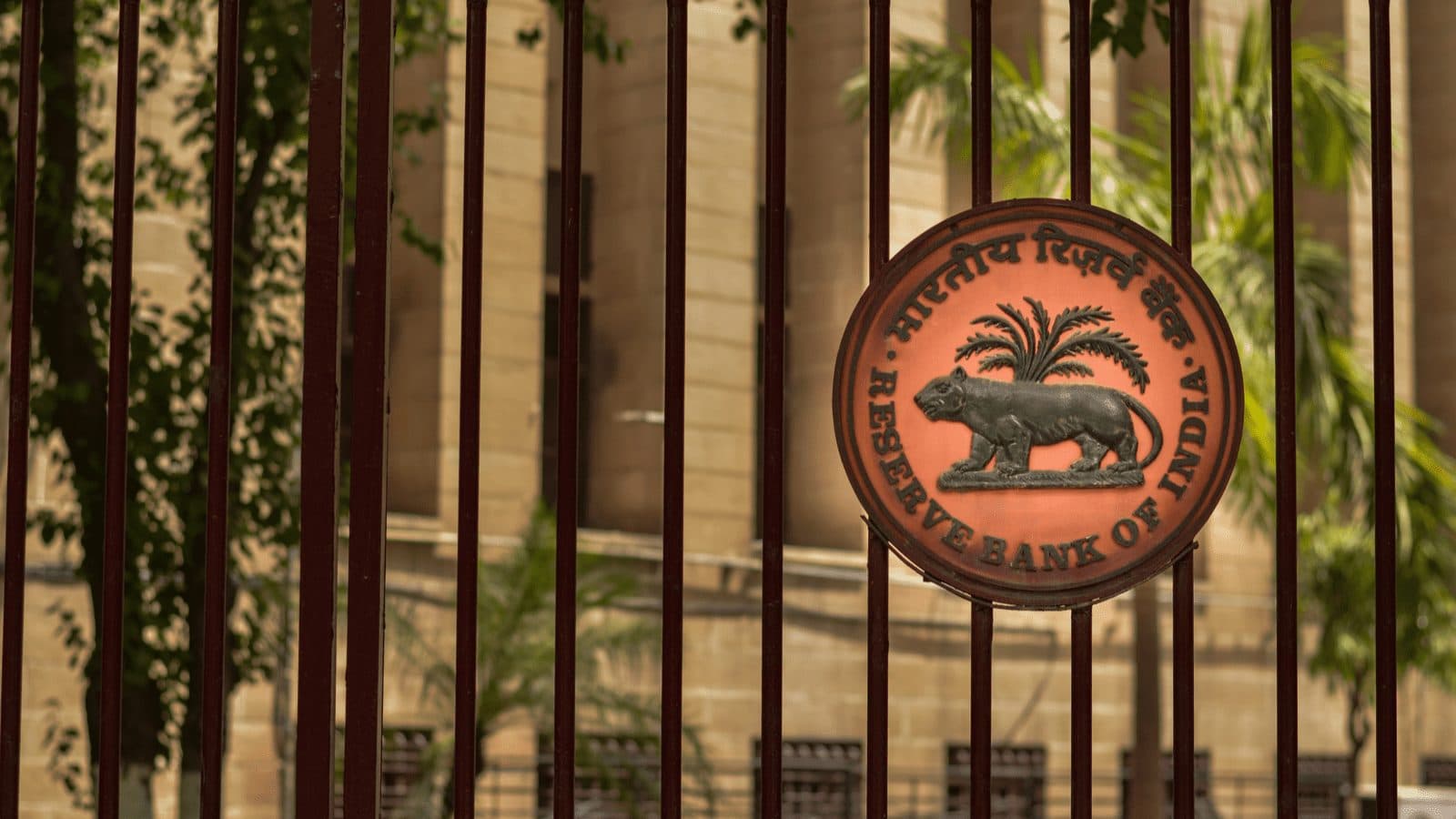
The RBI logo on the closed iron gate of Reserve Bank of India | Credit: Shutterstock
- The deputy governor of India’s central bank said cryptocurrency is akin to a Ponzi scheme
- He also said crypto was just one use case of blockchain technology and that a ban on digital assets would not affect innovation
Cryptocurrencies are akin to Ponzi schemes and have no intrinsic value, according to India’s central bank deputy governor.
T. Rabi Sankar, who spoke during the Indian Banks’ Association’s 17th annual Banking Technology Conference on Monday, said cryptocurrencies had no place in India’s economy and presented significant risks to financial stability.
“All these factors lead to the conclusion that banning cryptocurrency is perhaps the most advisable choice open to India,” said Sankar. “We have examined the arguments proffered by those advocating that cryptocurrencies should be regulated and found that none of them stand up to basic scrutiny.”
The deputy governor said the argument put forth by enthusiasts including crypto’s use as a store of value or a medium of exchange — and that they should be regulated as such — did not stand up to “basic scrutiny.” He also said he did not accept the argument that crypto advanced the development of blockchain technology.
“Even in case of private authentication through consensus mechanisms, accounts can be kept and rewards can be given in any legal tender currency,” said Sankar. “In other words, creating native cryptocurrencies is just one way of implementing a blockchain; it can be viewed as just one use case of the blockchain technology.”
Sankar said that those arguing that a ban on crypto would limit innovation in blockchain was similar to drawing the conclusion that a ban on nuclear weapons would harm advancements in nuclear physics.
While Sankar’s comments come as no surprise, the seesawing rhetoric on crypto regulation from India’s policymakers has amounted to a dizzying stance. A patchwork of ad-hoc laws has, at times, allowed private cryptos to function as digital assets, while, at others, have outlawed them.
The lack of a unified front on crypto has exposed fragmentation among the country’s policymakers on the issue of how the nascent asset class should best be policed. Earlier this month, India’s finance minister, Nirmala Sitharaman, moved to introduce a 30% tax on income received from crypto gains, raising hopes for crypto’s legitimacy as an asset class.
Last week, Sitharaman shut down expectations she was not doing “anything to legalize it or ban it [crypto]” at present and left the question as to how crypto would be regulated in India unanswered. Instead, the minister said she wanted to wait until after inputs from consultation were concluded and that taxing crypto now is the government’s “sovereign right.”
Get the news in your inbox. Explore Blockworks newsletters:
- The Breakdown: Decoding crypto and the markets. Daily.
- 0xResearch: Alpha in your inbox. Think like an analyst.
