Crypto industry sounds off on legislative speed bumps
As some Democratic senators oppose the latest draft of the GENIUS Act, Arizona’s governor calls bitcoin “untested”
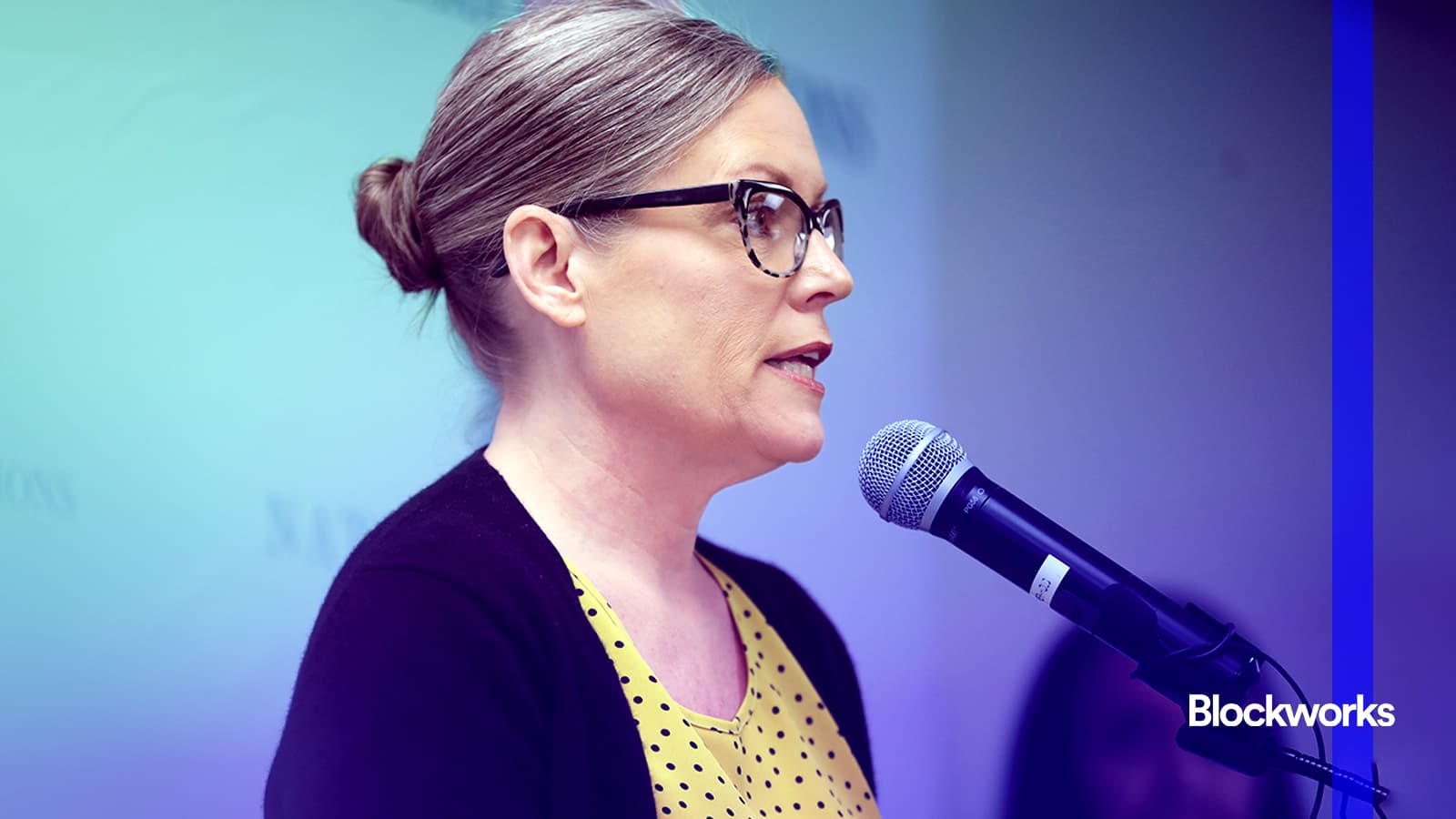
Arizona governor Katie Hobbs | Gage Skidmore/”Katie Hobbs (52667033692)” (CC license), modified by Blockworks
This is a segment from the Forward Guidance newsletter. To read full editions, subscribe.
Roads that people drive fast on sometimes get speed bumps. I live in Queens, so I’d know.
While pro-crypto developments have quickly proliferated this year, we’ve seen a couple legislative slowdowns in recent days.
Nine Democratic senators — Digital Assets Subcommittee ranking member Ruben Gallego among them — noted they would not vote for the current version of the Guiding and Establishing National Innovation for US Stablecoins (GENIUS) Act.
If it gets to the floor, that is.
Desired additions include “stronger provisions on anti-money laundering, foreign issuers, national security, preserving the safety and soundness of our financial system and accountability for those who don’t meet the act’s requirements,” they wrote in a Saturday statement.
This development made waves in the crypto community, especially considering the Senate Banking Committee advanced the bipartisan bill out of committee in March with an 18-6 vote that included five Democrats.
Gallego addressed the decision in a weekend X post:
Galaxy Digital research head Alex Thorn acknowledged that an updated draft of the bill was released on May 1. He argues in a note, however, that nearly all the changes made in recent weeks “make the bill stricter on stablecoin issuers when compared to the version the Senate Banking Committee voted on.”
Essentially endorsing the GENIUS Act, Thorn’s note explains that the crypto industry “both gets a viable pathway while also being reigned in, it protects the financial system, and it helps America succeed geopolitically and in the shifting global economy.”
Amanda Fischer, Better Markets policy director and an ex-SEC chief of staff, sees the situation a bit differently:
In the case there was trepidation given World Liberty Financial’s USD1, CoinFund president Christopher Perkins said: “Enough of the politics, let’s focus on doing what’s right for a change.”
With everyone and their crypto moms sharing their thoughts on X, the CEOs of Blockchain Association, Crypto Council for Innovation and the Digital Chamber also put in their two cents.
They noted being “grateful” for the “significant strides” the GENIUS Act has already made and urged the Senate to bring the bill to the floor for debate this week.
“We hope to see meaningful refinements to further ensure US leadership in digital finance,” Kristin Smith, Ji Kim and Cody Carbone wrote.
So we’ll see how this snag impacts the timeline for when this legislation could see the light of day. Here at Forward Guidance, Casey recently shared an update on the crypto market structure bill, too. We had previously heard a perhaps ambitious goal of having these passed by the end of the summer.
The Democratic senators did note in their GENIUS Act statement: “We recognize that the absence of regulation leaves consumers unprotected and vulnerable to predatory practices.”
So it would seem we’ll get there eventually.
Separately (but speaking of legislative speed bumps), Arizona governor Katie Hobbs vetoed a bill that would have allowed the state treasurer and retirement system to invest up to 10% of public funds in “virtual currency” like bitcoin.
Hobbs wrote in a letter to Senate President Warren Petersen: “Arizonans’ retirement funds are not the place for the state to try untested investments like virtual currency.”
Interestingly, it appears the Arizona State Retirement System owned nearly 67,000 shares of Michael Saylor-led bitcoin treasury company Strategy at the end of Q1 (worth ~$19 million at the time). It would seem the “need for more education” trope continues to be a cliché with merit.
Get the news in your inbox. Explore Blockworks newsletters:
- The Breakdown: Decoding crypto and the markets. Daily.
- 0xResearch: Alpha in your inbox. Think like an analyst.
