Is There a Silver Lining in DeFi Yield Inversion?
The current business of DeFi lending is largely limited to funding leverage for shorter-term, speculative trading, expert says
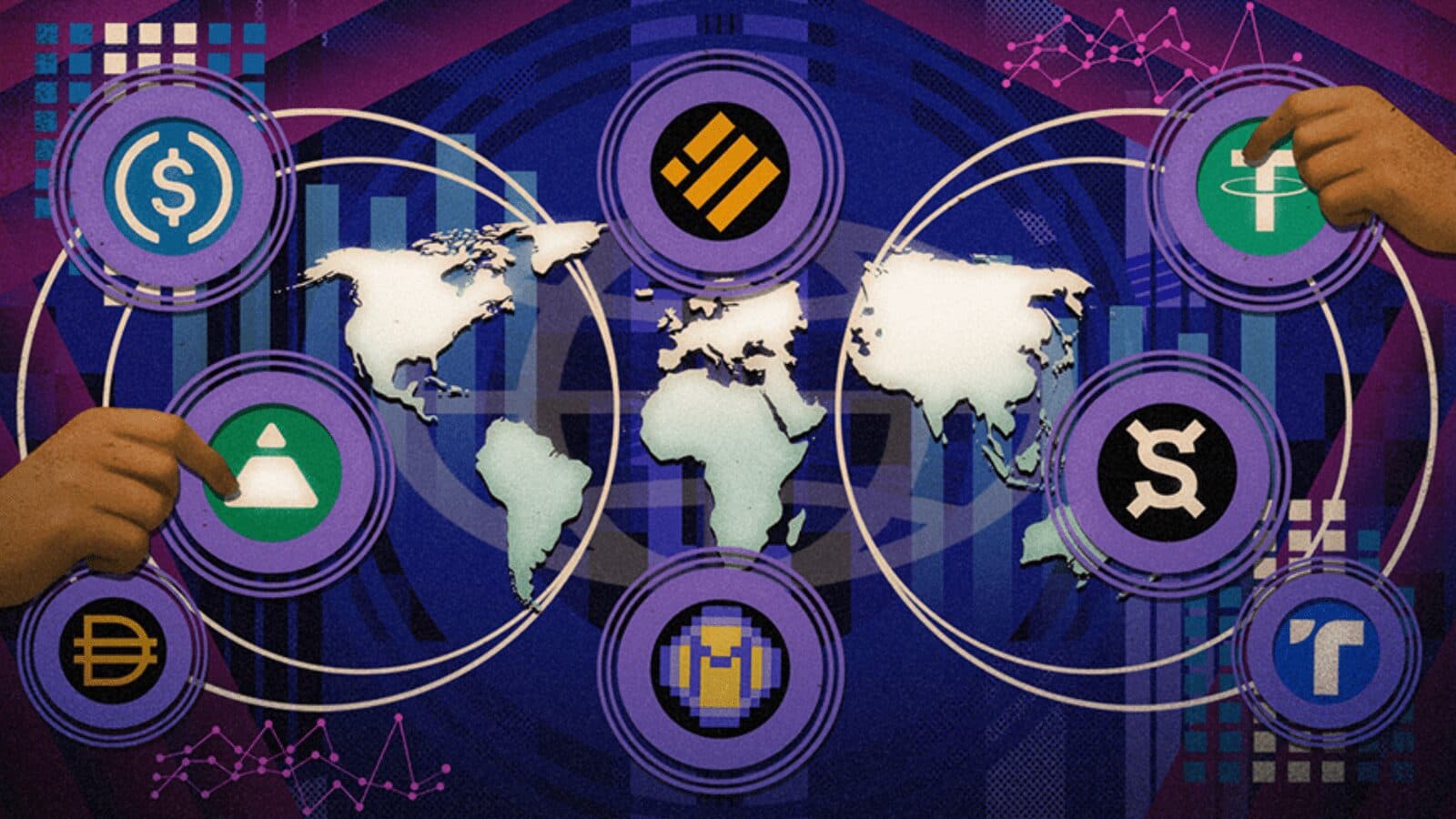
Blockworks Exclusive Art by Axel Rangel
- USD Coin interest rates are lower than four-week Treasury bills amid the crisis
- Despite a bear market, analysts think going forward the rates of DeFi will come closer to being in-line with, if not above, traditional markets
The DeFi space has seen a sharp drop off as the market continued to be battered following Celsius‘ liquidity crisis and the butterfly effect going on this week. The ability to generate low-risk yield in DeFi (decentralized finance) has fallen, followed by an outflow of liquidity, hitting stablecoins’ interest rates in the lending market.
USD Coin (USDC) interest rates on money market protocol Aave stand at 0.76% and on Compound at 0.24% as of Tuesday at 6:00 am ET — both lower than the latest 1.18% yield on four-week Treasury bill — reversing the scene from the bull market.
“Some people called it a utopian virtuous cycle. Others just called it greed,” analyst Ben Giovo wrote in Bankless’ newsletter. “The thing is: reflexivity cuts both ways.”
On-chain activity fell as prices dropped, which made deploying capital in DeFi less attractive as returns are lower, he explained in the post.
In May, the top four stablecoins market capitalization fell by nearly $7 billion as investors looked to redeem their tokens for cash. After all, why take the risk of holding stablecoins at all, if there’s nowhere to generate a safe yield in excess of the traditionally risk-free rate?
Yet, Giovo wasn’t overly concerned, arguing that “DeFi lenders are intersecting with meatspace businesses to get this jack out of its box.”
Dustin Teander, research analyst at Messari, agreed, thinking the lower deposit rates compared to traditional markets are due to a smaller serviceable market rather than a structural shortcoming of the protocols.
“At its present state, the business of DeFi lending is largely limited to funding shorter-term, speculative trading leverage,” he told Blockworks. During a bull market, borrowers were willing to pay up for leverage. But now, deleveraging is de rigueur.
“As we have seen prices decline, the demand for leverage and borrowing has significantly pulled back, ultimately lowering deposit rates in the process.”
Teander believes that going forward, the rates of DeFi will “come closer to being in-line, if not above, traditional markets” along with the expansion of serviceable markets. He highlighted protocols have already built lending businesses that are more integrated with traditional markets, such as MakerDAO’s real-world asset lending and Aave’s Arc protocol.
“Over time, this will open the door for DeFi deposit rates to decouple away from being purely driven by speculative trading demand and move to be more commerce-driven as seen in traditional markets,” he said.
Get the news in your inbox. Explore Blockworks newsletters:
- The Breakdown: Decoding crypto and the markets. Daily.
- 0xResearch: Alpha in your inbox. Think like an analyst.
