‘Lower the decibels’: House committee stablecoin markup devolves into shouting match
House Financial Services Committee members couldn’t find common ground on much Thursday as bipartisan cooperation on stablecoin legislation fell apart
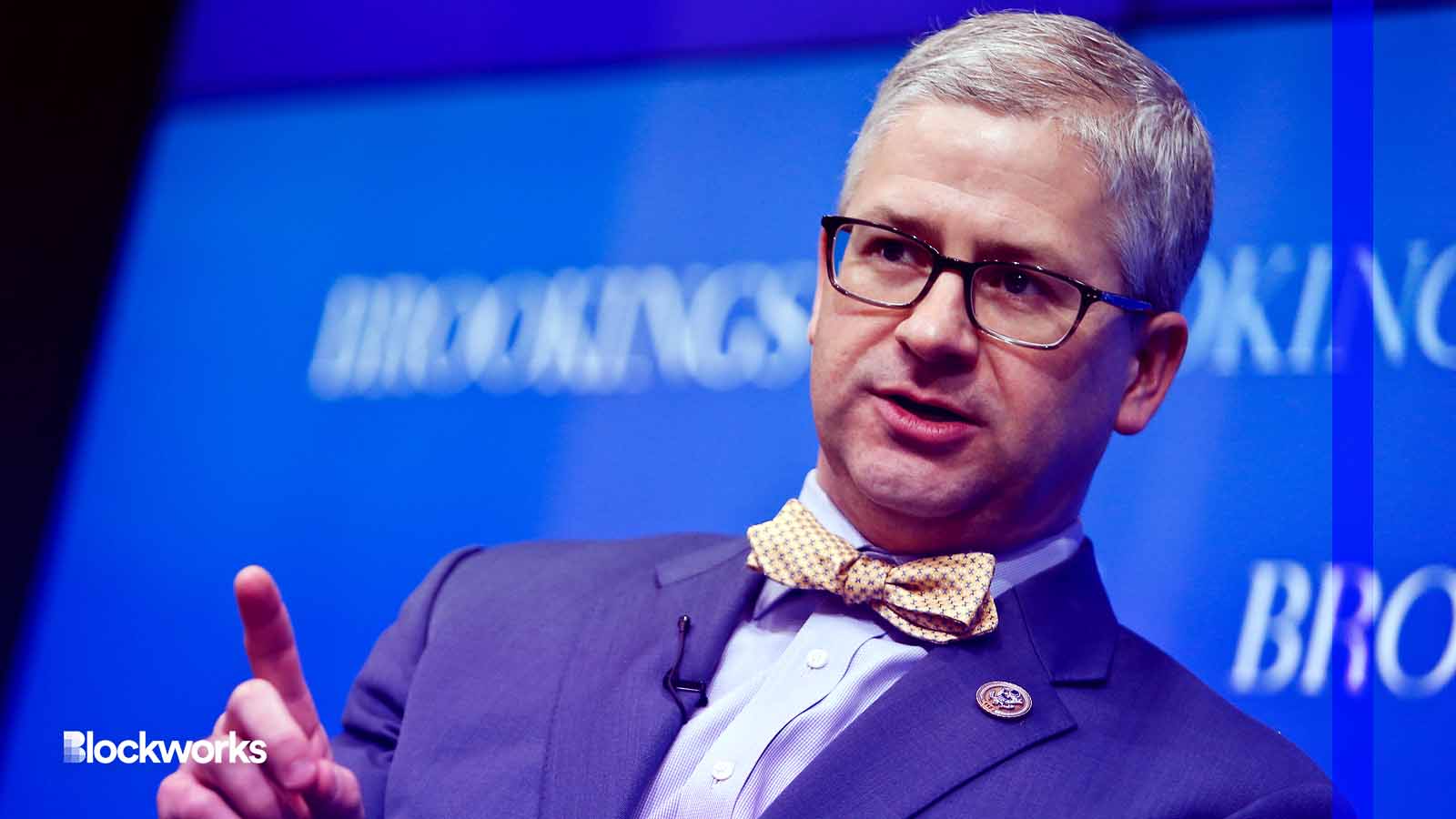
US Rep. Patrick McHenry | Paul Morigi for Brooking Institution (CC license)
A markup hearing in the House Financial Services Committee escalated to a full-blown clash over proposed stablecoin legislation between representatives Thursday morning.
After concluding a markup hearing Wednesday, committee members gathered again Thursday to consider six newly introduced bills. Legislators agreed that the main focus of the markup would be on the Clarity for Payment Stablecoins Act of 2023, introduced last week by Committee Chair Patrick McHenry, R-N.C., but party lines prevented any cooperation across the aisle.
Tensions were high to begin with, as Democrats made their dissatisfaction with the agenda clear.
“Today this committee is being forced by the extreme [“make America great again”] wing of the Republican party to address a trove of anti-ESG, anti-investor and wholly anti-capitalist bills,” ranking member Rep. Maxine Waters, D-Cali., said in her opening statement.
The committee room immediately reacted, with many people present shouting and expressing their outrage at Waters’ comments.
The chaos seems to stem from a bipartisan agreement that fell apart at the eleventh hour thanks to interference from the White House, according to McHenry.
“Today I had hoped to announce an agreement with the ranking member on stablecoins legislation,” McHenry said. “This will not be the case…It was the White House’s unwillingness to compromise that has once again brought that negotiation to a halt.”
White House director of the National Economic Council Lael Brainard raised concerns at the last minute about the bill and the lack of oversight the Federal Reserve has over state-regulated non-bank issuers, according to a person familiar with the matter. The White House then asked Rep. Waters to attempt to delay negotiations, the source alleged.
Waters proposed a vote to the committee asking the stablecoin bill not be considered, but she was overruled by Republicans. Committee Democrats then accused Republican members of trying to push the legislation through too quickly, not allowing Democrats the time to draft and propose amendments.
“We have had no meaningful opportunity to amend this bill and now we are being asked to do it on the fly,” Rep. Stephen Lynch, D-Mass., said in a raised voice. “The problem is this: Going forward now, we are being denied, in the minority, we don’t expect to win our amendments… but we do want to be heard.”
McHenry countered: He said the process is being appropriately followed, resulting in an extended debate over the procedure of the committee. McHenry requested his colleagues “lower the decibels” in the committee room.
“There are a number of [Democrats] who support [this] bill and a full bipartisan agreement fell through at the 23rd hour due to White House concerns with lack of [Federal Reserve] oversight over state and non-bank issuers,” Cody Carbone, vice president of policy at the Digital Chamber of Commerce, said on Twitter Thursday. “We’re confident this bipartisan bill still moves forward.”
Get the news in your inbox. Explore Blockworks newsletters:
- The Breakdown: Decoding crypto and the markets. Daily.
- 0xResearch: Alpha in your inbox. Think like an analyst.
