Grayscale Win Over SEC Might Not Change Much, Industry Watchers Say
A court ruling in favor of Grayscale does not necessarily offer a clear path for spot bitcoin ETF approval
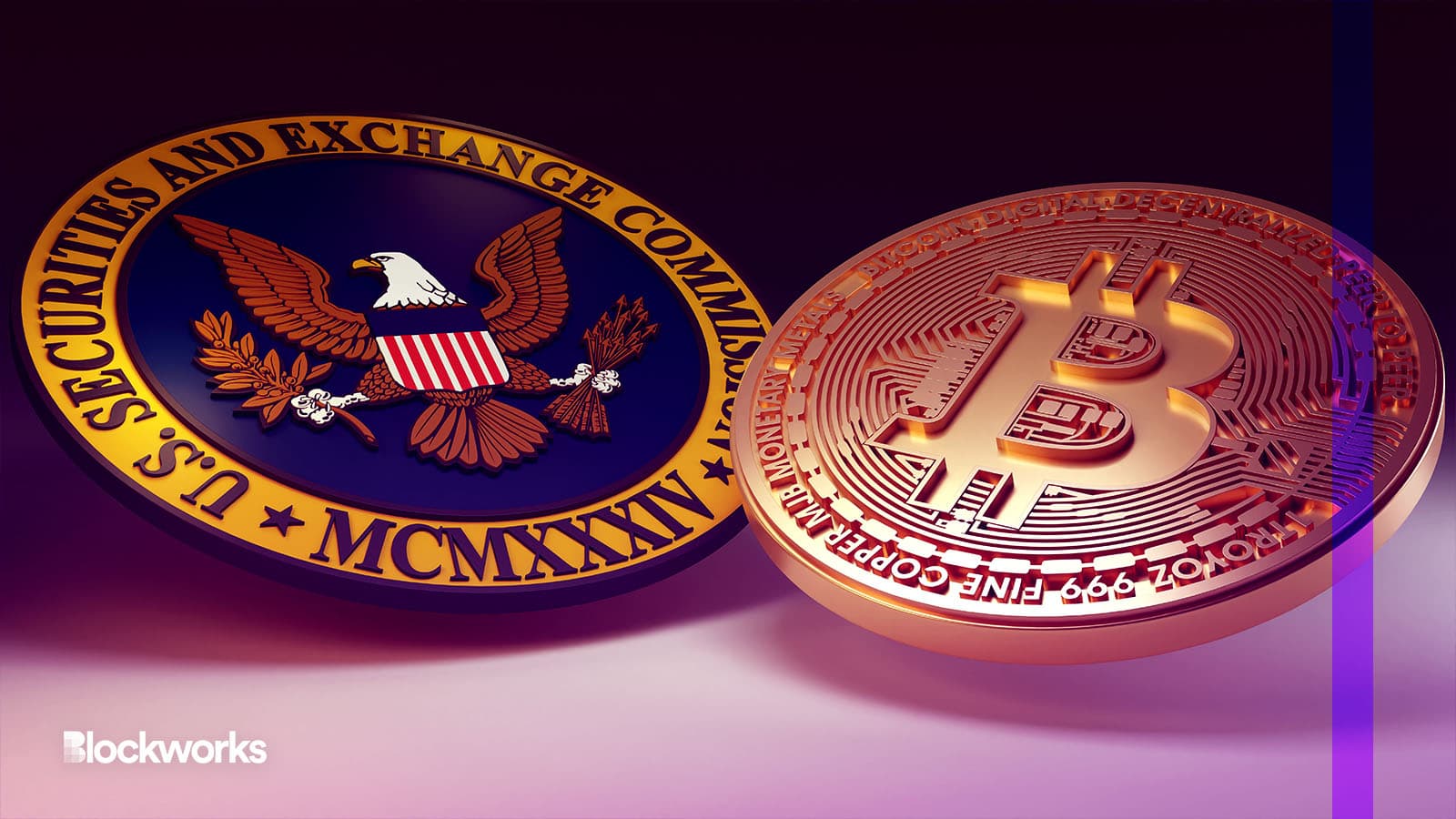
Source: Shutterstock / CryptoFX, modified by Blockworks
While some viewed Tuesday’s oral arguments in Grayscale Investment’s case against the SEC as a positive sign for the crypto fund manager, what exactly would happen in the case of a favorable Grayscale ruling is far from clear.
The crypto-focused asset manager’s case against the SEC argues the agency’s approval of ETFs investing in CME-traded bitcoin futures, but not proposed ETPs that invest in bitcoin directly — such as what the Grayscale Bitcoin Trust (GBTC) would convert to — is discriminatory.
The DC Circuit Court of Appeals has been asked to simply review the SEC’s denial of GBTC’s conversion to an ETF, according to Dave Nadig, financial futurist at analytics company VettaFi.
“That’s the very narrow scope here,” he told Blockworks. “It’s of course possible that the court finds the SEC erred in their denial completely, but it’s also possible they respond in a much more nuanced way.”
The oral arguments
Donald Verrilli Jr, a former US solicitor general who Grayscale hired last year as a legal strategist, said during Tuesday’s hearing that there’s a 99.9% correlation between prices in the bitcoin futures market and the spot bitcoin market.
But Emily Parise, an attorney representing the SEC, said in court Tuesday the causal relationship between the bitcoin futures and spot markets “is the key empirical question that we don’t know the answer to.”
Judge Neomi Rao, one of three judges hearing the case, sounded skeptical of the SEC’s argument.
“The commission says it’s an empirical question about which leads and lags, but they approved the futures product,” Rao said. “So doesn’t the commission necessarily have to have a view about the lead and lag?”
A Grayscale spokesperson said in a statement after the hearing Tuesday that the court asked “thoughtful, pointed questions.” CEO Michael Sonnenshein said, in an interview with CNBC, he was “encouraged” by the hearing.
The company representative added Grayscale is anticipating a final decision by the fourth quarter.
Bloomberg Intelligence ETF Analyst James Seyffart told Blockworks earlier this week, after the hearing, he believes a favorable ruling for Grayscale is 70% likely.
If Grayscale wins, what next?
Rao later asked Parise what the SEC would do in the case the court ruled in Grayscale’s favor, noting the possibilities of looking to approve bitcoin spot products or reversing the approval of futures products.
“I don’t want to pre-judge what the commission would do,” Parise told the judge. “But certainly if you disagreed with the commission’s position here and sent it back, the commission would have to think about the issues anew.”
Nadig said a Grayscale “win” could mean only that the courts tell the SEC its denial is insufficient. The agency could then potentially deny GBTC’s conversion, and other spot bitcoin ETF applications, via different reasoning.
“That remanding back to the SEC to ‘do something’ should actually have folks concerned,” Nadig added. “They could, for instance, simply reinterpret some existing piece of existing regulation to obviate both the existing futures-based ETFs and a spot bitcoin ETF.”
Seyffart agreed, noting a favorable decision for Grayscale could simply reset “the spot bitcoin ETF denial merry-go-round by issuing another denial with different language and/or reasoning.”
As for reversing the approval of bitcoin futures ETFs, issuers don’t seem worried.
ProShares became the first issuer in the US to launch a bitcoin futures ETF (BITO) in November 2021. Valkyrie Investments came to market with a similar product just days later. The ProShares and Valkyrie products have roughly $750 million and $23 assets under management, respectively, according to ETF.com.
Valkyrie CEO Leah Wald told Blockworks she does not see the SEC reversing the approval of bitcoin futures ETFs as a possibility.
A ProShares spokesperson did not comment on what impact the court ruling could have on bitcoin futures ETFs, but said in an email that BITO has tracked the performance of spot bitcoin very closely since its launch.
“We remain focused on providing investors with innovative solutions,” the ProShares representative added.
A flood of resubmissions?
Josh Olszewicz, Valkyrie’s head of research, said Grayscale would most likely have to resubmit its spot ETF application if it wins the case.
Other spot ETF applications by other issuers will likely be submitted as well, he added. The SEC has rejected a bunch of spot bitcoin ETF submissions in recent years, including one from Valkyrie.
Analysts told Blockworks late last year that high crypto market volatility spurred by now-felled FTX’s struggles further dimmed the possibility of a spot bitcoin ETF approval.
Nadig said if new SEC guidance about exactly what the regulator needs to see in a spot bitcoin ETF spurs a slew of refilings, Grayscale could be at a disadvantage.
“I actually think GBTC conversion would lag new launches,” he added.
Get the news in your inbox. Explore Blockworks newsletters:
- The Breakdown: Decoding crypto and the markets. Daily.
- 0xResearch: Alpha in your inbox. Think like an analyst.
