Gone Crypto: From US Attorney’s Office to Bitwise General Counsel
As the crypto space evolves, regulation for the industry is paramount, but it has to be done in a correct way, General Counsel and CCO of Bitwise Katherine Dowling said.
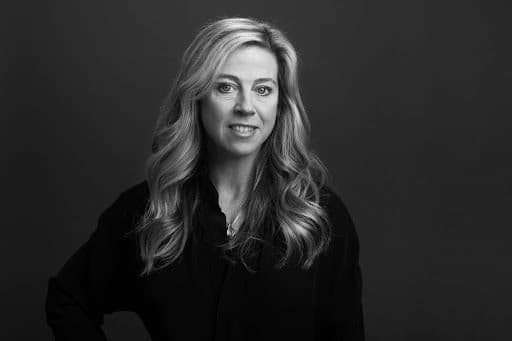
General Counsel and CCO of Bitwise Katherine Dowling
- “Every day there’s an evolution for crypto, there’s so much going on in this space,” she said
- “If you have too much regulation, it’s the iron fist that hurts growth and development and sends it off shore which isn’t good for a number of reasons,” she said
Katherine Dowling is a Harvard Law School graduate with an extensive financial background from covering private equity law to prosecuting economic crimes for the US Attorney’s Office. In recent months, Dowling has “gone crypto” and taken the role of general counsel and chief compliance officer for Bitwise Asset Management.
Bitwise created the world’s first cryptocurrency index fund, the Bitwise 10 Crypto Index Fund, in 2017 and provides exposure into the crypto asset space. Simply put, Bitwise is in crypto with asset management and financial ties, according to Dowling.
Prior to joining Bitwise, Dowling was heavily involved in regulating an array of financial themes.
For a little over a decade, she worked in the Economic Crimes Unit as the assistant US attorney to the US Attorney’s Office. There she covered a realm of economic crimes, commonly known as white-collar crimes from insider trading and Ponzi schemes to health care fraud and identity theft, she said.
“My last case before I left was an insider trading case that was later taken up by the Supreme Court. I was able to bring my then five-year-old to my closing arguments for the case,” Dowling said. Then three years later, after she had left the US Attorney’s Office, she and her son attended the Supreme Court hearing of that case as a guest of Ruth Bader Ginsburg who asked the opening question.
After that, she was recruited into private equity and worked in finance again. From there, she started her own fund and raised a $266 million fund one for Luminate Capital and vested that into a number of B2B software companies. After fund one, Dowling departed and went to an asset management firm and while she was at that firm, she was headhunted for Bitwise.
Dowling knew the headhunter personally, so she said she took the call and listened to what they had to say. “I’ve always been fascinated by crypto and a good friend of mine from the US Attorney’s Office also went that direction,” Dowling added. She was interested in getting in the space with Bitwise because it “opens access to crypto investing to a number of individuals who are not as easily accessible,” she said.
“Part of the market can jump right in, but there’s a certain aspect of savviness you need to access crypto directly,” Dowling said. “Our funds allow diversification and a professionally managed solution that creates an avenue for access in a traditional instrument that might not otherwise be available.”
Dowling’s regulation regards
Dowling said she sees crypto experiencing a breakthrough moment. “Every day there’s an evolution for crypto, there’s so much going on in this space,” she said. But as the space evolves, regulation for the industry is paramount, but it has to be done in a correct way, she said.
“If you have too much regulation, it’s the iron fist that hurts growth and development and sends it offshore which isn’t good for a number of reasons,” she said. The US economic growth would be impeded by moving crypto companies offshore and could also potentially create a national security issue.
“You want to make sure that the regulations are correct and understand businesses,” she said. “If you have folks who want to ‘do right,’ they will spend a fortune figuring out how to do it right or they just won’t do it in the US because they don’t want to face penalties for their efforts,” she added.
There’s a lack of clarity right now of who specifically is regulating crypto-based businesses, how they are regulating them and the definitions they use, she said. Dowling hopes in her new role she can help Bitwise and the crypto space reach a partnership with others where the regulatory work provides clarity and fairness for all sides involved.
“We’re looking for opportunities to partner and work with others toward that common goal. And other businesses are trying to do the same thing,” she said.
Many crypto-based businesses are open to conversations with regulators, they just need to keep the dialogue open and help evolve the space, while strategizing and creating innovative products and infrastructure that’s good for all investors involved, Dowling said.
As the saying goes, a rising tide lifts all boats, she said.
Have your own Gone Crypto story to tell? Email us at [email protected].
