German Banking Giant’s Move into Crypto Highlights Growing Trend in Europe
The bank plans to focus on institutional clients at first
Source: Shutterstock
- Crypto custodial services were first brought under the purview of German financial regulators in January 2020
- European Union watchdogs are still in the process of drafting and implementing their own regulatory measures on digital assets
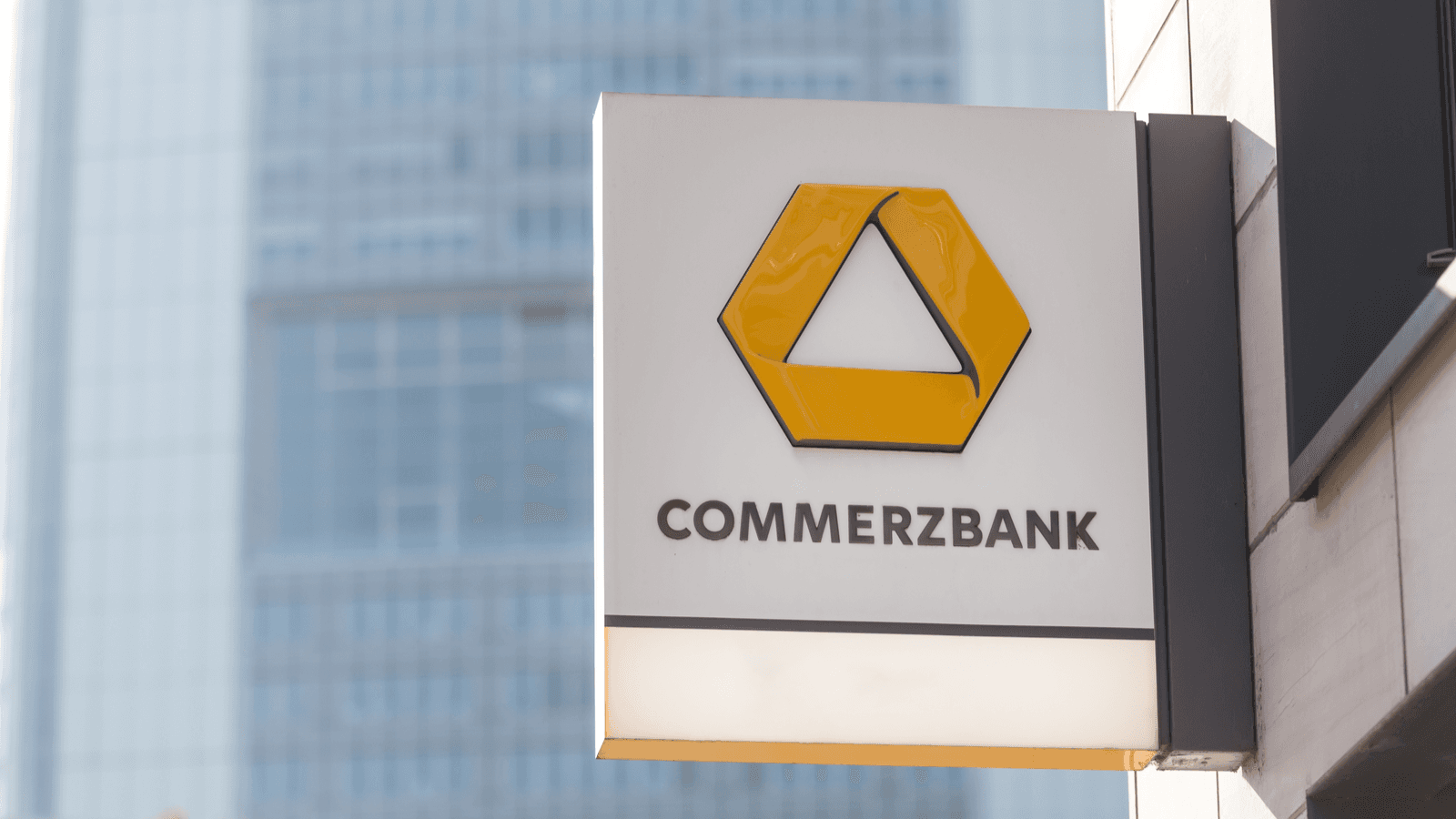
Commerzbank, Germany’s fourth-largest bank, has confirmed it wants to offer digital assets custody and exchange services to clients, joining a growing number of conservative banks in Europe moving into digital assets.
Bernd Reh, a Commerzbank senior spokesman, confirmed to local media Börsen-Zeitung last week that the bank applied for a license in January from BaFin, Germany’s Federal Financial Supervisory Authority, and that the bank would first focus on institutional customers. The banking giant currently has 70,000 corporate and institutional clients worldwide.
“Where traditional and large banks until very recently have seen crypto as competition and shied away from it, we now start to see adoption even from some of the most conservative players in the banking field,” Mikkel Morch, executive director at crypto hedge fund ARK36, said. Commerzbank, which had some 541 billion euros ($583 billion) under management in late 2021 according to its latest financial statement, has been working on several blockchain projects since 2018.
In January 2020, Germany introduced crypto custody into the German Banking Act as a new financial service. “Crypto custody business is also subject to the notice issued by [the German central bank] Deutsche Bundesbank on the granting of authorization to provide financial services,” BaFin says on its website dedicated to crypto licensing.
The regulator is also cracking down on unauthorized activity. Recently, the supervisory authority opened investigations into several crypto services companies that have not been granted authorization to operate in the country. If found guilty, individuals involved could face up to five years in prison.
Authorities and legislators in the European Union are still in the process of building regulatory regimes, but some, such as those in Germany and Portugal, already have registration procedures in place.
And traditional banks are increasingly applying for crypto licenses in Europe, including in Portugal, where Bison Bank last week became the first authorized bank to receive a crypto license from the country’s central bank.
Last July, Coinbase was awarded Germany’s first crypto license. A report by Coincub last week ranked Germany as the most crypto-friendly country.
Added Morch: “These moves can be interpreted as the beginnings of a race within the traditional banking field to gain a competitive edge by being the first entity in its local market to offer crypto services.”
As a result, crypto adoption will increase, he believes, and it will be a mainstream financial service – instead of the “next big thing.”
Get the news in your inbox. Explore Blockworks newsletters:
- The Breakdown: Decoding crypto and the markets. Daily.
- 0xResearch: Alpha in your inbox. Think like an analyst.