Fusaka upgrade on track as devs eye December mainnet fork
All Core Devs confirmed testnet deployments and Holesky shutdown on schedule
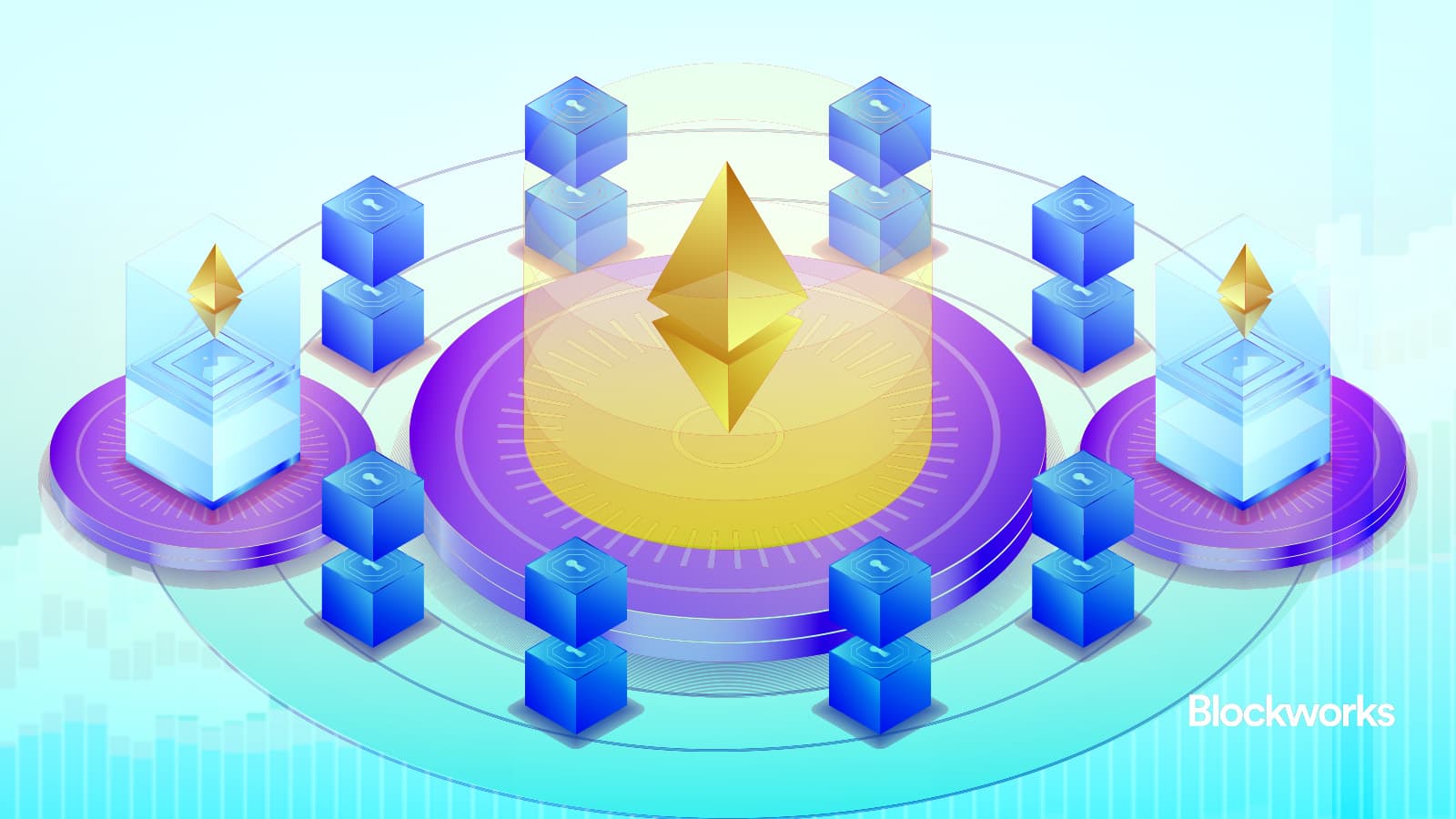
imajinajib/Shutterstock and Adobe modified by Blockworks
Ethereum developers are moving ahead with a Dec. 3 mainnet fork for the long-awaited Fusaka upgrade, following strong client team support during Thursday’s All Core Devs (ACD) call.
The timeline remains technically conditional on Hoodie testnet finalization next week, but with no major issues reported on the first two testnets and all client teams signaling approval, the dates are effectively locked in.
Release candidates for mainnet clients are expected Nov. 3, giving node operators one month to make the switch.
The progression to Blob Parameter Override (BPO), will get a schedule tweak, however.
“BPO one and two on December 9 and then on January 7, respectively,” Alex Stokes said on the call. “We did a temperature check last call, we’re generally on board, so I wanted to do the same thing here.” All major client teams present gave a green light.
Blobs were introduced with Dencun (March 2024), specifically through EIP-4844 (proto-danksharding), but the BPO staging is a new mechanism being introduced with Fusaka to dynamically adjust blob parameters post-fork, unlike Dencun’s static blob configuration.
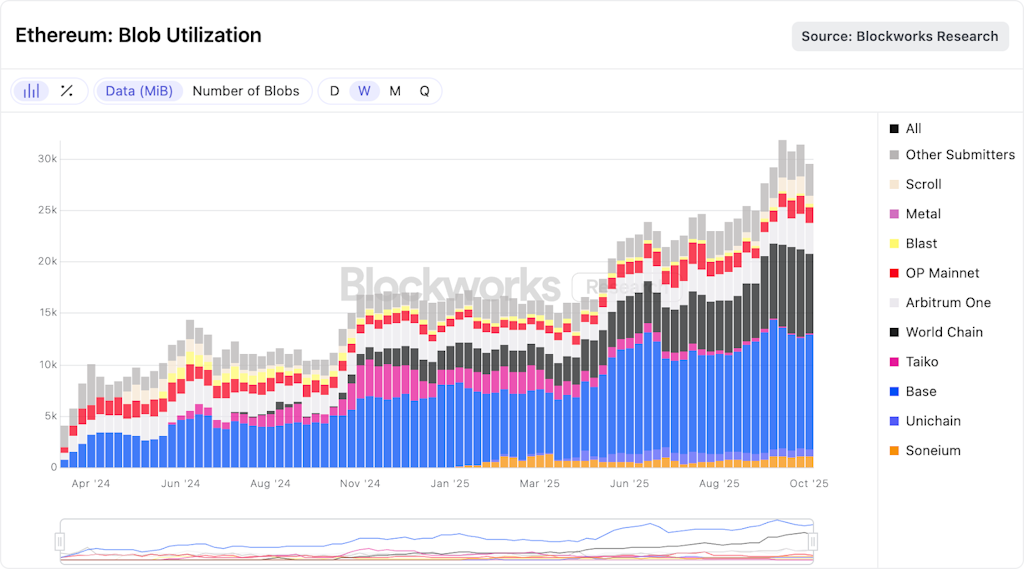 Blob utilization is one Ethereum metric that’s been up and to the right | Source: Blockworks Research
The advantage of BPOs is that they lower risk, Gabriel Trintinalia noted, an engineer on the Consensys team that maintains LFDT’s Besu client.
“It lets us grow blob capacity step by step, based on real network data and performance,” Trintinalia told Blockworks. “And of course, in the unlikely event that we observe any performance degradation, BPOs can be used to safely reduce the number of blobs as needed.”
The Sepolia fork continues to progress smoothly.
“We have 99% [validator participation]. Every single combination is just fine now. We rolled out the latest stage and that solved all of our bugs,” said Barnabas Busa, who coordinates Ethereum testnets. “Everything went smooth.”
The next Sepolia BPO activation is scheduled in four days, ahead of the Hoodi fork. If those proceed as planned, mainnet confirmation is expected during next week’s call.
“Client teams have done extensive work to ensure the network can handle the blob increase unlocked by PeerDas, including multiple benchmarks, bandwidth analysis, instability simulations, and more.”
Holesky, which has already seen its last fork with Fusaka testing, will be deprecated next week. “We’ll be officially shutting it off next Friday,” Busa said.
Fusaka introduces Peer Data Availability Sampling (PeerDAS), allowing nodes to verify data through sampling instead of full downloads. Infrastructure providers expect PeerDAS to lower costs by more than 90%, paving the way for lower blob fees, cheaper rollup operations, and faster oracle updates across the L2 ecosystem.
Formal confirmation of the fork date is expected soon after Hoodi’s fork activation on Oct. 28, barring any unforeseen issues.
Get the news in your inbox. Explore Blockworks newsletters:
- The Breakdown: Decoding crypto and the markets. Daily.
- 0xResearch: Alpha in your inbox. Think like an analyst.