House expected to vote on bipartisan crypto market structure bill Wednesday
The Financial Innovation and Technology for the 21st Century Act, known as the FIT21 Act, is expected to head to the floor for a vote in the House in the afternoon on May 22
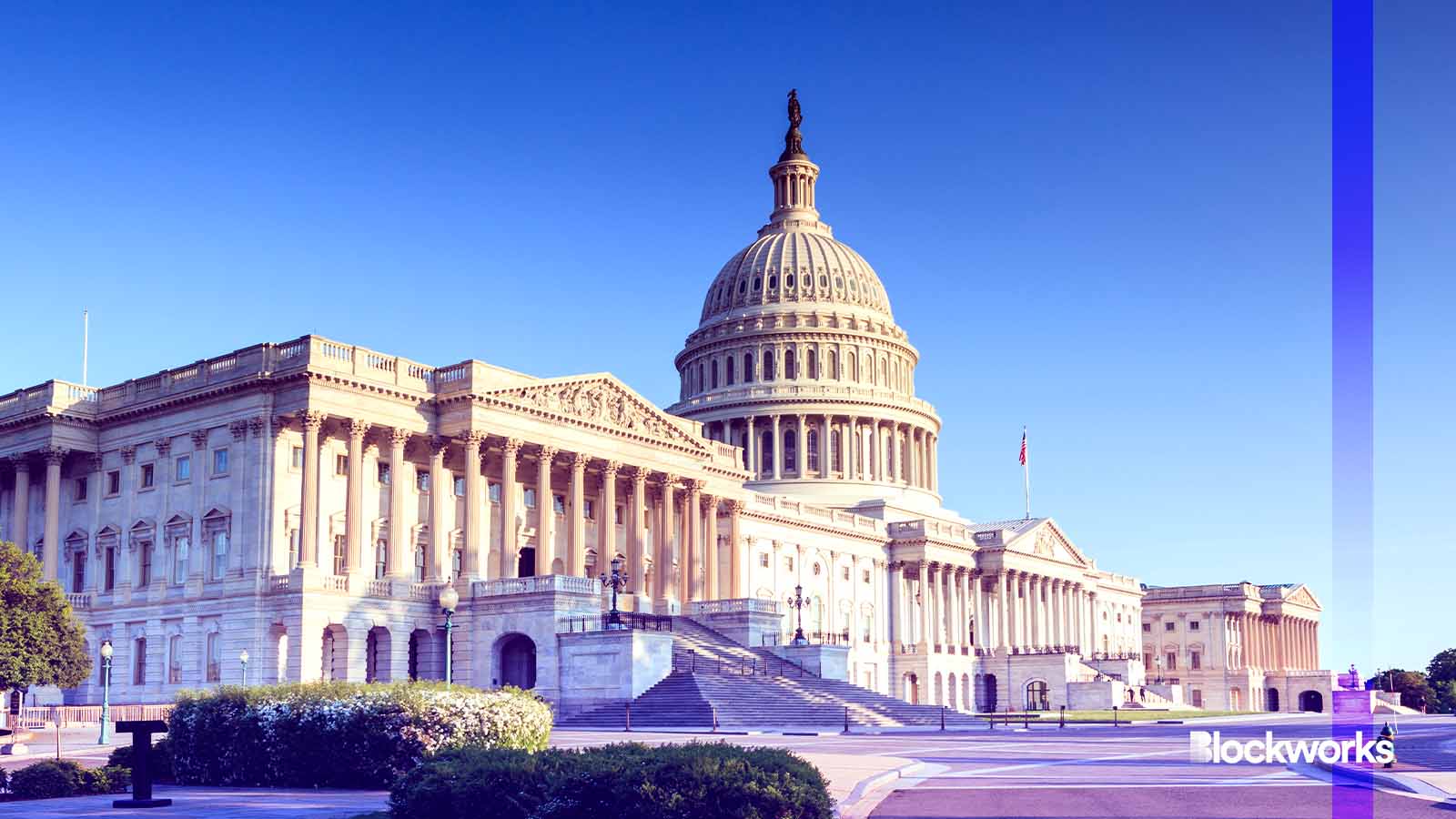
Cvandyke/Shutterstock modified by Blockworks
The House of Representatives is scheduled to vote on a landmark cryptocurrency market structure bill this week.
The Financial Innovation and Technology for the 21st Century Act, known as the FIT21 Act, is expected to head to the floor for a vote in the House on May 22, according to a person familiar with the matter.
FIT21 advanced through the House Agriculture and Financial Services Committees last summer before getting the greenlight from the Rules Committee to advance to a vote earlier this month. The bipartisan legislation has 11 co-sponsors, including Democrats Henry Cuellar of Texas, Wiley Nickel of North Carolina and Ritchie Torres of New York.
The proposed market structure law establishes joint rulemaking powers between the Securities and Exchange Commission (SEC) and the Commodity Futures Trading Commission (CFTC). Notably, the bill grants the latter control over digital commodities markets, including exchanges and broker-dealers.
The legislation also clarifies how digital assets are classified, stating that the existence of an investment contract alone does not make a token a security, a distinction that could impact several pending legal disputes between token issuers and crypto exchanges and the SEC.
About 70% of all crypto tokens should be classified as commodities rather than securities, the co-sponsors wrote in a fact sheet published alongside the bill.
While FIT21 managed to survive markup, there has been pushback from some House Democrats, who argue the legislation goes too far to limit SEC power.
Rep. Jonathan Jackson, D-Ill., last summer proposed an amendment — which never passed — to strike a section of the bill that allows firms who have filed a “notice of intent to register” to be exempt from certain enforcement actions from the SEC.
“Allowing for ‘intent to register’ before those regulations are completed would be an absolute injustice to our constituents and retail investors,” Jackson said. “This industry needs to be under full-force regulation and oversight.”
Agriculture Committee Chair Glenn Thompson, R-Penn., countered that the “notice of intent” allows firms who meet requirements for treatment of customer funds, disclosures and records to operate limitedly while the potentially years-long registration approval process plays out. The bill also allows the Commodity and Futures Trading Commission to issue enforcement actions against firms who have completed the “notice of intent” process.
The Republican majority in the House however, coupled with the expected support of at least some Democrats, mean the bill is likely to pass and make it to the Senate, where its fate is less clear.
The expected House vote comes days after the US Senate passed another crypto-focused piece of legislation Thursday: Joint Resolution 109, which seeks to invalidate the SEC’s Staff Accounting Bulletin (SAB) 121.
The resolution now heads to the President’s desk. The Biden Administration said earlier this month the President will veto the legislation.
Get the news in your inbox. Explore Blockworks newsletters:
- The Breakdown: Decoding crypto and the markets. Daily.
- 0xResearch: Alpha in your inbox. Think like an analyst.