Federal Reserve Policy Is Shaking Confidence in America’s Banks
About half of Americans say they are afraid to keep their money in the bank
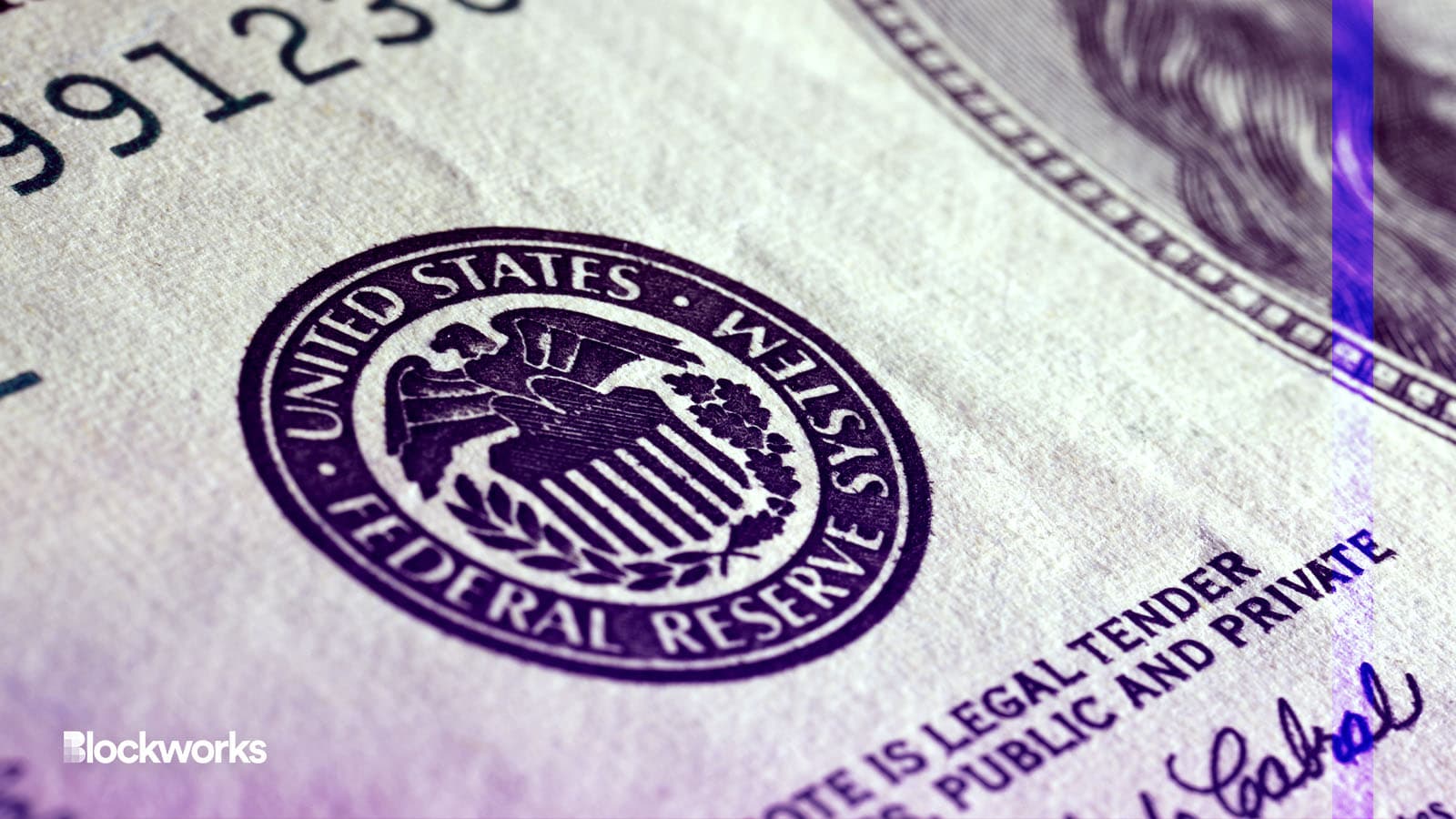
Adam Dodd/Shutterstock modified by Blockworks
The topic of Federal Reserve monetary policy rates pretty highly on the yawn meter of most Americans. Still, the direct impact on everyday lives, whether people know it or not, is difficult to overstate.
Central bank interest rates are usually hiked for the purpose of slowing inflation. Without getting into money supply issues and other complexities, it boils down to a pretty simple concept: as borrowing money becomes more expensive, people borrow less and therefore spend less.
Thus, prices on goods, services, real estate and so forth should theoretically fall with fading demand as rates increase.
In an ongoing effort to tamp down historic inflation, the Federal Reserve has continuously pushed rates upward over the past year, only recently hinting at slowing down.
One side effect of multiple hikes is potential economic damage that can be seen in a steady string of failures — as demonstrated by the current bank crisis — when interest rates become too expensive for those left holding the debt bag.
On a recent On the Margin podcast, guest Mark Yusko, founder of Morgan Creek Capital Management, spoke to Blockworks about his thoughts on the current monetary predicament. He suggests the economic fallout is not an accidental side effect, but is instead deliberate — and highly destructive.
“The Fed has destroyed a whole bunch of people’s lives.”
“Think about the shareholders of First Republic. Think about the shareholders of Signature Bank, of Silvergate Bank.”
“Think about the people that worked there,” Yusko says.
At a recent meeting, he spoke to First Republic Bank shareholders after its collapse. One told him, “I gotta move. I gotta sell my house.”
Part of a plan
Yusko believes the damage wrought upon regional banks in recent months was intentional, to “funnel the money up and foment fear in the banking system.”
Yusko mentions a statistic that points to the lack of confidence that has spread through the system, with about half of Americans saying they are now afraid to have their money in the bank, according to a recent Gallup survey.
“It just seems all too convenient. Kind of like in the global financial crisis. JPMorgan et al got this big bailout.” On the other hand, he says, “little Washington Mutual” was left to collapse, only to be happily scooped up by recently-rescued JPMorgan for a bargain.
“And then who bought [First Republic] on Sunday night? Shocking. JPMorgan.”
This is all part of a plan, Yusko says, to make it easier for the government to move toward CBDCs. Public trust in smaller banks is diminishing while larger entities are busily absorbing them as they fail.
CBDCs, or central bank digital currencies have seen significant criticism for potentially being oppressive tools of surveillance and control. In recent days, both North Carolina and Florida passed legislation to effectively ban them.
Like pushing someone off a cliff
JPMorgan’s acquisition of First Republic Bank is an example that Yusko calls an “assassination” whereby the assailant got to “pick whatever they wanted off the body” in the aftermath.
“It makes me angry to think about,” he says. Shareholders were wiped out, “like pushing someone off a cliff.”
“I’m not really happy about what’s happening.”
Podcast host Mike Ippolito disagrees with Yusko about the nature of recent Fed behavior, “I don’t think this is a plan for bank consolidation.”
“I think the Fed is really concerned about interest rates and price stability, and they’re trying to do what they think is best. Now, there’s a lot of debate about, are they actually doing what’s best?”
“Even if you have the right intentions and you’re trying to restore price stability,” Ippolito says, “Are you trying to use a chainsaw for a butter knife?”
“It’s too much.”
“There are better ways to do it.”
Get the news in your inbox. Explore Blockworks newsletters:
- The Breakdown: Decoding crypto and the markets. Daily.
- 0xResearch: Alpha in your inbox. Think like an analyst.
