BlackRock, Fidelity Back USDC Issuer in $400M Raise
Circle will use the funding “to drive the next evolution of Circle’s growth”
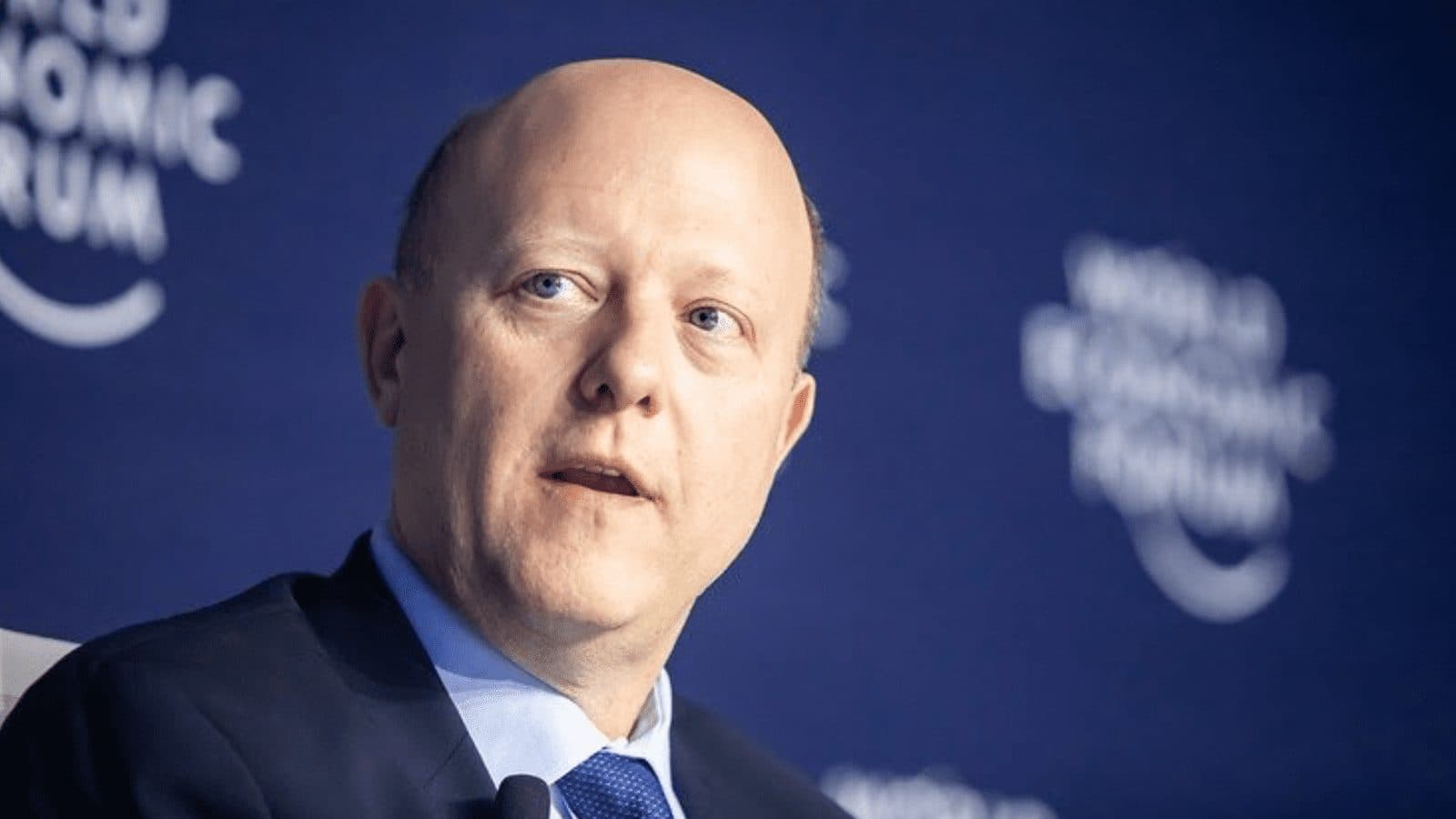
Circle CEO Jeremy Allaire | Source: World Economic Forum
- Circle’s latest funding round is expected to close in the second quarter
- The raise comes as Congress starts to take a more critical look at the stablecoin industry
Circle, one half of the Centre Consortium behind stablecoin USDC, has announced a $400 million fundraise from firms including BlackRock, Fidelity Management and Research and Fin Capital.
BlackRock and Circle also revealed a new strategic partnership to focus on exploring capital market applications for USDC, the companies said. USDC, the second largest stablecoin in the world, currently has over $50 billion in circulation, Circle said.
“Dollar digital currencies like USDC are fueling a global economic transformation, and Circle’s technology infrastructure sits at the center of that change,” Jeremy Allaire, co-founder and CEO of Circle, said in a statement. “This funding round will drive the next evolution of Circle’s growth.”
The latest funding round comes as Circle executives continue to publicly plead with US regulators, who are starting to take a closer look at the rapidly growing stablecoin industry. Dante Disparte, chief strategy officer and head of global policy at Circle, appeared before the Senate Banking Committee in December to defend USDC’s place in the global financial landscape.
Stablecoins play an essential role in deploying smart contracts, Disparte told senators, and will continue to be used in a host of industries. Without stablecoins, blockchain technology’s impact on innovation is limited, he noted.
“An open internet dollar functionally becomes one of the only missing links to enable [smart contracts] at scale,” Disparte said during the hearing. “We’re in the opening innings and when people say we have failed the financial inclusion test, the presumption is that the stablecoin has agency just as the dollar, and both are patently wrong.”
Circle’s General Counsel Flavia Naves has also been vocal about the need to create regulation that allows for innovation, arguing that the proposed rule to only allow banks to issue stablecoins will effectively end the industry.
“Trying to place the existing constructs of traditional banks on stablecoin issuers may have the effect of simply banning the entire industry altogether,” Naves said during a virtual panel discussion with Merkle Science in December. “I am sure this is not the desired intent of the regulators, but it may just go in that direction.”
BlackRock’s participation in the funding round and strategic partnership is “particularly gratifying,” Allaire said, and will help to scale Circle as stablecoins start to play a larger role in the global economy.
BlackRock hired between 12 and 20 registered lobbyists and spent between about $1.8 and $2.7 million in each of the past five years to lobby the federal government, according to data from OpenSecrets.
Get the news in your inbox. Explore Blockworks newsletters:
- The Breakdown: Decoding crypto and the markets. Daily.
- 0xResearch: Alpha in your inbox. Think like an analyst.
