Big takeaways from Bessent’s first quarterly refunding announcement
All eyes were on Bessent to see if he would change the composition of issuance back toward normalization

christianthiel.net/Shutterstock modified by Blockworks
This is a segment from the Forward Guidance newsletter. To read full editions, subscribe.
With the recent confirmation of Scott Bessent as US Treasury Secretary, we’ve received the first quarterly refunding announcement under his leadership.
Much has been written in the past year about the potential politicization of the composition of debt being issued by Treasury and how that could impact markets.
As seen below, the proportion of bills that have been issued compared to coupons has skyrocketed. Historically, this type of maneuver has been kept for times of crisis when Treasury needs to raise a lot of money very quickly, with little impact to duration.
However, this has occurred in a regime of exceptional economic strength.
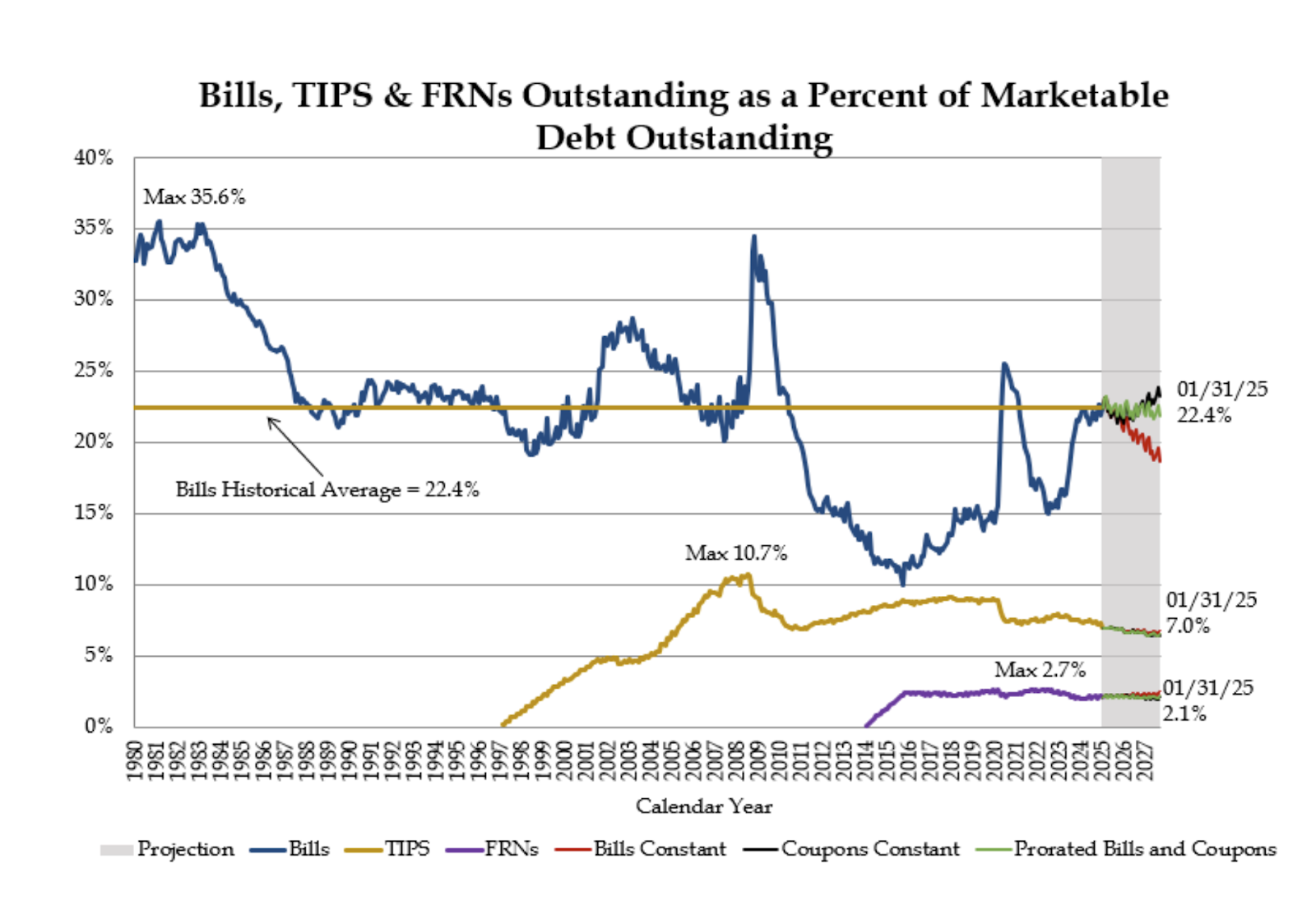
Before being nominated as secretary, Bessent was publicly critical of this strategy. He discussed his belief that it was essential for the composition of issued debt to get normalized — meaning an increase in proportion of longer-duration debt being issued.
Though admirable, this strategy would be very precarious due to the lack of structural demand for long-duration bonds without the Fed buying for QE, foreign central banks becoming net sellers of long-term debt, and concerns about fiscal deficits increasing.
With that context, all eyes were on this week’s QRA to see whether Bessent would change the composition of issuance back toward normalization.
As seen in the chart below of the estimate for borrowing for the next two quarters, Bessent has toed the line and kept the policy approach he criticized Yellen for:
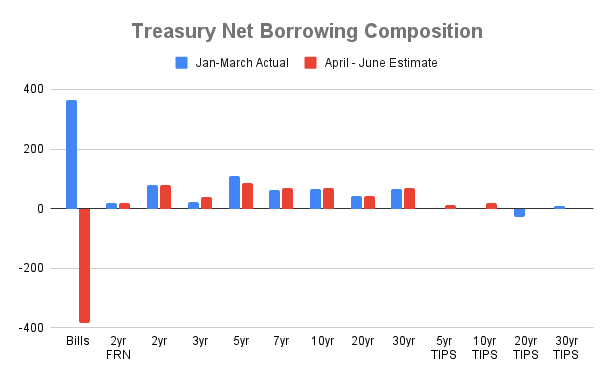
What’s even more interesting is the commitment to the forward guidance of this issuance that was introduced last year, guidance the Treasury decided to keep despite recommendations from TBAC to remove it:
“In discussing issuance recommendations, the committee uniformly encouraged Treasury to consider removing or modifying the forward guidance on nominal coupon and FRN auction sizes that has been in the refunding statement for the past four quarters. Some members preferred dropping the language altogether to reflect the uncertain outlook, though the majority preferred moderating the language at this meeting.”
Despite this recommendation, Treasury kept the following commitment:
“Based on current projected borrowing needs, Treasury anticipates maintaining nominal coupon and FRN auction sizes for at least the next several quarters.”
So what’s the takeaway? I’ll leave it with a meme:

Get the news in your inbox. Explore Blockworks newsletters:
- The Breakdown: Decoding crypto and the markets. Daily.
- 0xResearch: Alpha in your inbox. Think like an analyst.
