What’s behind ‘bearish’ altcoin action: Amberdata
Even before LIBRA, altcoins were having a rough start to the year

Artwork by Crystal Le
This is a segment from the Empire newsletter. To read full editions, subscribe.
Admittedly, it’s been a pretty bearish week for crypto, though an optimist can still find pockets of good news.
Amberdata’s Greg Magadini thinks the data out of the derivatives markets shows that options trading volume on Solana peaked around the inauguration last month which could imply that SOL hit its top.
“I think the bearish story within altcoins is that the supply of altcoins is essentially unlimited. And so we’re seeing so many new altcoins … every day there’s just kind of a new increase in the total altcoin float, which is completely opposed to the limited fixed supply of the bitcoin value proposition. And so I think that dynamic is hard to overcome,” Magadini explained.
The divide is simple and can be seen outside of crypto, too. It’s what Magadini would call the hard money narrative: Gold’s going up while commodities like coffee and cocoa become more expensive. Add in the discussions we’ve had about a potential AI bubble and, well, the bitcoin vs. crypto discussion makes a bit more sense.
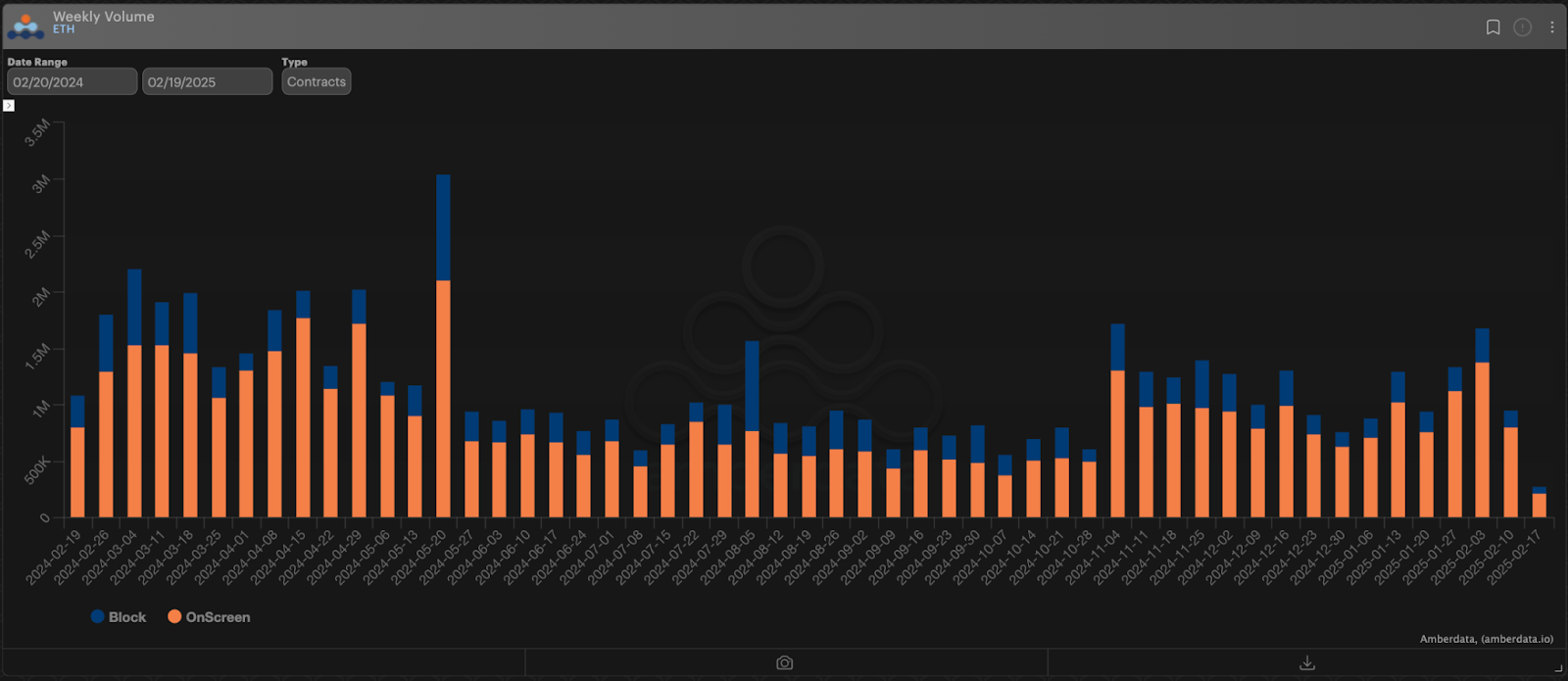 A look at ETH’s block trades courtesy of Amberdata
Bitcoin, in this case, is still the solid narrative. Everything’s going swimmingly right now and we’re all waiting to hear about a potential bitcoin reserve. For altcoins, which don’t have the same catalysts on the horizon, the picture is unfortunately more bearish.
This isn’t to say that bitcoin’s going to pop off though. Magadini thinks that we’ll continue to see it trade sideways, between $85,000 and $100,000 for the next two to three months. He told me this action is needed after the bullishness we saw going into the end of last year.
“I think during that hanging out period, bitcoin actually gains dominance. It’s a relatively strong asset. I think for the altcoin space, we’re getting a little bit of a flush out, and we’re really seeing that right now with SOL and ETH.”
“If we just look at the charts of ether and bitcoin [in terms of] the relative price, the fact that we had a huge spike lower for ether versus bitcoin is pretty rare because those are very correlated assets. The move that it had was a very volatile move, which is unusual. That was significant, that meant something. And we’re seeing the same thing with the SOL-BTC ratio, where it pretty much popped out at a local high on inauguration day and has just come down since,” he explained. His read is that it’s a sign of retail flow — or lack thereof.
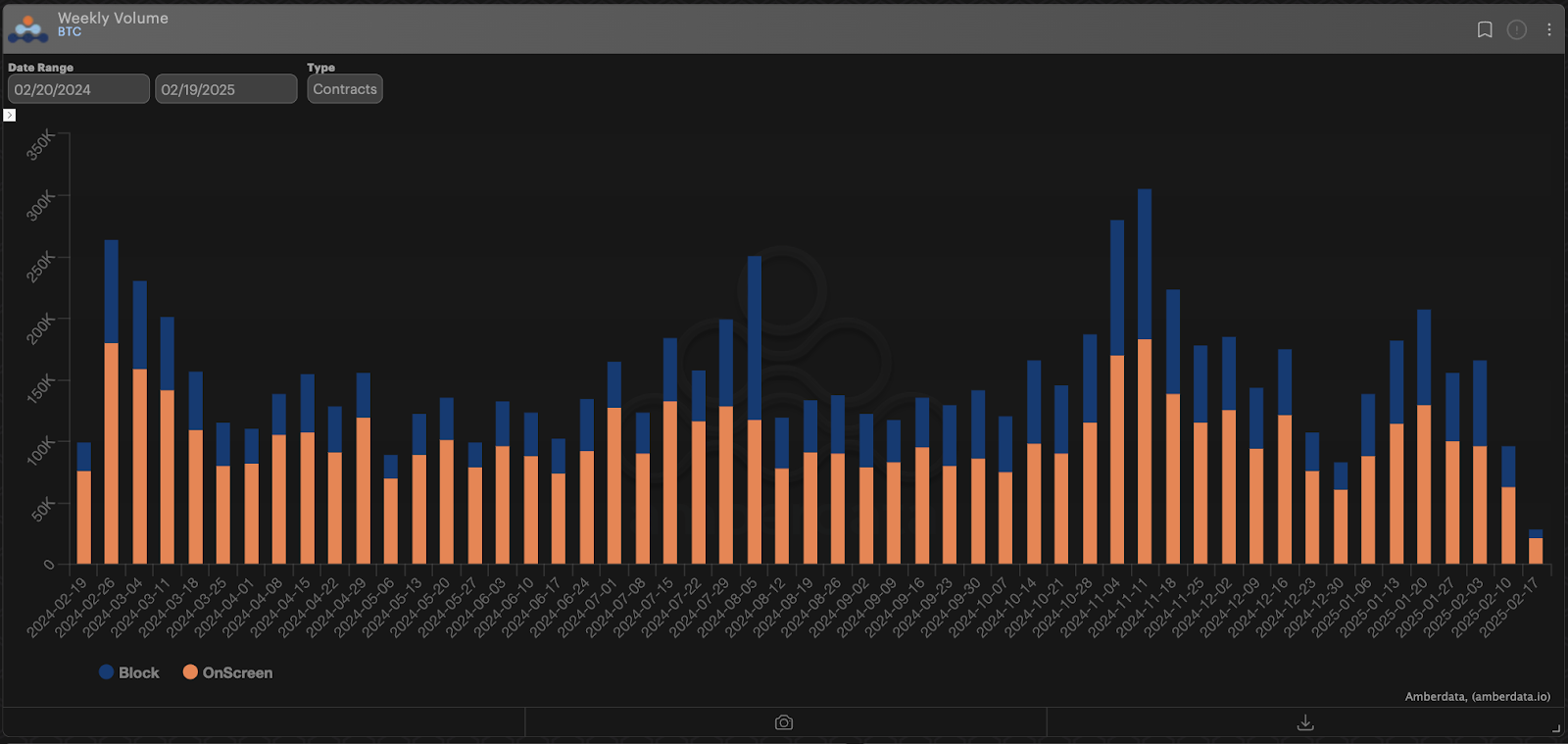 And bitcoin’s block trades courtesy of Amberdata
It’s not something to be terribly worried about, he added, but rather it’s a natural sign that we may be hitting the speculative phase because there aren’t fundamentals tied to many altcoins just yet.
But, hey, at least we don’t have to blame everything on memecoins…right?
Get the news in your inbox. Explore Blockworks newsletters:
- The Breakdown: Decoding crypto and the markets. Daily.
- 0xResearch: Alpha in your inbox. Think like an analyst.
