Friday charts: The many, many architects of AI
Throughout its billions of searches, Google’s goal has always been to train and hone its algorithms
Intellson/amiak/Shutterstock and Adobe modified by Blockworks
“By 2026, Google’s main product will not be search but AI.”
— Kevin Kelly, 2016
When Kevin Kelly met Larry Page at a party in 2002, he asked why anyone would invest in a company that offers its product for free: “I still don’t get it. There are so many search companies. Web search, for free? Where does that get you?”
Page’s response was both memorable and prophetic: “Oh, we’re really making an AI.”
That was two years before Facebook, three years before YouTube, five years before the iPhone and 20 years before ChatGPT.
For Kelly, it was an “aha” moment.
“Rather than use AI to make its search better,” he wrote in 2016, “Google is using search to make its AI better. Every time you type a query, click on a search-generated link, or create a link on the web, you are training the Google AI.”
Kelly was right about search engines — training AI would prove far more consequential than serving ads.
But from the perspective of 2025, we can make an even bigger claim: The true purpose of the entire internet was to train AI.
That, at least, is the view of Alex Tabarrok, who recently told Tyler Cowen that history will remember the internet primarily as the “agar culture for the growth of the AI” — i.e., the nutrient-rich petri dish whence it sprang.
“That’s why the internet’s important,” Cowen agreed. “We’re just beginning to realize this, right?”
“When we look back,” Tabarrok added, “we’ll think about… ‘What was the internet?’ Putting everything online was for the AI. It wasn’t for us. I don’t think anyone thought about that.”
Except Larry Page!
And maybe Page’s dad, a pioneer in AI research.
And also Page’s co-founder, Sergey Brin, the machine-learning expert so well-versed in AI that he’s contributed code to Google’s large language model, Gemini.
None of those three made the cover of Time Magazine as an “architect of AI” this week.
But they probably should have, because Google’s search engine did exactly what they intended it to.
“The ultimate search engine would understand everything on the web,” Page explained way back in 2000. “It would understand exactly what you wanted and give you the right thing and that’s obviously artificial intelligence; to be able to answer any question, because almost everything’s on the web.”
Who put it there? You did, of course.
“When you type ‘Easter Bunny’ into the image search bar,” Kelly wrote in 2016, “and then click on the most Easter Bunny-looking image, you are teaching the AI what an Easter Bunny looks like. Each of the three billion queries that Google conducts each day tutors the deep learning AI over and over again.”
We’re now up to 16 billion Google queries per day!
So, really you should be on the cover of Time Magazine this week — for the many years of important Googling you’ve done.
Thank you for your service.
Let’s check the charts.
More power, please:
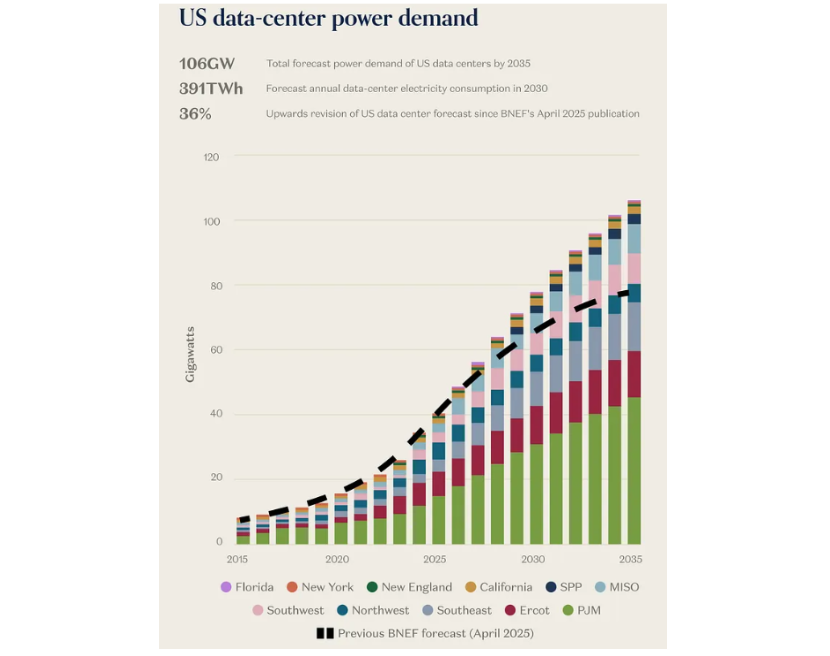
Per a16z, forecasts for data center power consumption have risen by 36% since just April. AI-related stocks were down today in part because they can’t get enough power to run all the data centers they need (or think they need).
Power to the people:
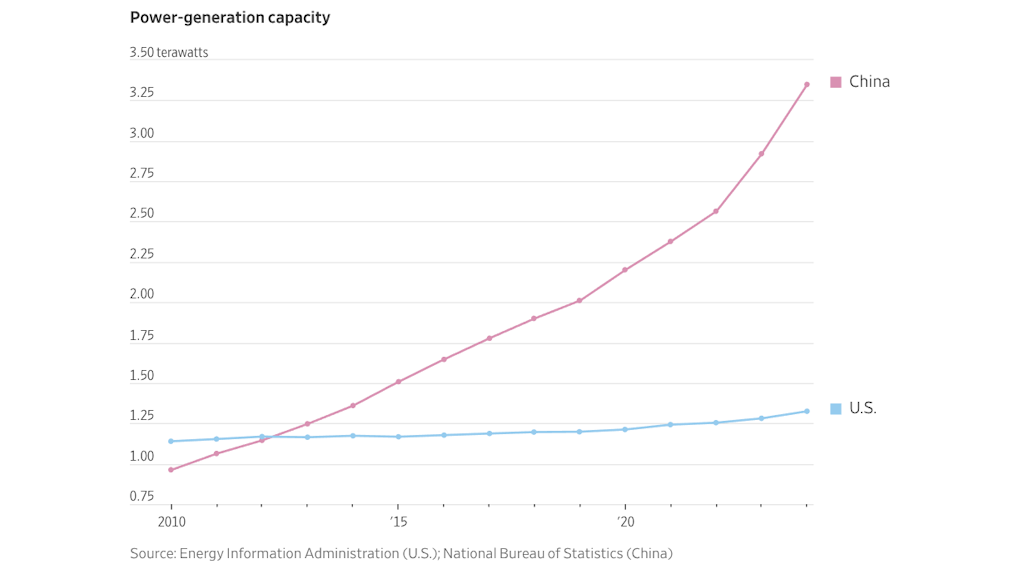
China’s big advantage in the race to AGI is that soon, it will be generating 3x as much power than the US is.
Investing role reversal:
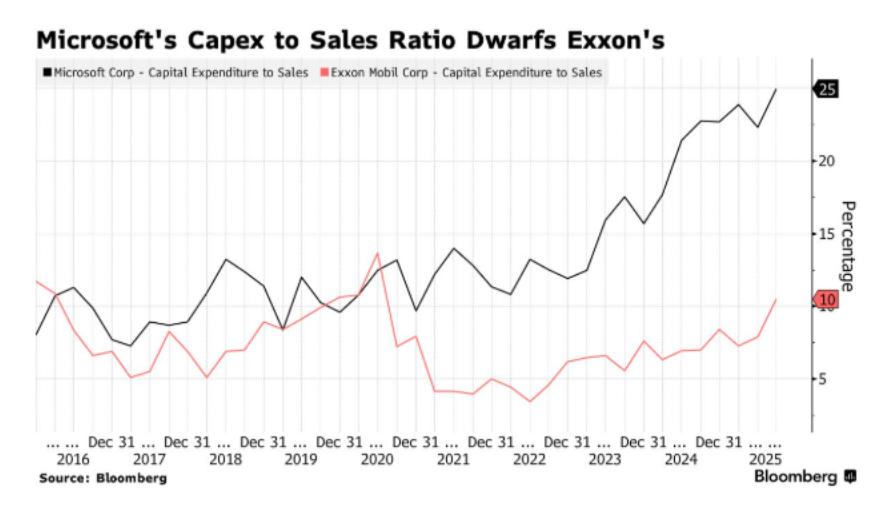
Paul Kedrosky notes that as a percentage of sales, Microsoft (a traditionally asset-light business) is now spending more than double on capex compared to what Exxon (a traditionally asset-heavy business) does.
Not investing advice:
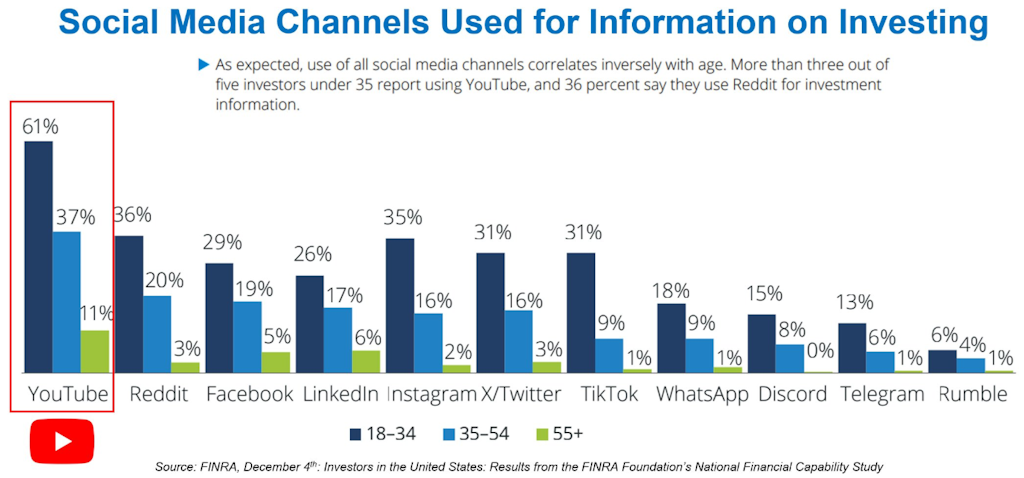
A Finra survey finds that 61% of investors under the age of 35 use YouTube for investing advice. To me, this suggests that Australia got it the wrong way around when it banned under-16s from social media this week. They should have banned over-30s instead.
The non-crisis of grocery prices:
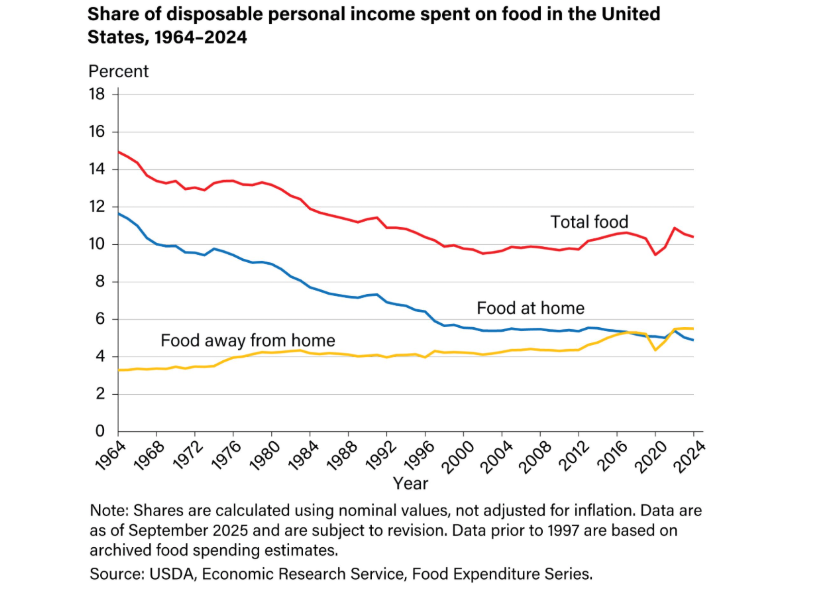
Contrary to what social media would have you believe, there is no crisis of grocery store prices: As a percentage of disposable income, food at home (in blue) has gotten cheaper. In total (red), our food budget has remained unchanged, but only because we’re getting lazier (yellow).
The stock market isn’t only about AI:
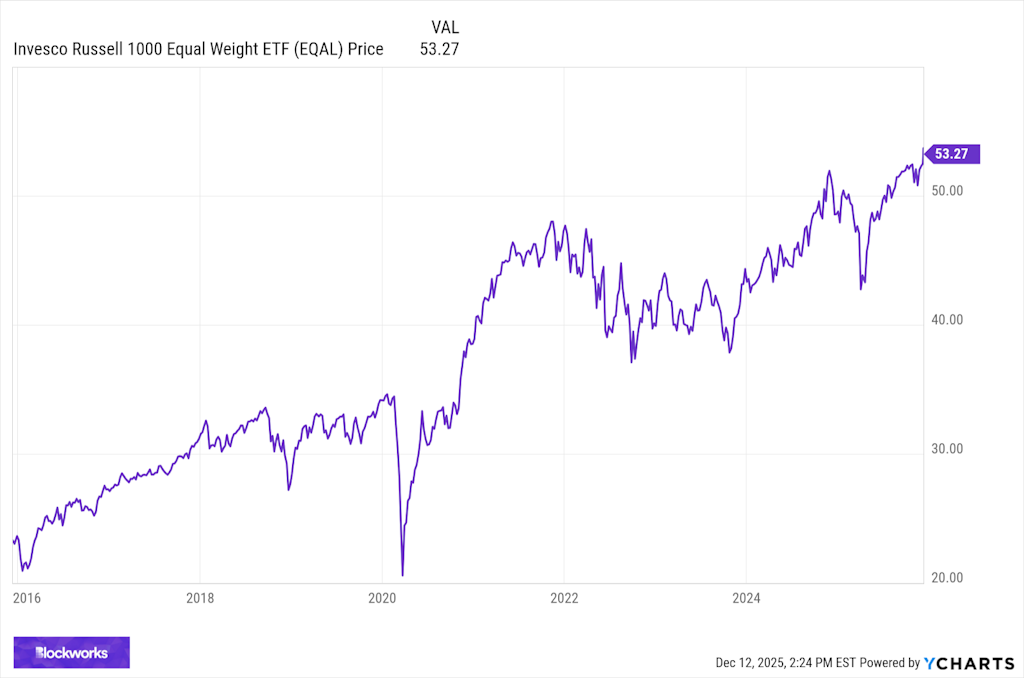
The equal-weight S&P 500 hit an all-time high this week.
A demographic time bomb:
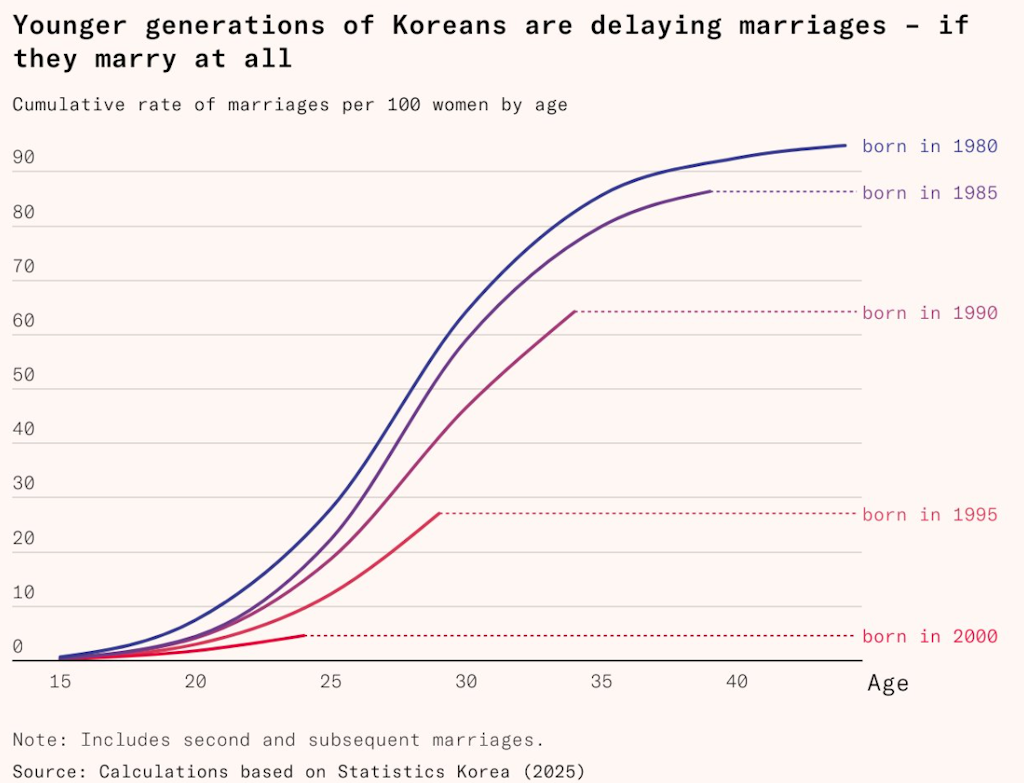
Sam Bowman shares an incredible stat: “Every 100 South Koreans today will have only 6 great-grandchildren between them.” Not six each — six in total. Thankfully, AI should be doing most of the jobs by then.
All the persons of the year:
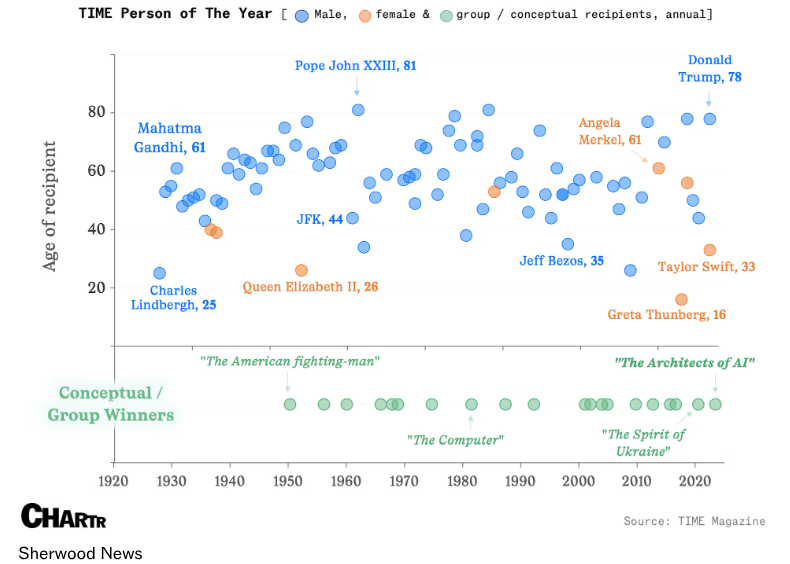
Note that The Computer was Time Magazine’s “person” of the year in 1982. Not labelled in the above is the 2006 winner: you. The 2006 award recognized the individual content creators populating the world wide web with YouTube videos, blog posts, Instagram photos and Reddit comments.
This year, “you” should rightfully have joined nine US presidents as a repeat winner, because if we hadn’t populated the web with our content, the “architects of AI” would’ve had nothing to work with.
Your training session is now complete. Please proceed outdoors.
Have a great weekend, readers of the year.
Get the news in your inbox. Explore Blockworks newsletters:
- The Breakdown: Decoding crypto and the markets. Daily.
- 0xResearch: Alpha in your inbox. Think like an analyst.