Why Apollo and Securitize’s new partnership is a win for institutional adoption
Apollo’s Christine Moy said that there’s been “market demand” and “strong interest” in tokenizing private credit
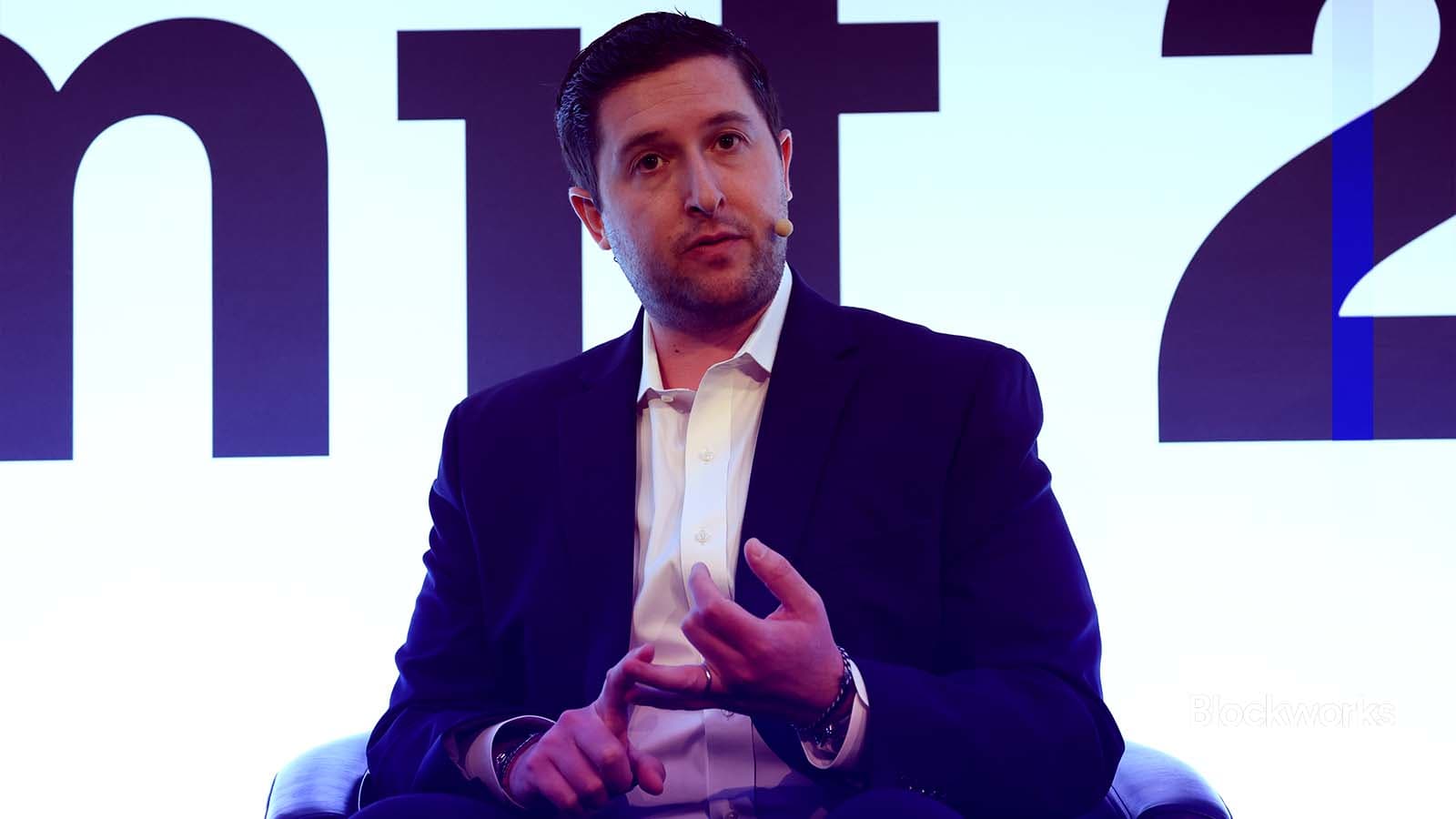
Securitize COO Michael Sonnenshein | Ben Solomon Photo LLC for Blockworks
This is a segment from the Empire newsletter. To read full editions, subscribe.
“I think all of the traditional equities markets are now looking at crypto over the weekends because it’s the only market that’s open,” Empire’s Jason Yanowitz said on the Round Up this week.
And you know what? I agree.
Crypto markets, especially now that they’re trading more in line with traditional equities data, are a good tell for traders who are trying to gauge market moves before Monday’s opening bell.
For anyone who hasn’t been active in equities — either watching, reporting or trading — you might not know that, at least in the past, folks would eagerly wait to see how premarkets for major indices (which opened late on Sundays) handled weekend events. Just a few years ago, it was one of the only strong tells in how to prepare yourself for Monday morning outside of staying awake for the European markets.
So the change to crypto is, subtly, a big deal and shows just another layer of adoption.
Specifically, Santos and Yanowitz were talking about the crypto market’s reaction to DeepSeek, which started well before the open this past Monday.
Analysts told us earlier this week that much of the crypto-related selling pressure really bubbled down to “too much excitement.” But it’s not hard to make the connection that crypto getting caught up in an AI-related selloff could be bad for a company like Nvidia without putting all of the context clues together.
Yet I’m curious to get your take: Is this another crypto use case or just a sign of the times? I’m personally torn.
Speaking of adoption, I have an announcement to bring up. ICYMI Thursday, Securitize and Apollo Global announced Apollo Diversified Credit Securitize Fund (ACRED), which essentially gives a “tokenized access point” to Apollo Diversified Credit Fund, as Apollo partner Christine Moy told me.
“It’s a multi-asset approach that leverages Apollo’s expertise across corporate direct lending, asset-backed finance, performing credit, dislocated credit and structured credit, with the ability to scale allocations up and down based on the market environment for the best risk-reward,” she explained.
Basically, it’s opening a door for the more crypto-native institutional base. And they’re doing it with Securitize, who helped bring BUIDL to life alongside BlackRock. Apollo, which has plenty of experience dipping its toes in crypto, is looking to take advantage of the changing environment to team up with crypto talent.
For Securitize’s Michael Sonnenshein, it’s showing that the bigger institutions are getting pretty comfortable with RWA tokenization.
At this point, Sonnenshein said, it’s becoming clear to asset managers that “crypto as an asset class is not going away” and it’s starting to evolve toward previously existing asset classes instead of crypto just hanging out in its own little bubble.
Moy noted that there’s been “market demand” and “strong interest” in tokenizing private credit, which then democratizes said market.
“It’s a higher yielding complement to the stablecoins, tokenized treasuries markets, but it’s also a diversifier for the higher, more volatile crypto-native yield products,” she said.
Get the news in your inbox. Explore Blockworks newsletters:
- The Breakdown: Decoding crypto and the markets. Daily.
- 0xResearch: Alpha in your inbox. Think like an analyst.
