Treasury’s Wally Adeyemo: My agency needs more power to regulate crypto
Digital asset firms face potential new regulatory landscape under Treasury’s proposed authority expansion
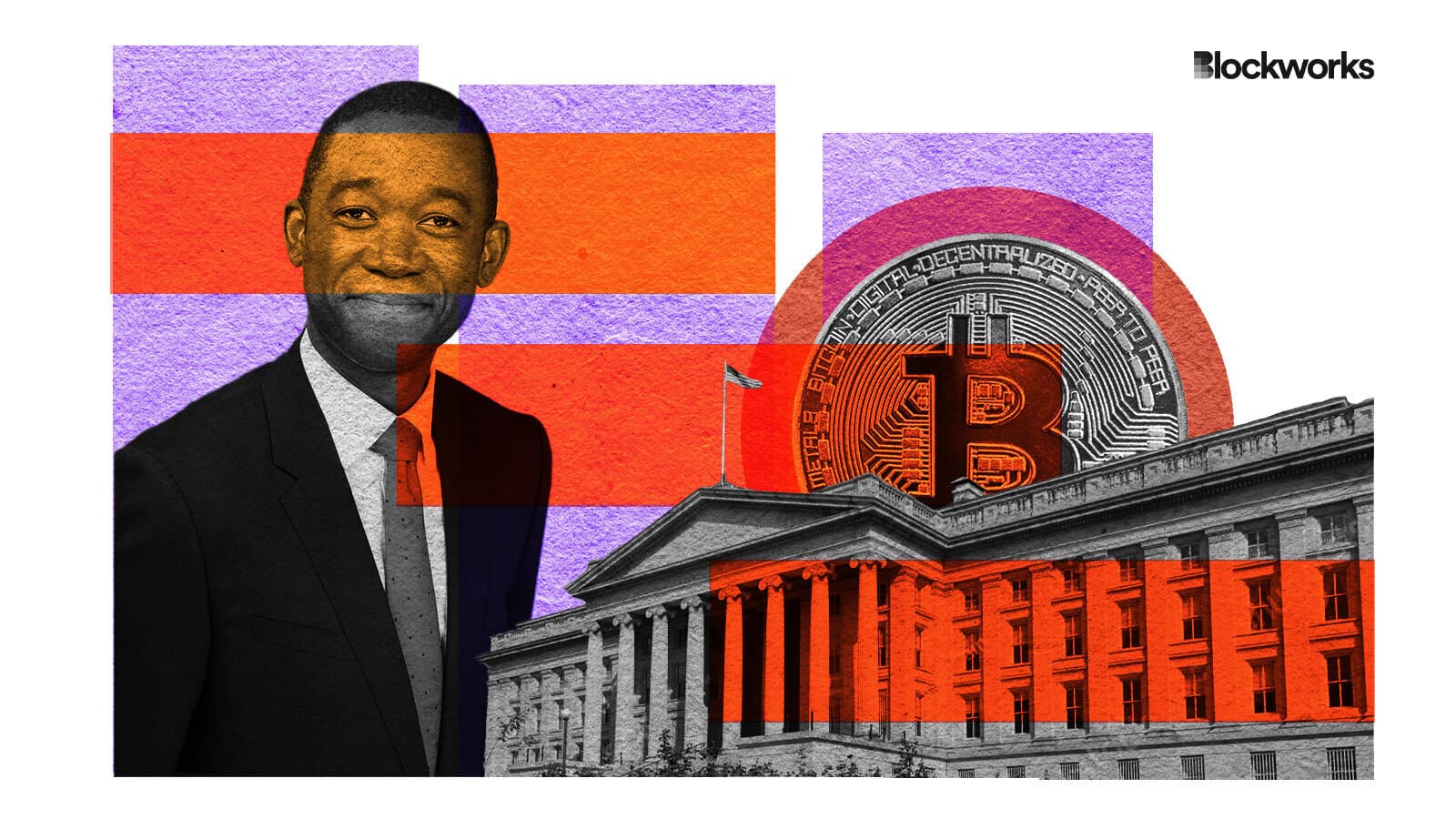
US Treasury Deputy Secretary Wally Adeyemo | Artwork by Crystal Le
US Treasury Deputy Secretary Wally Adeyemo has a message for digital asset firms: Get in line, or end up like Binance.
“I hoped the digital asset industry would take up this call to partner with government, design new tools and pursue new ways to protect digital assets from being abused,” Adeyemo said at the Blockchain Association Policy Summit in Washington DC Wednesday.
While many digital asset firms have taken steps toward compliance, others have failed to act. According to Adeyemo, this “represents a clear and present danger for national security.”
The Treasury Department sent a legislative proposal to Congress on Tuesday asking for additional authority to oversee the crypto space, including allowing it to step outside of the United States.
Read more: From SBF to Binance: Biggest court cases of 2023
Treasury officials have asked Congress to expand the International Emergency Powers Act to explicitly allow the agency to “designate blockchain nodes or other elements of cryptocurrency transactions,” according to a copy of the proposal obtained by Blockworks.
Some industry members argue that given the Treasury’s apparent success thus far in sanctioning exchanges, mixing services and other actors, granting the agency greater authority is unnecessary.
The rules cannot always keep up with the technology, Adeyemo said in response to the criticism.
“The thing that I learned most from being at Treasury during the financial crisis is that innovation outpaced regulation,” he added. “Our goal is to make sure that we have the flexibility.”
Read more: Treasury urges crypto companies to ‘prevent’ terrorist financing
Adeyemo’s remarks came hours after his office announced sanctions against cryptocurrency mixing service Sinbad for allegedly facilitating North Korea state-sponsored hacking group Lazarus’ money laundering.
For illicit actors, the digital asset ecosystem is the “prefered” method of moving assets, as opposed to the traditional financial system, Adeyemo said.
“My message is simple: We will find you and hold you accountable,” he said to the digital asset industry and those enabling or facilitating illicit actions.
Get the news in your inbox. Explore Blockworks newsletters:
- The Breakdown: Decoding crypto and the markets. Daily.
- 0xResearch: Alpha in your inbox. Think like an analyst.
