Treasury Must Clarify Tornado Cash Sanctions, Congressman Says
Rep. Tom Emmer has urged Janet Yellen’s Treasury office to expand on its Tornado Cash sanctions, saying “expectation of privacy is normal”
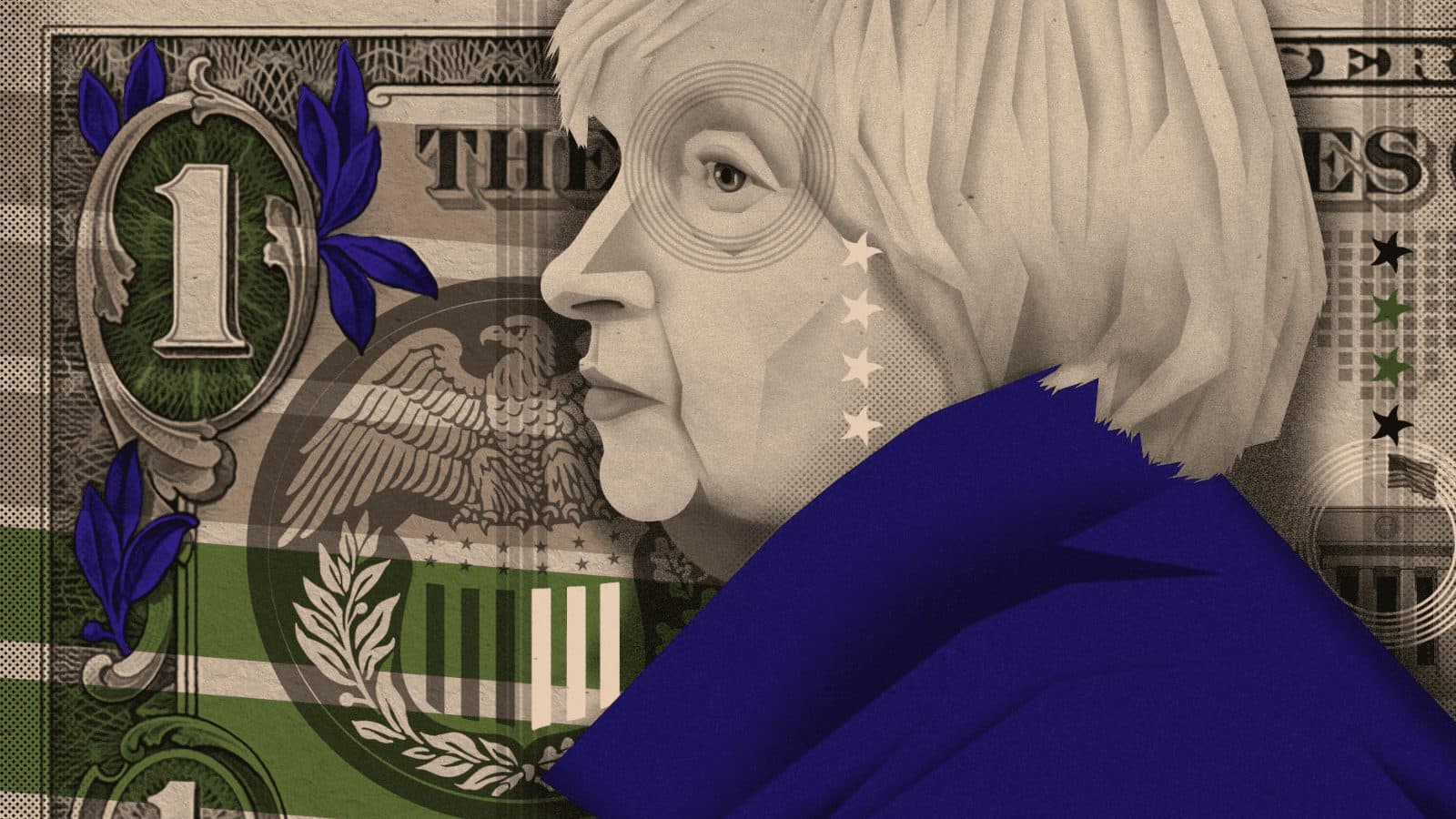
BLOCKWORKS EXCLUSIVE ART BY AXEL RANGEL
- Sanctioning open-source code impacts the right to privacy, congressman Tom Emmer said
- Emmer also questioned whether recipients of the Tornado Cash ‘dust attack’ were in breach of the law
Tornado Cash has sparked debate over privacy and free speech ever since the US Treasury sanctioned the crypto mixer earlier this month — prompting US congressman Tom Emmer to weigh in.
Emmer, a Republican, wrote a four-page letter to US Treasury secretary Janet Yellen on Tuesday, asking her office to clarify its decision to blacklist Tornado Cash.
On August 8, the Office of Foreign Asset Control (OFAC) added 45 Ethereum addresses linked to Tornado Cash to its Specially Designated Nationals (SDN). US citizens would no longer legally be allowed to use the protocol or interact with its addresses.
Dutch police then arrested Tornado Cash developer Alexey Pertsev in Amsterdam over his suspected role in facilitation of money laundering, leading to a protest rally in the city’s historic Dam Square last weekend.
The SDN list generally includes groups or people who are controlled or acting on behalf of specific countries, such as Iran and North Korea. In Emmer’s letter, the congressman pointed out the Tornado Cash sanctions were unique as they targeted “privacy-enabling” code, rather than a person or entity.
“The sanctioning of neutral, open-source, decentralized technology presents a series of new questions, which impact not only our national security, but the right to privacy of every American citizen,” Emmer wrote.
When used effectively, crypto mixers like Tornado Cash can help people keep their crypto transactions private by mixing funds in a pool of assets belonging to multiple users.
Use cases unrelated to money laundering for crypto mixers exist: Ethereum co-founder Vitalik Buterin, born in Russia, tweeted that he’s used the protocol while donating to pro-Ukrainian causes.
US authorities claim Tornado Cash was used to launder more than $7 billion in cryptocurrencies since its 2019 launch, including over $455 million allegedly stolen by Lazarus Group, the hacker crew believed to be sponsored by Pyongyang.
Although, that figure aligns with the total value of cryptocurrency sent through the mixer overall, per a Dune Analytics dashboard. Blockchain analytics unit Elliptic reported earlier this month that around $1.5 billion in illicit funds had been moved through Tornado Cash.
The crypto industry does not encourage money laundering or other forms of illicit transactions, Anthony Georgiades, co-founder of Pastel Network, told Blockworks.
“My hope is that lawmakers, law enforcement and regulators can work with the crypto space to stop bad actors while also protecting the right to privacy and speech,” he said.
In any case, Emmer asked Yellen’s office to confirm whether ordinary Americans who received unsolicited funds from sanctioned addresses are in breach of the law.
Anonymous parties had sent 0.01 ETH ($16.38) to a number of prominent figures across the crypto ecosystem via Tornado Cash in defiance of OFAC’s sanctions, leading to blocks from DeFi web apps such as Aave and Uniswap.
Coinbase CEO Brian Armstrong and Tron founder Justin Sun were among the recipients, as well as addresses linked to celebrities such as Shaquille O’Neal and Jimmy Fallon.
Emmer said he shared OFAC’s concerns about the illicit use of Tornado Cash, but: “technology is neutral, and the expectation of privacy is normal.”
David Canellis contributed reporting.
Get the news in your inbox. Explore Blockworks newsletters:
- The Breakdown: Decoding crypto and the markets. Daily.
- 0xResearch: Alpha in your inbox. Think like an analyst.
