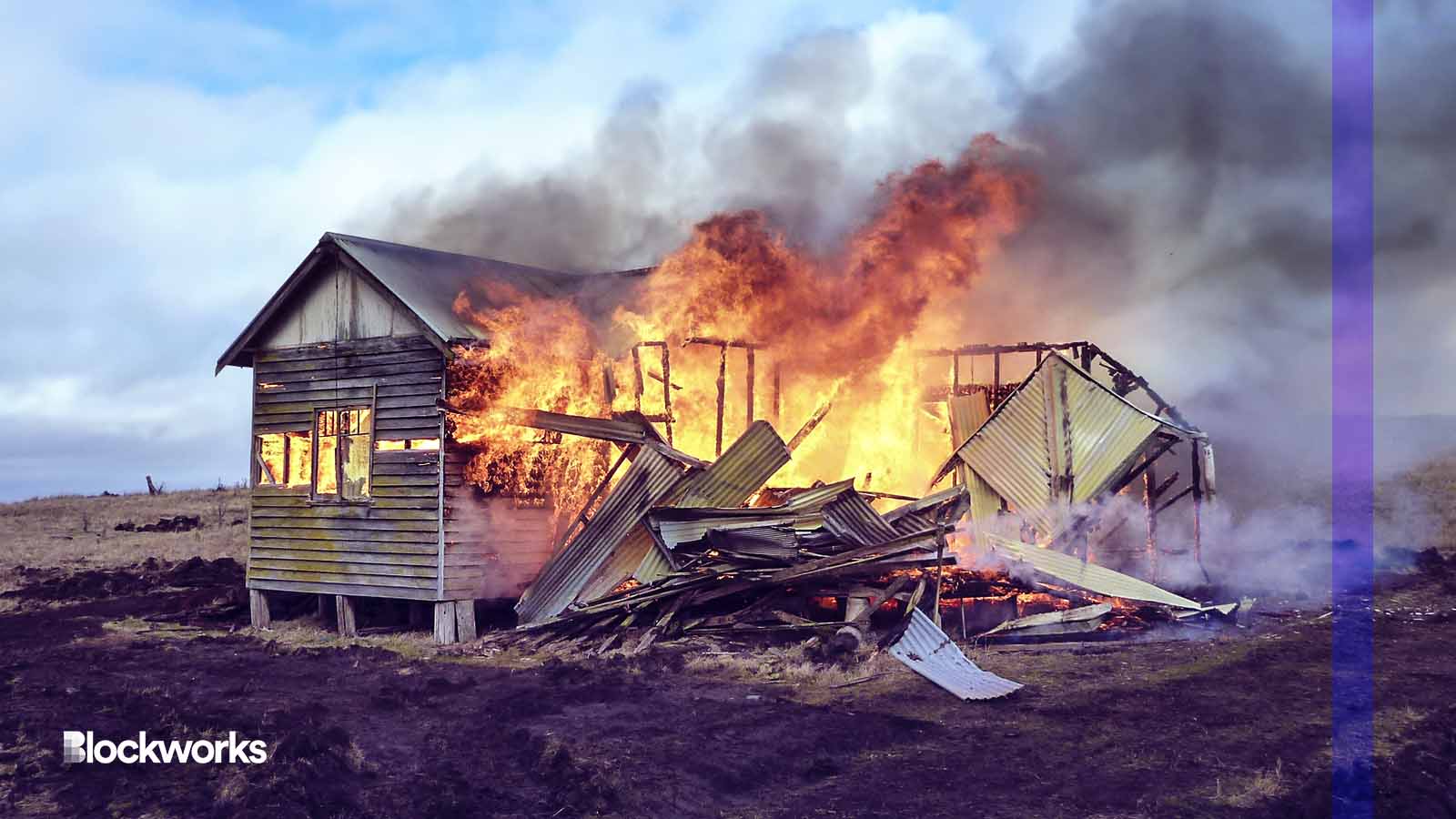
The ‘smoldering wreckage’ of Solana DeFi might be due for a rebirth, Blockworks Research says
A “single-shard” solution solves many of the problems Ethereum is struggling against, Blockworks Research analyst Dan Smith says
mantisdesign/Shutterstock modified by Blockworks
Following the FTX meltdown, one of crypto’s hardest-hit sectors was likely DeFi on Solana, Mike Ippolito says.
But it might be time for a comeback.
Members of the Blockworks Research team spoke to the host of the Bell Curve podcast (Spotify/Apple) about the future of DeFi on what’s left of Solana’s ecosystem.
Senior Research Analyst Dan Smith describes the current state of DeFi on Solana as a “smoldering wreckage,” but is optimistic about its recovery. “It’s primed for a renaissance,” he says.
“There are some great founders that are building in that space,” Ippolito agrees.
Smith says the idea of a high throughput blockchain makes sense, especially considering the myriad challenges Ethereum faces — like sequencer decentralization and flaws in social consensus mechanisms — with its modular design.
A “single-shard” solution solves many of the problems Ethereum is struggling against, Smith says. “Let’s just juice the base layer until we can get the throughput to where it needs to be.”
“There’s definitely gonna’ be problems we run into there,” he says. But the fact that someone is “going down the other side of the path” appeals to Smith.
“It’s not like it’s all sunshine and roses on the modular side.”
Smith points out many teams are building DeFi solutions on Solana. Among others, he mentions Jito, an “MEV-focused liquid staking solution” and the lending protocol, marginfi. “There’s still some interesting tech there, and I’m interested in what’s to come.”
With a mildly sardonic jab, Smith suggests it might be time to “get in the trenches with you and the 10 other people checking out Solana Defi.”
Primed for an explosion
Blockworks Research Analyst Ryan West finds a number of technical differentiators at play, too.
“Synchronous composability within the same block” is a technical advantage of Solana’s architecture, West says, adding that he thinks “it can be a superpower.”
“With Solana, you have the ability for synchronous composability within 400 millisecond block times,” he says. “You can imagine, once you stack these Lego blocks on top of each other, that you would have very seamless UX experiences across many different apps.”
West likewise finds a broad range of quality teams building DeFi tools for the platform. “Once you understand how the pieces fit together from one project to another, you see like, yeah, the DeFi ecosystem is coming back to life.”
“As soon as we start to see more capital, more users flow back into the ecosystem,” he says, “it’s definitely primed for an explosion.”
Ippolito notes the current “cold start problem” that Solana faces is “twofold.”
“One, you don’t have a robust DeFi ecosystem yet.”
“You did,” he says, but an FTX “18-wheeler” drove right through it.
“And then two is that the adoption for liquid staking is just so much lower.”
These two “fundamental building blocks” have been unable to kickstart a “virtuous cycle” that would otherwise kick off a Solana DeFi summer, he says.
“This is a solvable problem,” Ippolito says. “Once this gets kicked off, it could be gangbusters.”
Get the news in your inbox. Explore Blockworks newsletters:
- The Breakdown: Decoding crypto and the markets. Daily.
- 0xResearch: Alpha in your inbox. Think like an analyst.
