Sen. Elizabeth Warren Rolls Out Bill Designed To Close Crypto Loopholes to Sanctions
The bill was co-sponsored by 10 other senators who say they’re concerned about the role digital assets play in money laundering
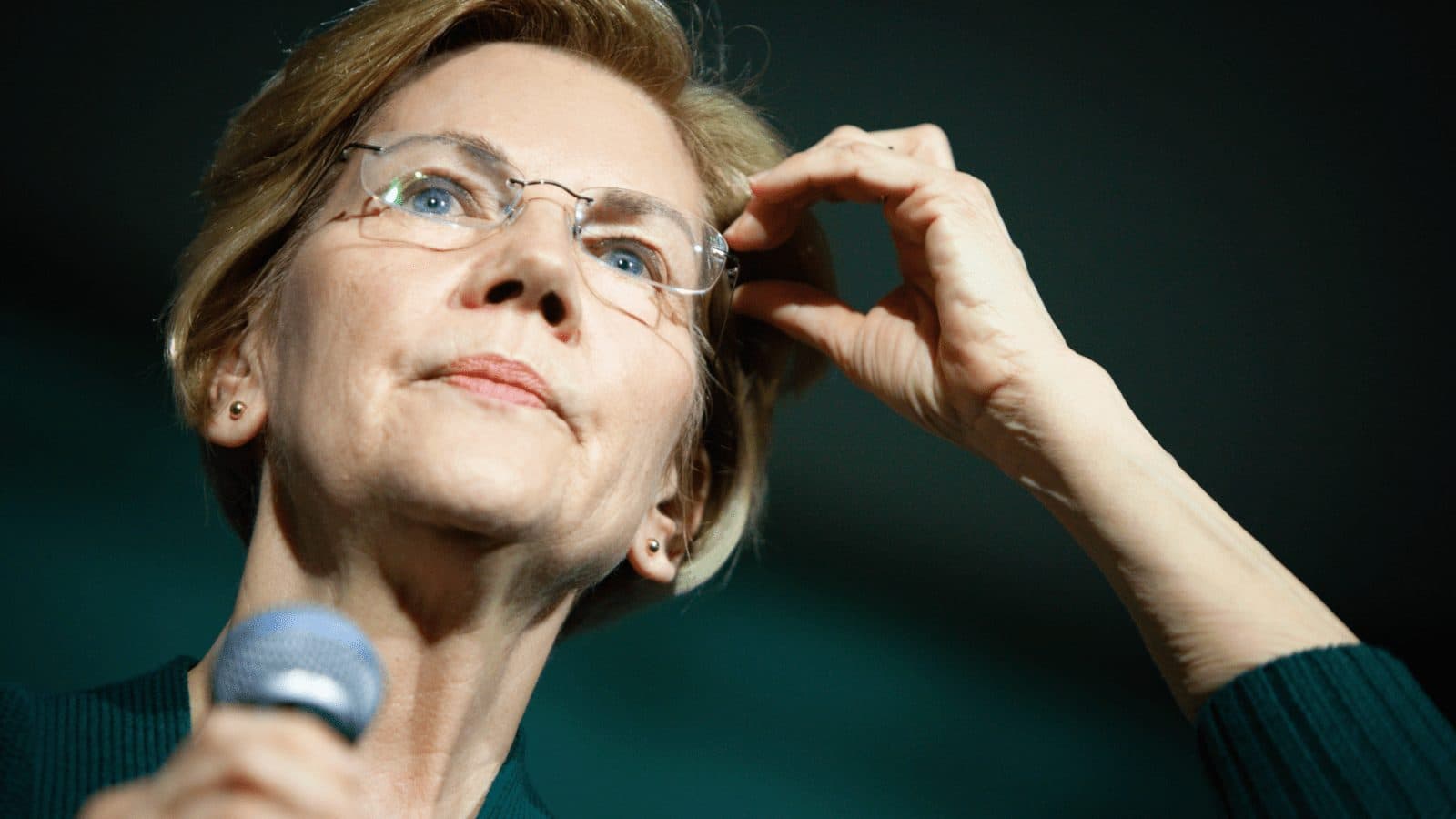
Massachusetts Senator Elizabeth Warren | Source: Shutterstock
- The bill was introduced during Thursday’s Senate Banking Committee hearing on digital assets and crime
- Russia’s invasion of Ukraine has highlighted the need for greater oversight, Warren said
Sen. Elizabeth Warren, D-Mass., revealed a new bill Thursday aiming to prevent crypto companies from doing business with sanctioned entities.
The Digital Assets Sanctions Compliance Enhancement Act, introduced during a Senate hearing on the role of digital assets in illicit finance, would give President Biden the go-ahead to slap secondary sanctions on those that transact with sanctioned individuals, companies or governments. It would apply to any sanctions imposed by the US — most pressingly, Russian ones.
“Crypto provides a new payment option for criminals and cheats, and it’s how those who attack our systems with ransomware collect their money with the least risk that they will be caught,” Warren said during the hearing. “In fact, according to one of our witnesses who’s here with us today about three-quarters of the money collected in ransomware attacks last year went to Russia-linked actors.”
Iran, North Korea and Venezuela all have turned to crypto in an effort to evade sanctions, Jonathan Levin, co-founder of blockchain tracker Chainalysis, said during the hearing.
The bill is co-sponsored by 10 other senators, including Sen. Mark Warner, D-Va. Warner was part of the bipartisan group that worked to include cryptocurrency tax provisions in the infrastructure bill last September.
Witnesses — Levin, Michael Mosier, former acting director and current deputy director and digital innovation officer of the Financial Crimes Enforcement Network (FinCEN) and Michael Chobanian, founder of KUNA Exchange and president of the Blockchain Association of Ukraine — said it would be difficult for Russians to circumvent all sanctions with crypto.
“I’m the person who is behind all the numbers, I know how this happens, and it’s impossible, physically impossible, to transfer large amounts of money from fiat into crypto,” Chobanian said.
The levels of requisite liquidity to run serious amounts of Russian government capital via digital assets is a pipe dream, according to Mosier.
“The crypto industry claims that Russians can’t use crypto to hide their wealth because the $3 trillion crypto market is too small and too transparent for that to work,” Warren said, adding that blockchain-hopping and shuffling funds between tokens could be a workaround.
“You can always split the money up into wallets…but that doesn’t remove the record of where the money actually sits,” Levin said.
Nonetheless, the crisis in Ukraine has underscored the need for more transparency in the blockchain space, according to Warren.
“That’s why I’m introducing today my Digital Asset Sanctions Compliance Enhancement Act,” she said. “This is a bill that would authorize the president to sanction foreign cryptocurrency firms that are doing business with sanctioned Russian entities.”
Get the news in your inbox. Explore Blockworks newsletters:
- The Breakdown: Decoding crypto and the markets. Daily.
- 0xResearch: Alpha in your inbox. Think like an analyst.
