SEC sues Celsius, former CEO for market manipulation, securities fraud
One year after Celsius filed for bankruptcy, the SEC has hit the defunct crypto lender and former CEO Mashinsky with a slew of charges
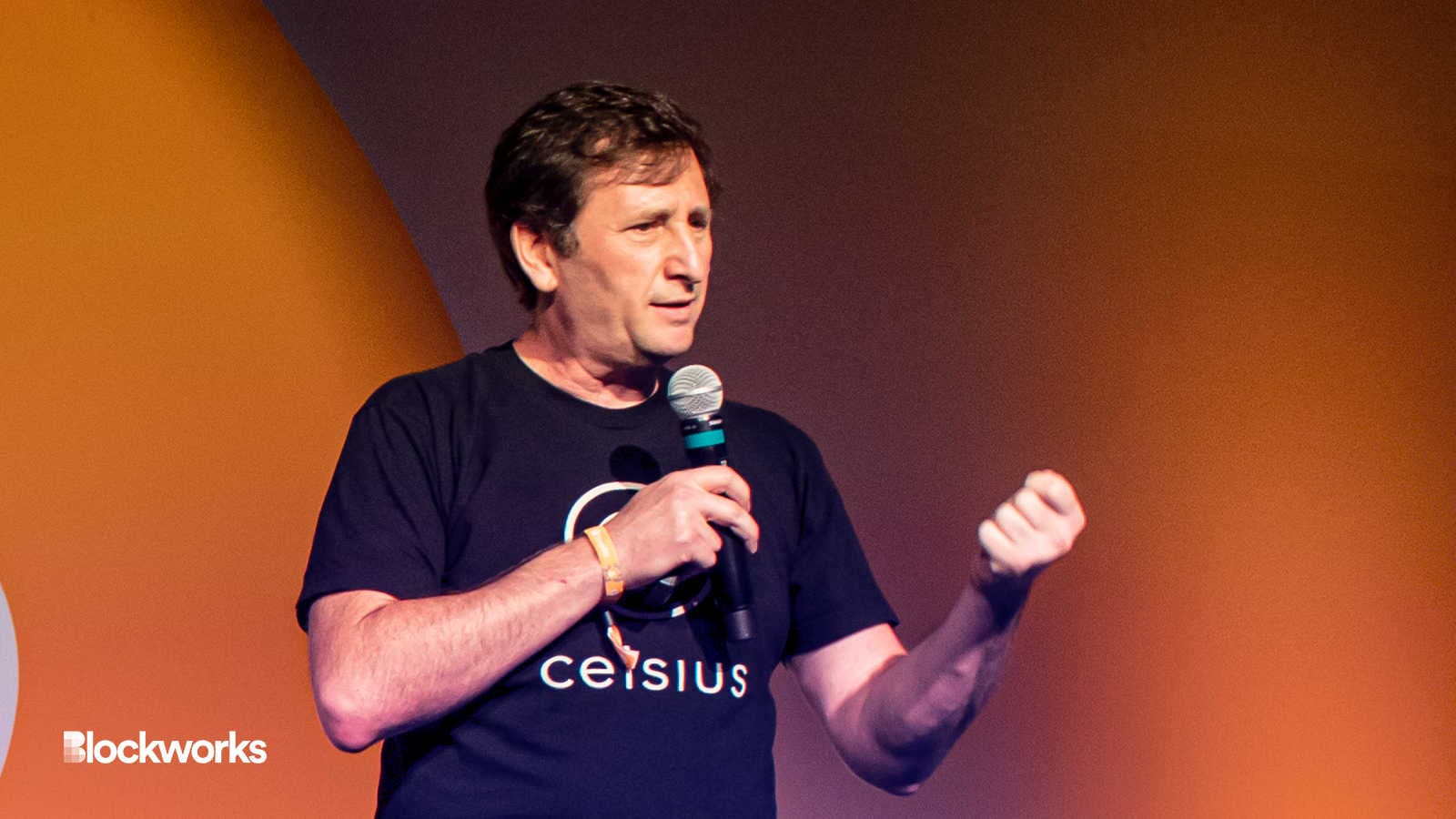
Former Celsius CEO Alex Mashinsky | Kevin McGovern/Shutterstock modified by Blockworks
The SEC sued Celsius and former CEO Alex Mashinsky on Thursday, alleging that the bankrupt crypto lender misled investors and raised billions through “unregistered and fraudulent offers and sales of crypto asset securities.”
According to the lawsuit, Celsius reportedly made “numerous false statements about Celsius’s business” while “manipulating the market for CEL,” the native token for the platform.
“In reality, Celsius bought, at Mashinsky’s direction, millions of dollars of additional CEL to bolster the price of CEL and induce investors to buy it,” the SEC claims.
It then became clear, prior to the bankruptcy, that Celsius was a “sinking ship” according to unnamed former employees in the suit. One unnamed employee even said Celsius didn’t “have any profitable services.”
The financially unstable model operated by the company saw losses incurred of $800 million in 2021, and $165 million in the first quarter of 2022.
However, back in May 2022, Celsius claimed that “all user funds are safe,” although it would go on to pause user withdrawals and deposits in late June.
But, on June 10, former CEO Mashinsky “sought to reassure investors further by claiming that Celsius has ‘billions in liquidity.’”
“Among other false representations, Defendants misrepresented Celsius’s central business model and the risks to investors by claiming that Celsius did not make uncollateralized loans, the company did not engage in risky trading, and the interest paid to investors represented 80% of the company’s revenue,” the lawsuit alleges.
Celsius filed for bankruptcy last July after the algorithmic stablecoin TerraUSD depegged from the US dollar.
The company has been undergoing bankruptcy proceedings since last summer, and recently got court approval to convert some of its assets to ether (ETH) and bitcoin (BTC), though the SEC said at the time that it “reserves its rights” to challenge the transactions.
It also sued StakeHound, seeking to recoup $150 million in polygon (MATIC), polkadot (DOT) and ETH.
Get the news in your inbox. Explore Blockworks newsletters:
- The Breakdown: Decoding crypto and the markets. Daily.
- 0xResearch: Alpha in your inbox. Think like an analyst.
