SEC FTT Complaint Is Yet Another Case of Regulation by Enforcement
Based on prior complaints, regulation by enforcement seems to be the SEC’s preferred method of keeping an eye on the crypto industry
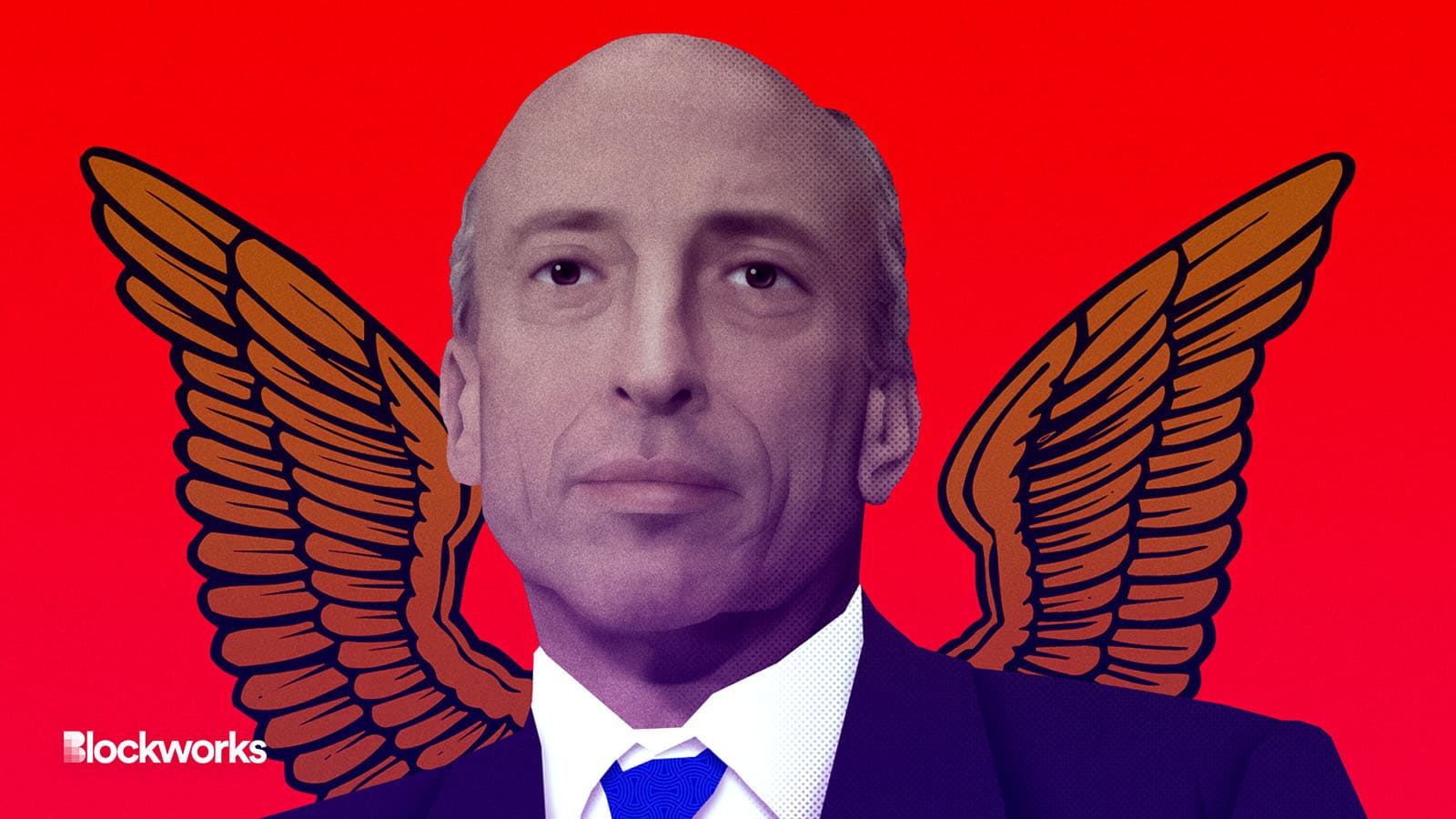
SEC Chair Gary Gensler | Blockworks exclusive art by Axel Rangel modified by Blockworks
In yet another enforcement action, bankrupt exchange FTX’s token FTT is a security, the US Securities and Exchange Commission stated in a complaint Wednesday.
“FTT was offered and sold as an investment contract and, therefore, as a security,” the complaint read.
SEC Chair Gary Gensler reinforced the designation with a tweet, stating that crypto investors will continue to face risks until platforms fall in line with “time-tested securities laws.”
Gensler then added an SEC priority is to leverage “all our available tools to bring the industry into compliance.” FTT was the 23rd largest cryptocurrency by market value before it collapsed more than 90% last month, worth more than $3.4 billion.
“The classification of FTT as a security is no surprise as it is in line with the LBRY action and the Ripple action,” Abiel Garcia, partner at Kesselman, Brantly & Stockinger LLP, said. “It is clear that the SEC now believes crypto tokens can fall within the securities definition and plans to enforce that concept in full force.”
Indeed, based on a string of prior complaints, regulation by enforcement seems to be the SEC’s preferred method of keeping an eye on the crypto industry.
In a July complaint against a former Coinbase employee and people close to him, the agency alleged that nine different cryptocurrency tokens are securities. None of the token issuers mentioned in the complaint are listed as defendants, but the SEC may choose to bring charges against these individuals at a later date.
The SEC’s ongoing legal battle with Ripple over the network’s native XRP token also started with a complaint regarding the token’s classification. Consequently, XRP was delisted by Coinbase in January 2021, a month after the initial complaint was filed.
Similar to Ripple, the SEC sued blockchain file-sharing startup LBRY in March 2021 for offering its tokens without first registering with the agency.
Although the LBRY team did not offer tokens to the public in an initial coin offering (ICO) or similar mechanism, they did keep tokens for themselves in a “pre-mine,” which were subsequently released on secondary exchanges to fund operations, a summary judgment in November 2022 declared.
First FTT, then BNB?
Without greater clarity around token classification, issuers and exchanges should be prepared to be served with complaints and potentially gear up for lengthy and expensive lawsuits.
“Until the SEC’s position is successfully challenged in court, those dealing in crypto tokens should review their assets to see whether their token could potentially fall within the definition of a security,” Garcia said.
“The FTX complaint lays out the basic facts that the SEC reviews in determining whether a crypto token is a security.”
The rules as they stand are unclear, Garcia said, but looking at LBRY’s judgment and FTX’s complaint, issuers can start to speculate what may or may not be permitted in the future.
There’s also the matter of Binance’s native BNB. In June, reports swirled that the agency was investigating Binance for selling BNB tokens when it was launching five years ago as an initial coin offering.
“The crypto industry may have to reassess how it launches IEOs and ICOs, given that the LBRY and FTX actions cite to marketing materials when proving that certain tokens should be classified as securities, but in the long run, SEC regulation could provide some transparency and reliability to an otherwise opaque and ever-changing industry segment,” he added.
Get the news in your inbox. Explore Blockworks newsletters:
- The Breakdown: Decoding crypto and the markets. Daily.
- 0xResearch: Alpha in your inbox. Think like an analyst.
