The SEC is ‘eroding trust,’ Electric Capital co-founder says
“Hey, the entire town, please report to jail tomorrow. You’re all arrested. Everything you’re doing here is illegal.”
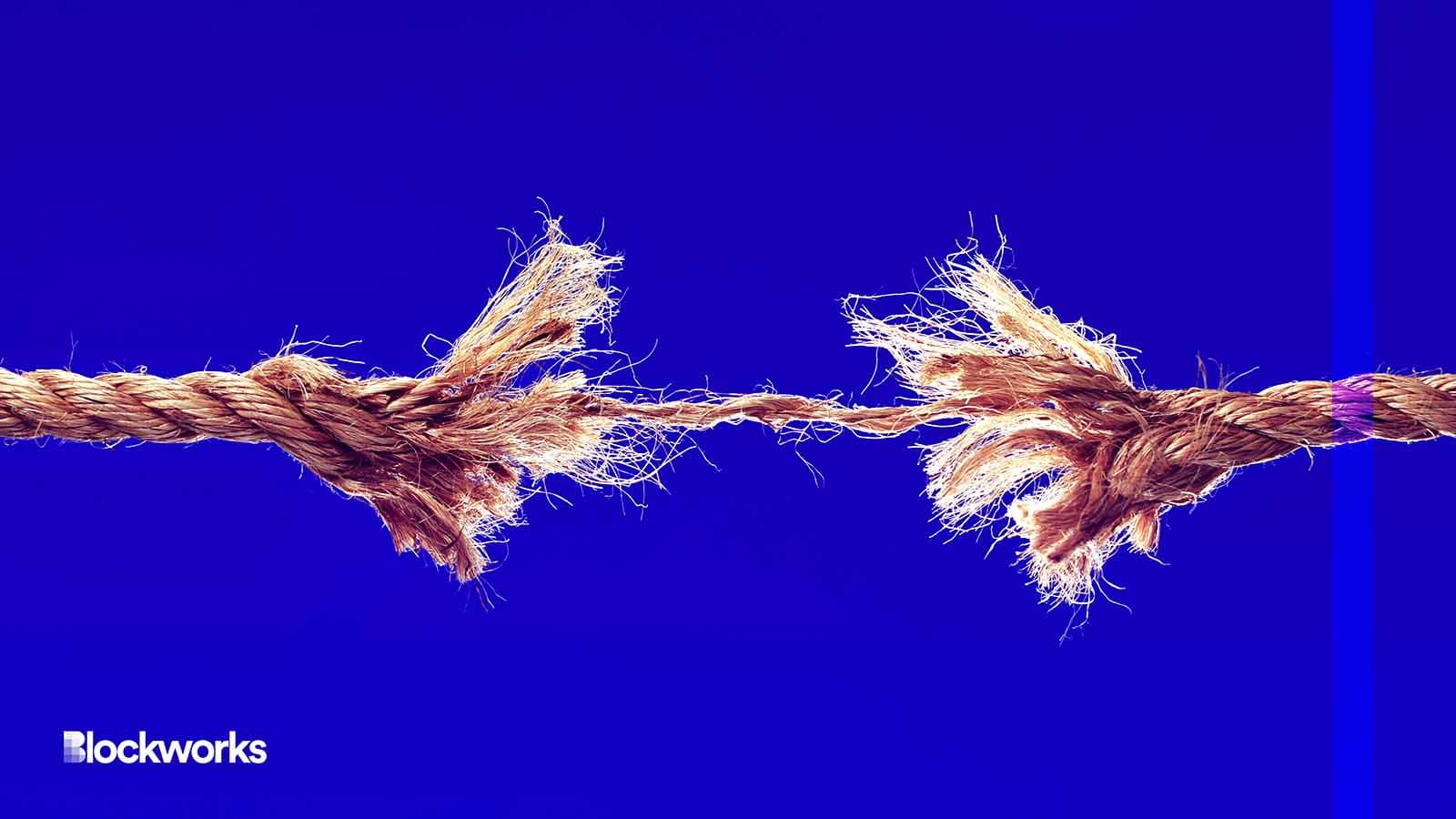
Gino Santa Maria/Shutterstock modified by Blockworks
Following the drama of the SEC’s regulatory crackdown on multiple crypto exchanges, the Band-Aid has finally been ripped off, says Haseeb Qureshi.
“Everybody knew that this was coming.”
The managing partner at crypto investment firm Dragonfly spoke to Blockworks on the Empire podcast (Spotify / Apple) about events leading up to the legal clash between the SEC and crypto exchanges Coinbase and Binance.
After the Bittrex and Beaxy cases earlier this year, Qureshi says, the SEC developed a very clear legal theory.
All exchanges are essentially doing the same thing that Bittrex and Beaxy were accused of doing, he explains, “which is, operating without a BD license, operating without an exchange license and operating without a clearing agency license.”
“So that’s gonna be true of everybody, right? If it’s true of Bittrex, it’s true of Coinbase, it’s true of Binance, it’s true of everyone.”
Enforcing non-compliance
SEC Chair Gary Gensler has publicly stated that he thought that everything in crypto, besides bitcoin, is a security, Qureshi says.
“Five of the top 10 items on Coinmarketcap are alleged to be securities.” The exceptions, he notes, include bitcoin, ether, USDC, USDT and dogecoin.
It all started with naming Ripple as the first major security, Qureshi says. People “deferred to the SEC,” thinking at the time that the agency must have known something that they didn’t, he says, so XRP was broadly delisted.
“Then they started going after more stuff,” he says. “It was algorand and then it was filecoin and people were like, ‘Oh, really?’”
“Are you sure this is a security?”
Soon, “everything is a security,” he says. But why?
“Because there’s a team. And the team has tokens. And they talked in public.”
The industry has grown “fatigued” with the process, Qureshi says. “They’re not complying anymore.”
“You’ve basically enforced non-compliance,” he says. “It’s like, ‘Hey, the entire town, please report to jail tomorrow. You’re all arrested. Everything you’re doing here is illegal.’”
“And at a certain point, you force the industry into a corner of just saying, ‘Okay, well, we’ll see how it plays out in court.’”
Old systems are atrophying
Avichal Garg, co-founder of blockchain-centered venture capital firm Electric Capital, says the issue is one of credibility.
He notes that the SEC’s accusations of fraud and commingling of user assets against Binance substantively differ from the allegations leveled against Coinbase.
“We don’t want another FTX situation. People should not be touching user funds.”
Unlike the Binance lawsuit, the Coinbase case is “exclusively focused on what is or is not a security,” according to Coinbase CEO Brian Armstrong.
When “everything is a security,” Garg says, “but I’m not willing to go in front of Congress and tell you whether or not a particular thing is a security or why a thing might be a security, you start to erode credibility.”
“Over the last 50 or so years, a lot of these organizations and institutions that were created, into which we imbued all of this trust,” he says, “have started to erode.”
The frameworks through which these agencies operate are no longer relevant, Garg says.
“Should we really be determining the rules of the road in 2025 with digital assets and a global market and [artificial intelligence] that can control billions of dollars with precedent set in 1930 about orange groves?”
Garg argues that rules need updating “because there’s no way people a hundred years ago could have imagined all of the ways that this stuff is gonna work today.”
“But if you don’t acknowledge that and if you don’t take the position of wanting to try to actually work on your mandate and you say, ‘I’m not gonna try to be helpful, I’m not gonna be collaborative, I’m not gonna make statements on the record,’” Garg says, “what you’re really doing is eroding trust.”
“The more crypto succeeds,” he says, “the more it’s an indication that all the old systems are atrophying.”
“And we don’t really have concrete plans to fix them.”
Get the news in your inbox. Explore Blockworks newsletters:
- The Breakdown: Decoding crypto and the markets. Daily.
- 0xResearch: Alpha in your inbox. Think like an analyst.