Russia Accelerates CBDC Efforts as US, EU Ponder SWIFT Ban of Russian Banks
While the Biden Administration explores options for Russia sanctions, should it invade the Ukraine, Moscow looks to ensure Ruble liquidity
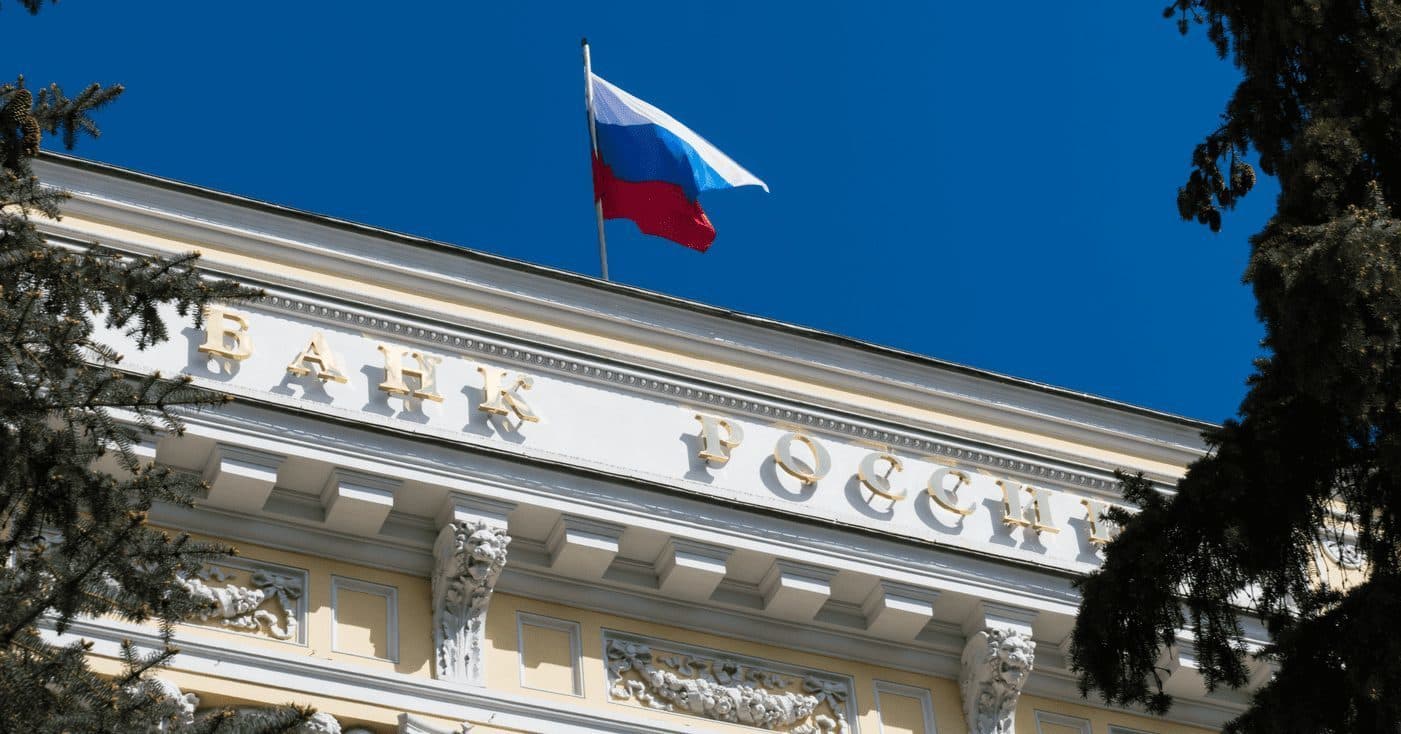
Bank of Russia; Source: Shutterstock
- Russia is accelerating efforts to develop a CBDC in light of possible sanctions on its financial industry from the US and EU
- At the same time, the country is preparing a bill for lawmakers that would have a “zero tolerance” approach to cryptocurrency
With the threat of Russian banks being possibly disconnected from the global financial system, Moscow is working to develop a central bank digital currency (CBDC) in an effort to give its domestic banks international liquidity should this happen.
As the world waits to see if Moscow intends to invade Ukraine, American officials are reportedly talking to their counterparts in Europe about preparing a broad sanctions package, which could include banning Russian banks from using the SWIFT interbank system. Such a move would curtail Russian banks’ access to foreign liquidity in the form of the world’s major currencies such as dollars, euros or yen.
The Bank of Russia is cognizant of the risks this presents to the broader stability of the Russian banking system should this occur and is accelerating efforts on developing a CBDC. According to a white paper published by the bank, a prototype is due by the end of December, with trials expected to begin in January. In the second stage of trials, expected by mid-2022, the Bank of Russia is expected to invite non-banking partners such as exchanges and credit institutions to the network.
In addition, the bank is expected to make the digital ruble freely convertible to foreign currencies and is encouraging foreigners to own the CBDC. Its whitepaper mentions smart contract-like vehicles to automatically convert the digital ruble into foreign currencies.
This contrasts with China’s approach to its CBDC, the eCNY, which is not meant to internationalize China’s currency, the CNY, but rather to wrest control of payments and money supply away from AliPay and WeChat Pay while improving the efficiency of ‘cross-border’ flows of capital between mainland China and its territories of Hong Kong and Macu.
In addition, the Russian ruble is freely convertible with foreign currencies, a policy first implemented in the mid-2000s to make it easier for foreign companies to invest in Russia and for Russian companies to invest globally. China’s currency is not freely convertible, thus Chinese firms use Hong Kong as a launchpad for foreign investment.
The effort comes as authorities in Russia are preparing to present a bill to lawmakers that would push for a zero tolerance, total ban of crypto in the country.
The Bank of Russia recently banned mutual funds from investing in crypto or creating listed digital asset macro proxies.
It’s not yet known how extensive this ban on crypto would be, or if it would be eventually watered down like India’s supposed ban. In India, what was first called a ban on all “private cryptocurrency” eventually morphed into a ban on private crypto wallets, requiring traders to only use registered accounts on exchanges for KYC/AML and tax compliance reasons.
The other option would be for the digital ruble to become the required on-ramp for crypto, which is something that India is said to be considering for its CBDC. This would satisfy KYC/AML requirements while also giving Russia’s CBDC liquidity via interest from crypto traders living in-country. It would also curb the use of Tether for cross-border transactions between Russia and China, which is said to have daily volume in the tens of millions because of the lack of international liquidity of either currency abroad.
The sense of urgency in Russia’s CBDC development might fade should the US not use a SWIFT ban as a deterrent for invading Ukraine. While it is reportedly being considered, there’s also concern that this ‘nuclear option’ would have undesirable downstream effects — including potentially decreasing the dollar’s global dominance.
The Bank of Russia did not respond to Blockworks’ requests for comment.
Get the day’s top crypto news and insights delivered to your inbox every evening. Subscribe to Blockworks’ free newsletter now.