Student credentials on the blockchain: North Dakota opts in for digital wallets
Students in North Dakota can utilize digital wallets, powered by blockchain, to share diplomas, transcripts and completed coursework
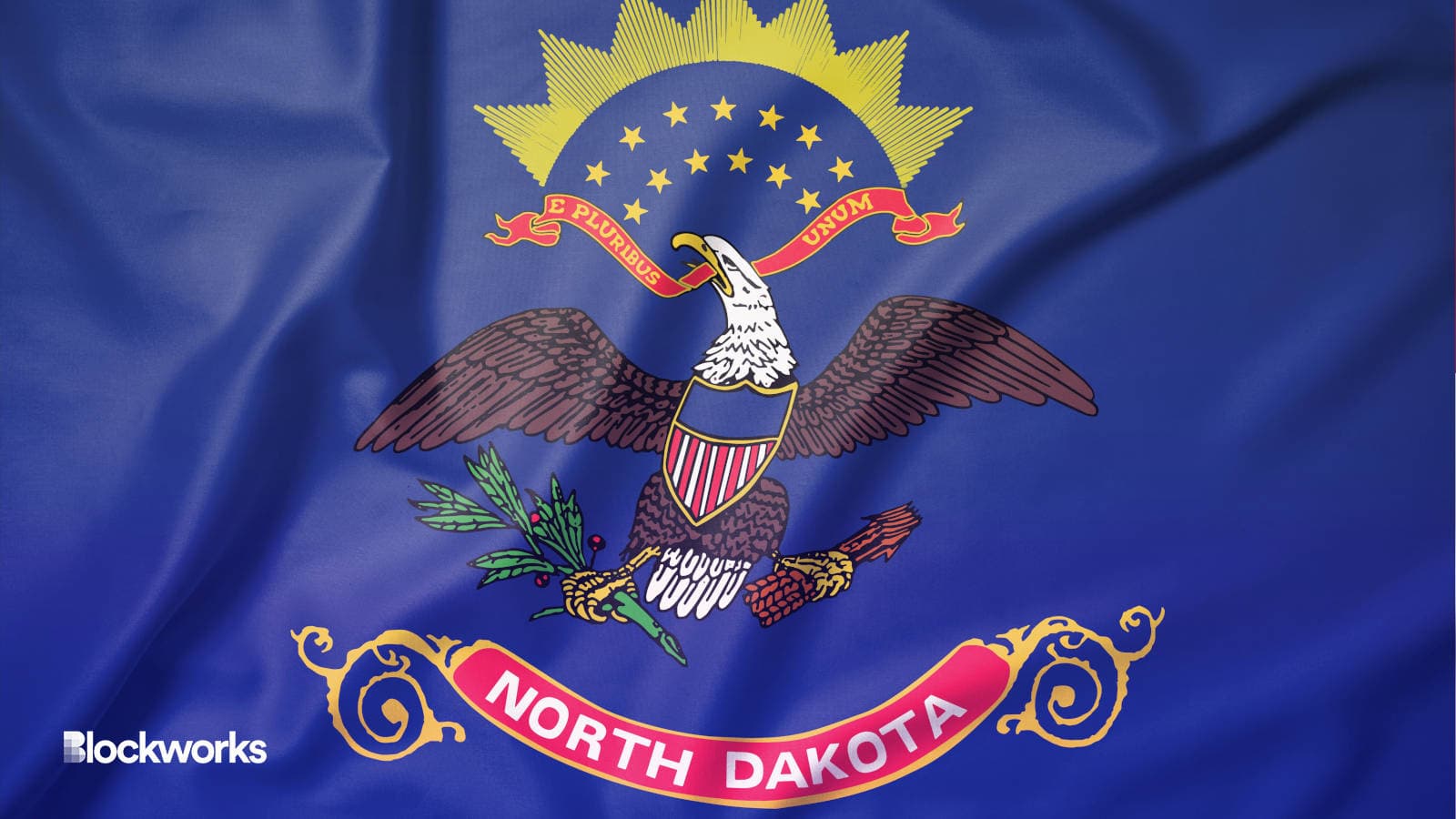
NaughtyNut/Shutterstock modified by Blockworks
North Dakota launched a program last August allowing all high school graduates to keep their credentials — transcripts, diplomas and more — in a blockchain-powered digital wallet.
The overarching use case for the state’s Open Credential Publisher is to allow students agency over their crucial documents when applying for jobs, Tracy Korsmo, one of the chief architects of the program, explained.
If students opt to use this digital wallet, they’ll be able to provide verified credentials to anyone who requests them — perhaps a college or prospective employer — with the help of a permissioned blockchain.
The blockchain used by the North Dakota Information Technology (NDIT) department was originally developed by Seattle’s Evernym and operated as the Sovrin network. Software company Avast acquired Evernym in December 2021 and is shutting down that blockchain, so NDIT will have to find a new chain by the fall, Korsmo told Blockworks.
“The way it works in a self-sovereign blockchain is that the person is not on the blockchain. Nor is their data on the blockchain,” he said. The institution or school who has the permission to issue the credentials on behalf of the student will be the only entity that’s on the blockchain.
Then, a pairwise decentralized identifier (DID) is created for the student. On-chain, it’ll show that the institution issued a diploma to that specific DID, for example.
In a scenario where a former K-12 or college student is sitting down for a job interview, the employer in that interview could have an application which generates a QR code. Through that QR code, the student would be able to send their chosen credentials in a peer-to-peer exchange which automatically validates them.
Right now, Korsmo said, North Dakota students can email an invitation link to an employer that will take them to the blockchain wallet so they can verify and download the credentials shared with them.
This eliminates the pesky step of employers having to call a high school’s front office to obtain and verify documents, Korsmo said.
But Korsmo envisions a world where diplomas and transcripts aren’t the only credentials people will decide to store in their digital wallets.
“We’ve already started to bring it into recognized credentials,” Korsmo said. “One of those would be career ready practices and work-based learning experiences. That credential actually is a prior learning award for credit hours in a community college.”
Essentially, participating community colleges, which include Lake Region State College and Bismarck State College, will be able to accept these digital credentials and award course equivalencies. Korsmo said he’s working to make this awarding process automatic.
North Dakota wants blockchain to help match skills
NDIT is also working with community colleges to begin doling out cybersecurity degrees in the form of digital credentials. There’s also efforts to get similar credentials for EMTs, Korsmo said.
“Bismarck State College’s cybersecurity program has been broken out into five stackable credentials. Once you get three of them, you have an associate’s degree. Once you get all five, you have a bachelor’s degree,” Korsmo said.
He added that each one of those credentials will have value, so that even if a person drops out but still has one or two credentials, they’re still employable.
It’s an idea called skills matching, and during the summer, the information technology department wants to take it a step forward by connecting the digital wallets to its system so it can actively push out notifications about potential credentials students and former students can pursue.
“From a student’s perspective, it’s opportunity,” Korsmo said. “If I could anonymously upload my skill base, and I could explore pathways to other careers I never even thought of before…that’s huge for the learner.”
This philosophy isn’t limited to just North Dakota. It’s also part of an eight-state consortium through the National Governors Association that is trying to advance secure digital resumes that are verifiable and put a greater emphasis on people’s skills so they can be matched to a job that fits their strong suits.
Outside of North Dakota, the states include New Hampshire, Connecticut, Virginia, Indiana, Kentucky, Alabama, Arkansas, Oklahoma, Colorado, Wyoming, and Washington.
Universities, institutions and corporations around the world have long toyed with using blockchain to verify credentials across a variety of different networks, including implementations that interact with Bitcoin.
The University of Johannesburg, for one, now issues certificates with embedded, blockchain-powered QR-codes to prove authenticity.
Get the news in your inbox. Explore Blockworks newsletters:
- The Breakdown: Decoding crypto and the markets. Daily.
- 0xResearch: Alpha in your inbox. Think like an analyst.
