North Carolina House Passes Bill to Ban State From Accepting CBDCs
The bill would ban North Carolina state government entities from accepting any CBDC, although a US digital dollar isn’t in the works just yet
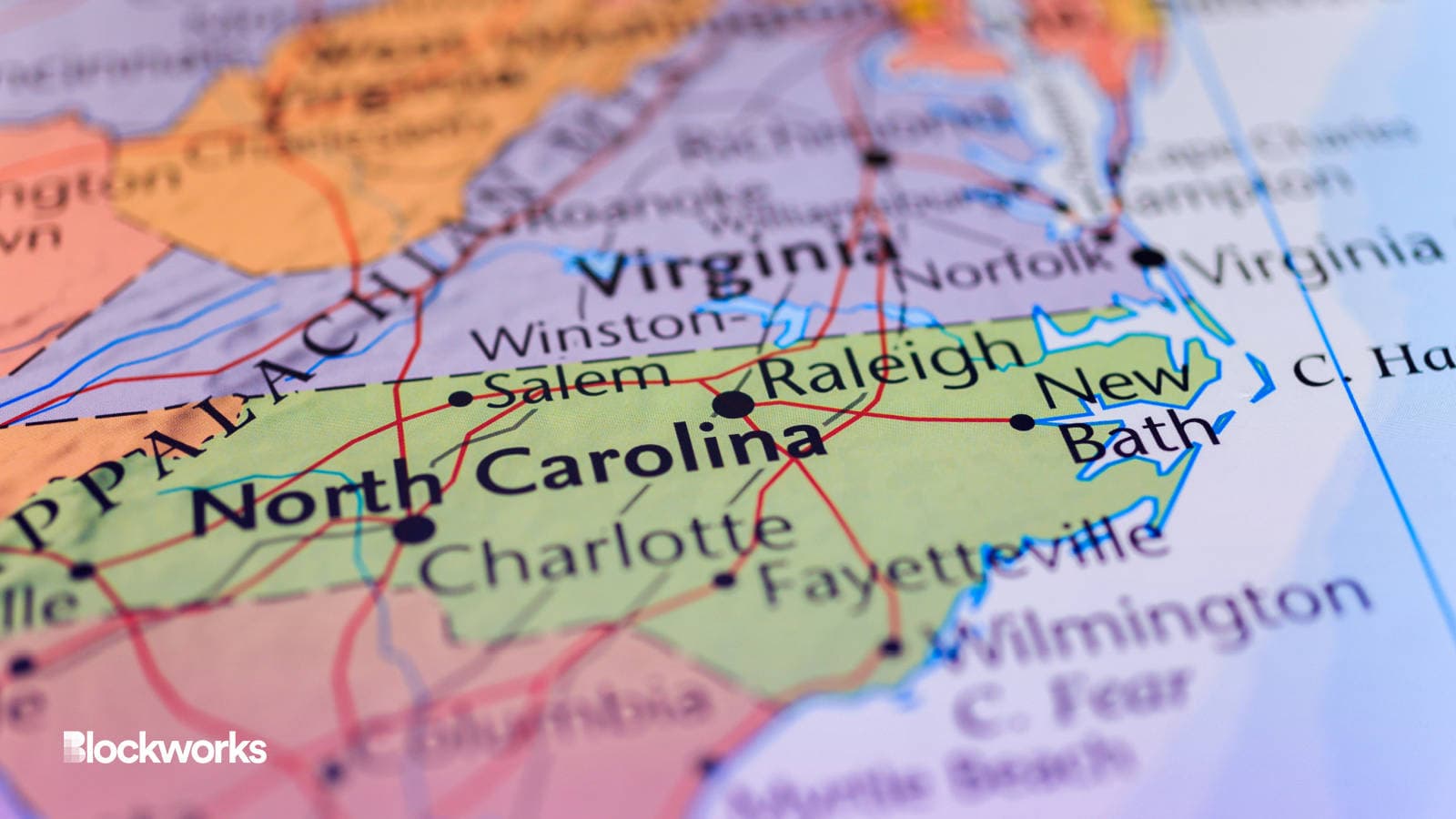
Alexander Lukatskiy/Shutterstock, modified by Blockworks
In North Carolina, the House of Representatives passed a bill on Wednesday which seeks to prohibit government entities in the state from accepting payments made in central bank digital currencies (CBDCs).
The bill passed its second reading unanimously, 110-0, with two absentee votes. It was first introduced on Apr. 18 and sponsored by a raft of Republican state representatives.
North Carolina joins Florida in its opposition to CBDCs, or ‘digital dollars’. The Florida legislature has passed a bill, HB 7049, that amends the Uniform Commercial Code to include a definition for CBDCs.
The US Department of the Treasury, under President Joe Biden, is currently outlining the technology required to develop a digital dollar.
Vocal opposition to CBDCs has picked up in earnest ahead of the 2024 presidential campaign. Critic and presidential candidate Robert Kennedy Jr has joined Florida’s Governor Ron DeSantis’ calls, decrying the potential use of CBDCs for state-wide surveillance.
Kennedy tweeted last month that:
We should be wary since CBDCs are the ultimate mechanisms for social surveillance and control.
DeSantis has expressed his personal fears on a number of occasions this year, implying that if the government takes control over digital currency, individuals might not be able to buy gasoline or firearms.
Ian Corp, an attorney at law firm Agentis, doubts that an anti CBDC-law would stand up to a federal CBDC.
“If the federal government institutes a CBDC, it could trump the Florida bill under the supremacy clause of the constitution,” he said.
CBDCs may not be good for Bitcoin
Proponents argue legislation prohibiting CBDCs could unwittingly harm innovation in digital assets, namely bitcoin.
The nonpartisan bitcoin think tank, Bitcoin Policy Institute, cautioned in March that anti-CBDC legislation may unintentionally impede the growth of the bitcoin ecosystem, unless it incorporates precise phrasing to assess BTC.
North Carolina’s anti-CBDC bill must now pass a state Senate vote before Governor Roy Cooper (a Democrat) can either veto or sign it into law.
Updated May 6th 2023 at 9:30am to include additional context on similar sentiment in Florida’s legislature.
Get the news in your inbox. Explore Blockworks newsletters:
- The Breakdown: Decoding crypto and the markets. Daily.
- 0xResearch: Alpha in your inbox. Think like an analyst.