No, China Didn’t Ban Crypto. It’s Just Pushing Exchanges Offshore
Ownership of crypto isn’t illegal under Chinese law, explains Bizantine Capital’s March Zheng, but regulators have their eyes on exchanges.
Source: Shutterstock
- Nuances in the language of a recent PBOC announcement led some to believe that China had made cryptocurrency illegal, whereas the announcement was really a clarification that there is significant risk in crypto ownership that the law can’t protect against
- The notice provides guidance that OTC desks and exchanges may be subject to criminal liability should they be tied to money laundering, gambling, securities offerings, or RMB-crypto conversion
The People’s Bank of China’s recent crypto-themed announcement shouldn’t be thought of as a definite out-and-out ban on crypto in-country, but rather as another warning, Bizantine Capital’s March Zheng, explained to Blockworks in an interview.
Zheng, a partner at the Shanghai-based fund, noted that there was nothing in the announcement that specifically banned crypto, but rather it was a warning to the public that crypto comes with significant risk and a warning to exchanges that the money transmitter regime is getting stronger.
“There is currently still no legal guidance that defines mainland Chinese citizens owning crypto assets as being illegal,” Zheng told Blockworks. “The text can be interpreted that because there is no legal framework in terms of ownership, there is potential investment risk because the law cannot protect consumers.”
This announcement echoes prior court rulings from Shandong, a province in China’s east, that came out in August which said that “the behavior of investing or trading cryptocurrency is not protected by law” after the defendant asked for compensation for a digital asset transaction gone wrong. “Regular investors should protect their personal property and stay away from virtual currencies,” the presiding judge wrote.
Transacting cryptocurrencies itself has no legal protection, Zheng explained. However, the conversion of crypto-to-fiat will be monitored under a stronger national money transmitter framework.
Previously, the transaction of crypto in China was subject to a constellation of local money transmitter laws — not dissimilar to the US — but this would change things.
The elephant in the room is the vibrant USDT-RMB ecosystem in-country used to bypass capital controls that mainland Chinese citizens are subjected to (they can remit $50,000 a year overseas annually). This recent notice from the PBOC said that OTC desks which facilitate these transactions may be subject to criminal liability for facilitating the breach of capital controls.
As of now Huobi and OKEX, two large China-focused exchanges, are still accessible without VPN within China Zheng said. Binance is also still accessible.
However, Huobi and Binance announced over the weekend that they have stopped letting new users in mainland China register. Huobi followed up by saying that it would “gradually retire existing mainland China user accounts by December while ensuring the safety of users’ assets.”
Zheng believes that this might be the beginning of the end, though the service is sure to continue elsewhere.
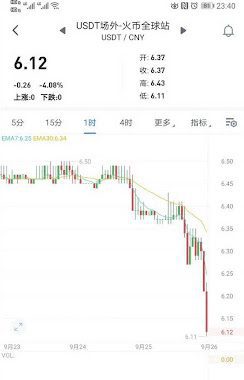
Given the increased scrutiny by authorities in Beijing, the USDT-RMB trading pair was down below the standard USD-RMB exchange rate to 6.12/USD, down from the usual 6.46.
But Zheng doesn’t think that this is the end of crypto in China — far from it. While there is a “brain drain” of talent to Singapore, Zheng points out that there are a number of offshore, USD-denominated Chinese funds buying up crypto which shows that Chinese interest in digital assets has been institutionalized. It just needs to happen offshore.
Are you a UK or EU reader that can’t get enough investor-focused content on digital assets?Join us in London on November 15th and 16th for the Digital Asset Summit (DAS) London. Use code ARTICLE for £75 off your ticket. Buy it now.