DAOs should learn from Machiavelli, says a16z crypto’s Jennings
The crypto VC’s general counsel penned a pair of essays Wednesday advocating a Machiavellian system of DAO governance that emphasizes checks on power
ArTono/Shutterstock modified by Blockworks
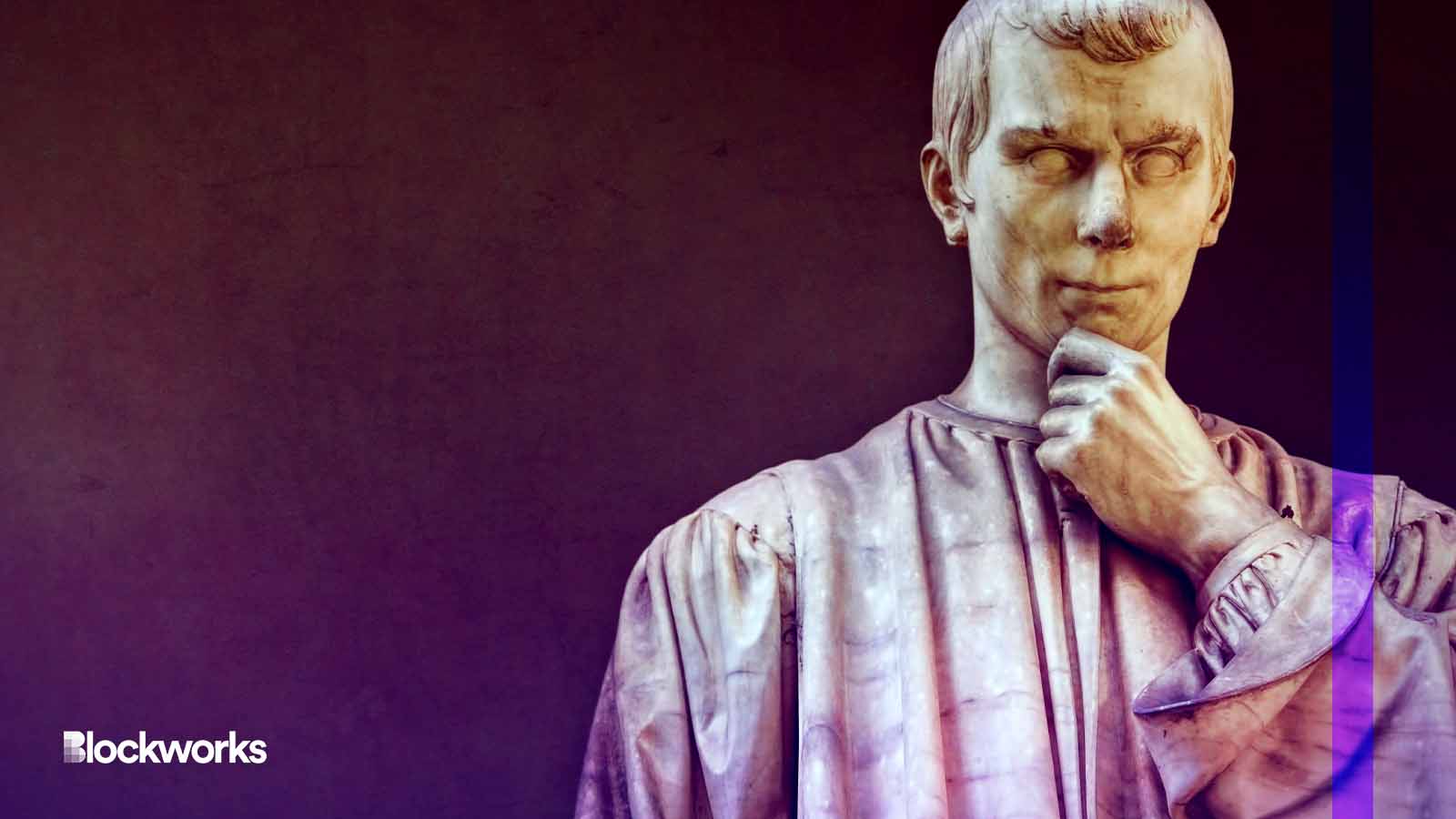
While DAOs toy with novel systems to fix sclerotic DAO governance, a16z’s Miles Jennings suggests looking backwards — to Niccolo Machiavelli.
Likening today’s clamoring Discord channels to 15th century Italian city-states, the a16z general counsel and head of decentralization penned two essays using Machiavelli as a jumping off point to propose a series of reforms for DAO governance.
Jennings believes DAO leaders should be held accountable to members, and he thinks governance can be fixed by people doing less of it.
Perhaps the most unique aspect of Jennings’ argument is the notion that DAOs should reduce subjective human decisions in governance wherever possible. Instead, decisions could be made by third-party clients of DAOs, and users can govern by choosing where to do business while protocols remain neutral — if DEX A’s fees are too high, users are free to switch to DEX B without the protocol’s governance ever getting involved.
Machiavelli was famously pessimistic on human nature, and Jennings believes DAOs should be, too. Starting from the premise that a leadership class will arise in any governing body, Jennings outlines a wonkish bicameral governance structure for DAOs that would see proposals introduced by one council and approved by the other.
Jennings advocates direct elections and term limits for some of the “stakeholders” in the legislative councils.
Ultimately, in Jennings’ view, DAOs need to get real about greed.
“Machiavelli’s philosophy was developed with a pragmatic understanding of the struggle for social power,” Jennings wrote, and such realpolitik is needed when decentralization can tend to be for show while insiders profit.
For Jennings, Machiavellian DAOs present a chance at the sort of stakeholder capitalism that seems beyond reach in traditional finance. Jennings’ proposed reforms would wrest some power away from whales and ruffle feathers in the process — but perhaps it’s better for DAOs to be feared than loved.
Get the news in your inbox. Explore Blockworks newsletters:
- The Breakdown: Decoding crypto and the markets. Daily.
- 0xResearch: Alpha in your inbox. Think like an analyst.
