Indian tech magnate teases Solana-built ‘finternet’ for an economy onchain
The forward-looking financial system is being championed by several contributors to India’s UPI digital money system
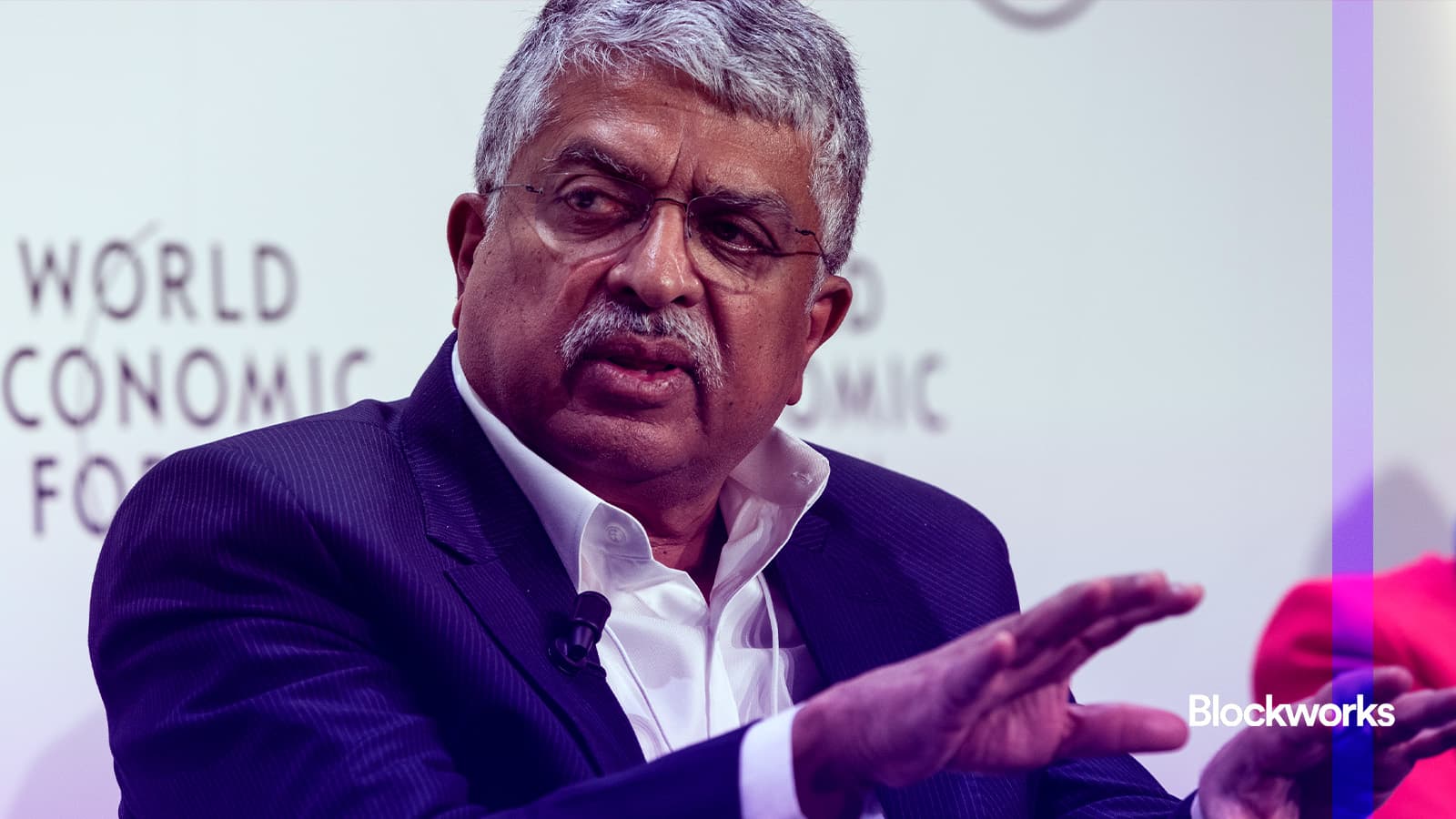
Indian entrepreneur Nandan Nilekani| World Economic Forum/Faruk Pinjo/”World Economic Forum Annual Meeting” (CC license)
Today, enjoy the Lightspeed newsletter on Blockworks.co. Tomorrow, get the news delivered directly to your inbox. Subscribe to the Lightspeed newsletter.
Whenever a big name in the financial world saunters into blockchain, a healthy dose of skepticism is warranted. Institutional blockchain initiatives can oftentimes be more about firms saying they’re doing something than about actually doing something.
One initiative that I’ve been trying to tease apart the seriousness of is the “finternet,” a forward-looking financial system being championed by some of the contributors to India’s UPI digital money system.
The Bank for International Settlements penned a paper with the financial magnate Nandan Nilekani, who co-founded India’s sixth-largest company by market cap, about the finternet in April of this year. Since then, the team has been on the talk circuit.
In late August, Nilekani and Siddharth Shetty, who was formerly an advisor to the Indian Ministry of Finance, demoed the finternet in a talk at Global Fintech Fest. In the demo, the Indian businessman shows off the finternet sending 2,000 rupees and settling the transaction on Solana.
Then last month at Solana Breakpoint, Shetty gave a talk about the finternet which admittedly was a bit of crypto word salad, but he did get into the idea of assets being tokenized on multiple interoperable financial ledgers — that is, building the economy on blockchain rails instead of traditional financial rails.
The finternet is in its very early stages, one person who helped work on the demo told me. And the finternet team, obviously, is not the first to have the idea of moving economic activity onchain. But what interests me is the names involved — and what they imply about the potential stakes for a project that’s integrated itself with Solana.
Nilekani’s Infosys IT company is worth $94 billion, and he and Shetty were involved in building India’s Unified Payments Interface, or UPI, the Solana Foundation and Shetty have said. The Indian government rolled out UPI in 2016 as part of a broader digitization movement in the country. It’s a quite ambitious, albeit offchain, digital payments program that processed over 100 billion transactions between Indians in 2023.
The finternet is wholly distinct from UPI, according to multiple people I spoke to. It’s more about unifying the financial system across asset types and geographies.
The Solana Foundation and Superteam India — a Solana community organization — are both listed as contributors to the finternet sandbox.
At the end of the day, maybe the finternet project won’t turn out to be much. But when we talk about large institutional projects involving Solana — the Visas, PayPals, and Stripes of the world — perhaps it’s worth throwing the finternet in there as well.
Get the news in your inbox. Explore Blockworks newsletters:
- The Breakdown: Decoding crypto and the markets. Daily.
- 0xResearch: Alpha in your inbox. Think like an analyst.
