Kazakhstan Government Regulations Threaten Bitcoin Mining Hotspot
The Kazakhstan government once offered bitcoin miners subsidies and tax incentives. Now in the midst of an energy crisis, the government is doing an about face.
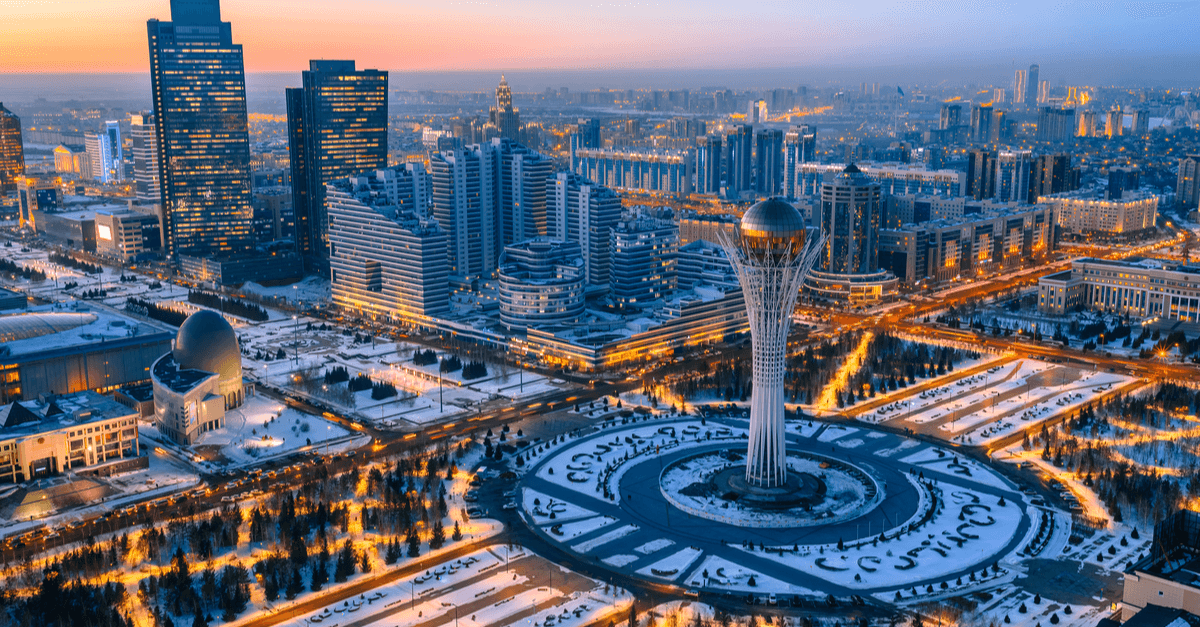
Nur-Sultan, Kazakhstan; Source: Shutterstock
- Kazakhstan’s government once encouraged bitcoin miners to set up shop in the country, but now it’s looking to put a cap on the industry’s growth
- The government has ordered the total power for electrical installations of consumers engaged in digital mining activities should not exceed 100 MW with each individual site limited to 1 MW
New data from the Cambridge Center for Alternative Finance’s Bitcoin Electricity Consumption Index suggests that Kazakhstan is one of the new bitcoin mining hubs commanding approximately 18% of the global hashrate, up from 8% earlier this year. However, new policy coming down the legislative pipeline from the nation’s parliament might be putting an end to its growth story.
As miners saw the writing on the wall of a looming mining ban in China in late 2020 and early 2021, many left for Kazakhstan. The country was well-capitalized to benefit from this, due to an excess of power, explained Kevin Zhang, vice president of business development at Foundry, a mining-focused Digital Currency Group subsidiary, with the government providing generous tax incentives and rebates to get miners departing China to relocate to Kazakhstan.
“It was a play to put these dormant assets to use,” he told Blockworks. “At one time, Kazakhstan’s government was very welcome to bitcoin miners.”
However, as the industry flourished in-country and began generating some serious capital the government became less enthusiastic about its tax-free status. Earlier this year, the government announced amendments to Kazakhstan’s tax code, which means beginning in January 2022, crypto miners will have to pay an additional 0.23 cents per kWh.
But this was all before the global energy shortage threatened to put a chokehold on the world economy. Kazakhstan relies heavily on fossil fuels, which are set to be in high demand this winter given production challenges. As a result, the country is moving to put a hard ceiling on the bitcoin mining industry in the country.
KEGOC, its state power utility, reported earlier this week that growth in power consumption is up 11.8% during the first nine months of the year, or approximately 1,500 MW — roughly the energy used by an entire province. Given that KEGOC says the country’s aging grid needs more frequent repairs, including to generating stations, the state utility says it’s implementing regional power restrictions to preserve capacity.
Parliamentarians are also wary of the problem. A bill enacted by the country’s legislature, put forward by its Energy Minister, orders strict caps on the mining industry’s access to power limiting its total draw from the grid to 100 MW with each new installation capped at 1 MW.
“You have a complete 180 flip in the approach to mining. It’s not being made illegal, they just want to limit it because it’s growing so fast,” Foundry’s Zhang explained. “Their grid is being strained. Not just from the bitcoin miner exodus from China, but with the global energy crisis that’s going on.”
While Kazakhstan is nominally a democracy, critics of its ruling party have called the president authoritarian. Transparency International gives Kazakhstan a score of 38/100 on its transparency index (beneath China), ranking it as a “corrupt” country.
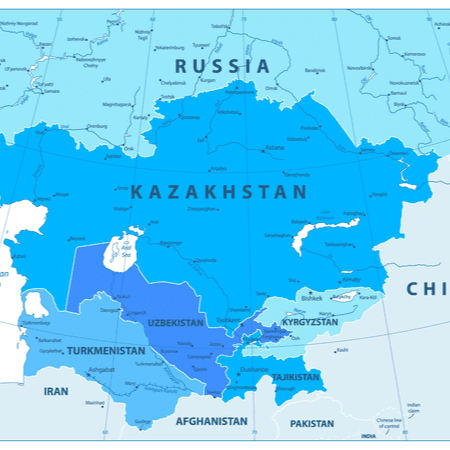
Although there might be some advantages to setting up a mining operation in a jurisdiction like China or Kazakhstan at first, Zhang said, “The legal framework in a place in Kazakhstan can change very quickly. Just like in China, if the CCP doesn’t want mining, it can kick them out.”
Ultimately, Zhang said, this is an argument for setting up more mining capacity in North America. The continent has the rule of law, plus most mining activities would fall under state mandate in the US or provincial mandate in Canada, meaning there can’t be a federal sweep to eliminate the industry and jurisdictions can compete against each other for business.
“Think of it as 60 different republics each with their own stances on bitcoin mining,” he concluded.