Hong Kong urges major banks to embrace crypto exchanges as clients
The city’s banking regulator raised questions in a meeting about banks’ hesitancy to welcome crypto exchanges as clients
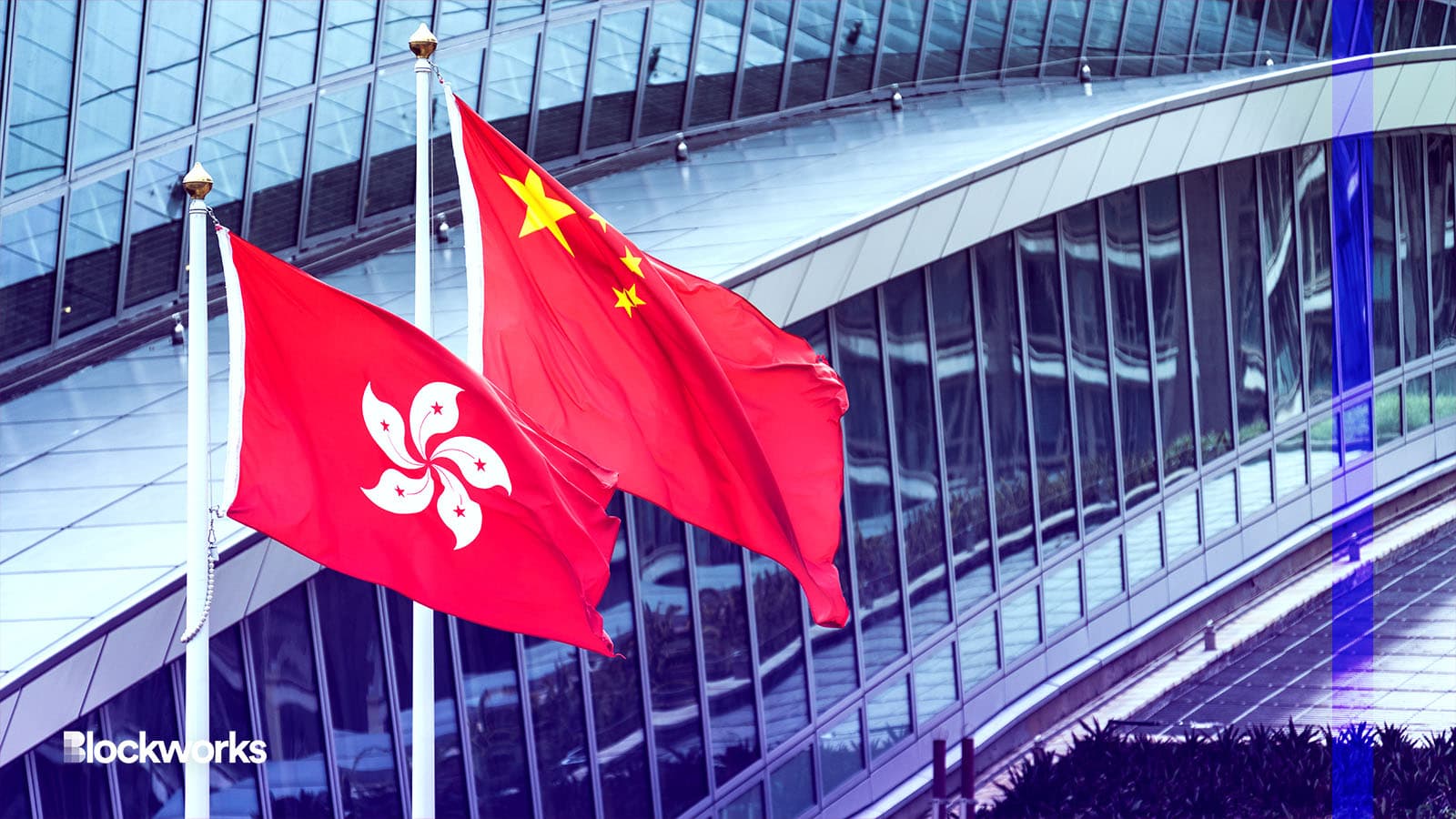
Urbanscape/Shutterstock, modified by Blockworks
Hong Kong, determined to reclaim its fintech crown and rival Singapore, is poised to become a thriving crypto hub by considering the inclusion of retail investors in cryptocurrency trading.
The city-state is reportedly giving a nudge to major banks, urging them to hop on the bandwagon and embrace crypto exchanges as clients after announcing a clear regulatory framework that aims to encourage innovation.
The Financial Times reported on Thursday that the lenders include HSBC, Standard Chartered and Bank of China.
In a recent meeting, the Hong Kong Monetary Authority, the city’s banking regulator, questioned lenders about their hesitancy in accepting crypto exchanges as clients, the report said.
In a letter to the banks, the HKMA advised them that conducting due diligence on prospective customers should not place excessive burdens, especially for those establishing offices in the city to explore opportunities.
An HKMA spokesperson confirmed to Blockworks that it has provided guidance to banks on provision of banking services to corporate customers, including virtual asset service providers.
Standard Chartered reacted to the report by saying it has regular dialogue with regulators on different subjects. HSBC and Bank of China didn’t return Blockworks’ request for comment by press time.
Bloomberg reported earlier this year that HSBC banned customers from buying crypto with credit cards due to risks, as warned by UK authorities.
US Government’s ongoing crusade vs. Hong Kong’s welcome
Meanwhile, in the US, the Securities and Exchange Commission’s back-to-back lawsuits against Binance and Coinbase last week signify a fresh stage in the US government’s ongoing efforts to control the industry.
Some analysts suggest the crackdown will have minimal immediate impact on crypto investors.
A person familiar with the HKMA’s discussion told the FT that the regulator encouraged banks to overcome their fears, highlighting that the traditional banking mindset and resistance from senior executives are factors behind the hesitancy in adopting crypto
And Hong Kong legislator Johnny Ng went as far as encouraging Coinbase and other exchanges to establish official operations in the city.
Hong Kong’s initiatives attract crypto players
Ahmed Ismail, CEO of AI-driven crypto liquidity aggregator FLUID, told Blockworks that Hong Kong is actively implementing multiple initiatives to facilitate expansion in the local market, making it an enticing hub for companies seeking to broaden their crypto operations.
He pointed to companies like Gate Group and Huobi announcing plans to establish operations in the region, saying that “this can help bring liquidity and trading volume to the crypto sector.”
State-owned China Pacific Insurance also recently introduced two crypto funds in Hong Kong. And according to Ismail, the Chinese government may use these to invest in crypto indirectly.
“This way, not only can China maintain its influence in Hong Kong, but it could also help gain from the region’s crypto activities,” he said.
“To put it succinctly, if Hong Kong’s crypto market manages to gain significant traction, it can potentially be the thing that kick-starts the next bull run.”
Get the news in your inbox. Explore Blockworks newsletters:
- The Breakdown: Decoding crypto and the markets. Daily.
- 0xResearch: Alpha in your inbox. Think like an analyst.
