Hive’s ‘Massive Efficiency Upgrade’ Led by Intel-powered Miner Rollout
The publicly traded company is set to receive the last of its new, Intel-driven mining rigs by the end of January
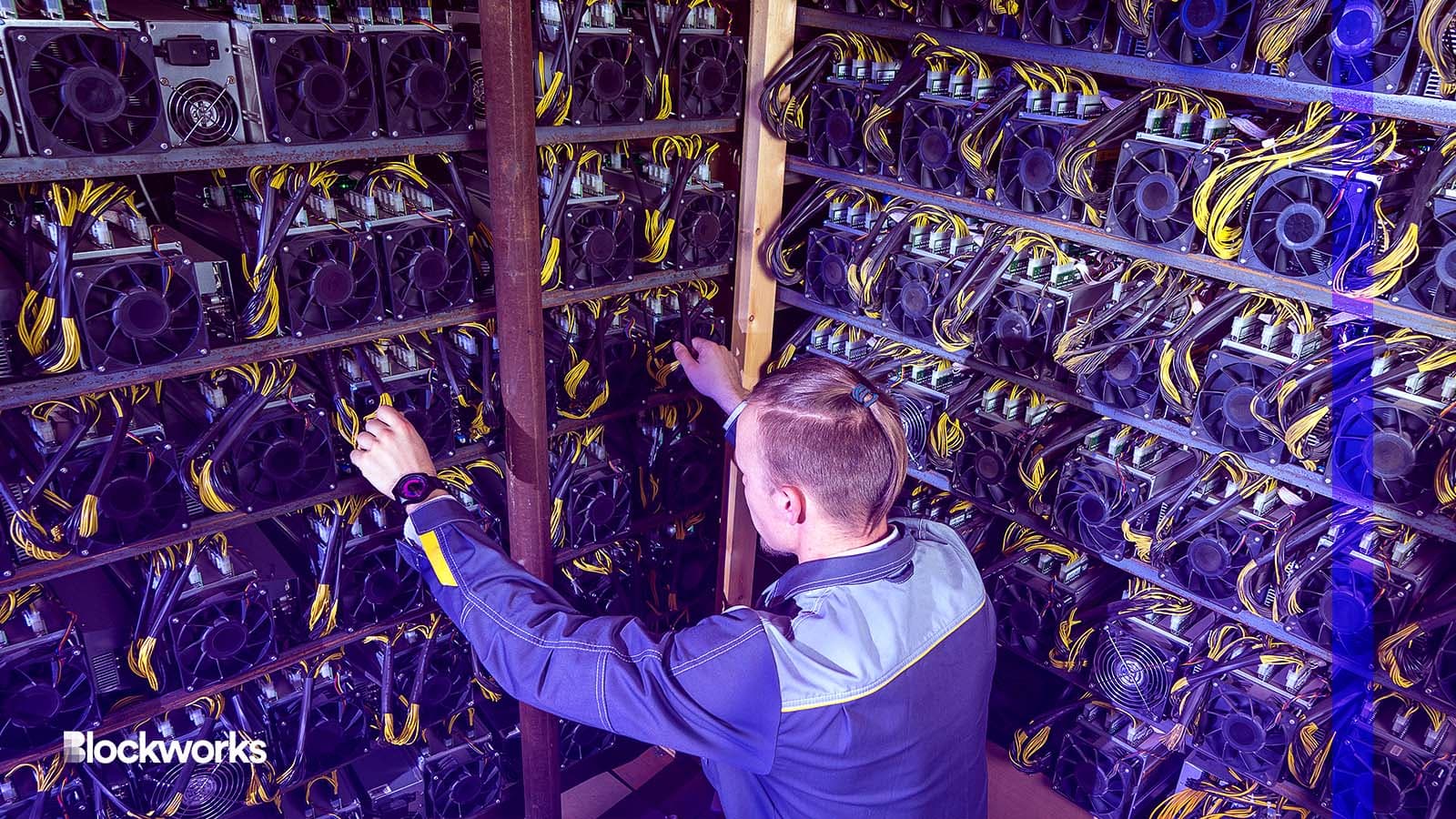
Mark Agnor/Shutterstock.com modified by Blockworks
Hive Blockchain has installed about a quarter of its expected new fleet of customized mining rigs powered by Intel processors — one key component of a push the company said would result in a “massive efficiency upgrade.”
The Canada-based bitcoin miner moved to set up a supply arrangement with Intel in March 2022. Hive executives said at the time that the company would work with a separate manufacturer to integrate Intel’s blockchain accelerators into an air-cooled bitcoin mining system that, once in place, would boost its bitcoin mining hash rate by roughly 95%.
Now, going on a year since the agreement was made public, Hive has put to work more than 1,400 of the new Intel-driven units — the company calls them HIVE BuzzMiners — the mining operator said this week. A total of 5,800 have been slated for production.
The crypto mining firm’s stock (HIVE) soared some 22% by mid-afternoon Thursday in New York, one of a number of publicly trading crypto companies to book double-digit intraday gains on the heels of cooling US inflation metrics released Thursday.
Though the stock has plummeted 76% over the past 12 or so months, the last 30 days have brought about quite the rebound: up roughly 46% from a month ago.
The recent installation of 1,423 HIVE BuzzMiners, as well as 2,050 Bitmain S19j Pro miners, are part of the company’s push to capture market share in the distressed bitcoin (as well as other proof-of-work blockchains) mining sector.
Hive expects all of the 5,800 HIVE BuzzMiners to be manufactured, tested and shipped by the end of January 2023.
A Hive spokesperson did not immediately return a request for additional comment.
Intel said last April that Block, GRIID Infrastructure and Argo Blockchain were signed up to be among the first customers of the newly launched Intel Blockscale ASIC product. The ASICs are capable of powering up to 580 giga hashes per second (GH/s) in hash rate and can reach power efficiency of 26 joules per terahash (J/TH) — ranking on the more efficient end compared to a number of competitors.
Intel Chief Architect Raja Koduri tweeted in June that the computing conglomerate had started shipping its Blockscale ASIC to a number of miners.
“Excited to see how Argo Blockchain, Griid and Hive Blockchain improvise around Blockscale and our open design,” he said at the time.
Intel did not immediately return a request for comment.
Hive’s growth comes during a tough time for the crypto mining sector. Hive Executive Chair Frank Holmes told Blockworks in September that Hive had enough cash on hand to pay for the Intel miners — adding that the company was going after other buying opportunities as abandoned machines flooded the market.
Get the news in your inbox. Explore Blockworks newsletters:
- The Breakdown: Decoding crypto and the markets. Daily.
- 0xResearch: Alpha in your inbox. Think like an analyst.
