The history of NFTs you didn’t know you needed: A review of ‘Token Supremacy’
What I found most compelling in this digital art history is how NFTs are far less revolutionary as an art form than I had believed
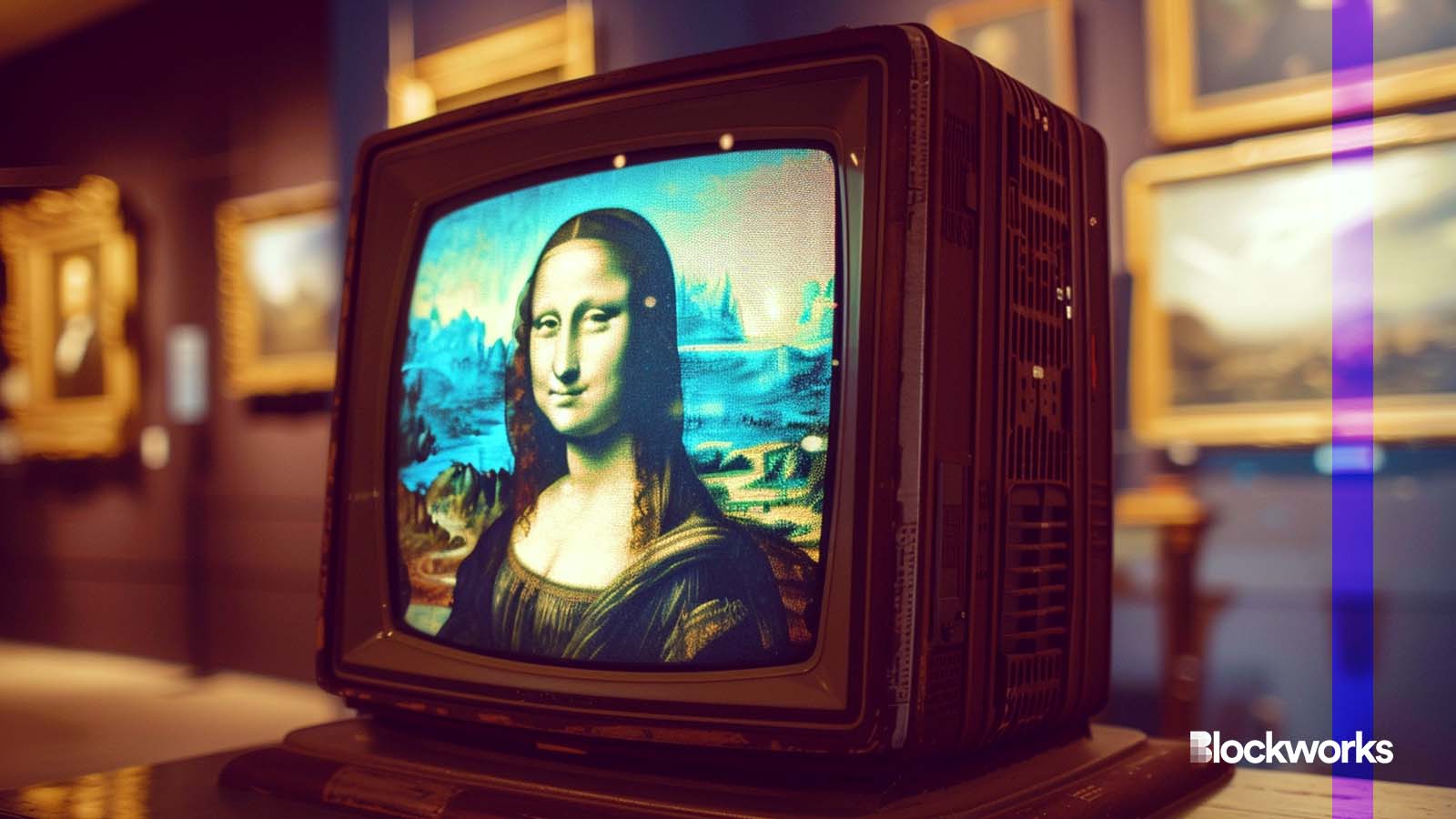
Midjourney modified by Blockworks

Unlike books on Sam Bankman-Fried, there aren’t too many out yet on the story of NFTs.
This week’s release of Token Supremacy: The Art of Finance, the Finance of Art, and the Great Crypto Crash of 2022 by New York Times culture reporter Zachary Small, changes that.
And while his treatise on NFTs and the wider art market can at times feel like a bit more in-depth of a history than the average crypto degen would digest, anyone who has a genuine interest in modern-day digital art will learn something new from this story. Like, for instance, the weirdly high number of NFT creators who have filmed themselves setting priceless, physical pieces of artwork (or themselves) on fire for the imagined clout.
Small comes to the NFT space with a background in reporting on the traditional art world, which is an important and often rare perspective to have in the NFT space. As someone who has little understanding of how non-NFT art is bought and sold myself, Small’s book had me constantly surprised both by how similar the NFT art market is to what came before, and also how different.
One example — we all remember the first NFT insider trading criminal case, where former OpenSea manager Nate Chastain was sentenced to three months in prison for buying NFTs ahead of their appearance on OpenSea’s homepage. But as Small writes in the book, it’s common practice for art dealers in the traditional art world to purchase paintings from artists when they know the artists will soon have major exhibitions. The OpenSea case then, Small continues, “was a clear indication that, within the industry, collectors viewed NFTs as being much closer to securities than to art.”
Read more from our opinion section: How a smart contract gets away with murder: A review of ‘The Oracle’
But what I found most compelling in Small’s telling of digital art history is how NFTs are far less revolutionary as an art form than I had believed. I am tickled by the idea that NFT artists are constantly recreating art movements of the past, either knowingly or subconsciously.
Take a quotation from pop art sculptor Claes Oldenburg, who wrote in 1961:
“I am for an art that embroils itself within the everyday crap and still comes out on top. I am for an art that imitates the human, that is comic, if necessary, or violent, if necessary.”
Small then writes of Mike Winkelmann, the artist known as Beeple whom he extensively interviewed for this book: “Winkelmann said much the same thing during my studio visit. And if he were a better art-history student, I might have accused him of ripping a page from Oldenburg’s notebook.”
Or, take this small anecdote about digital artists before blockchain was invented, who had to use physical CDs to store their individual artworks.
Small writes that these “artists were reluctant to upgrade or replace discs that collectors had accidentally snapped or scratched. If the discs were so easily replaceable, this would imply that the artworks they contained were also replaceable. And if they were replaceable, then they were not a unique or valuable commodity.”
Sound familiar?
If you are genuinely interested in NFTs, you’ll learn more about the artists that laid the foundation for NFTs to either successfully enter the space (or not) — as long as you can get past the prerequisite comparison of crypto to the Dutch tulip bubbles that intros the book.
If you are genuinely opposed to NFTs as an art form and all that they stand for, Token Supremacy will give you some evidence-based ammunition to debate NFT degens the next time they wax poetic about the future of digital art.
Take your pick.
I don’t care much about tech, I don’t care a whole lot about finance, either. I care about writing stories and watching weird things unfold. And that’s why I’ve ended up in crypto.
But because I’m missing that passion for what crypto and blockchain are all about — finance, tech, privacy, yadda yadda — I’m going to write instead about what I am actually interested in. Everything about crypto that has very little to do with crypto.
That’s what this column will be about. All the tangential stories that come out of the blockchain and crypto space, what I think about them, and how I navigate it all as a skeptical former Russian literature major.
It’s precisely my perch as an outsider that lets me do what I do: Opine on all sides of any crypto issue, no strings attached, no skin in the game.
If you want to talk crypto with me, let’s go off topic.
Get the news in your inbox. Explore Blockworks newsletters:
- The Breakdown: Decoding crypto and the markets. Daily.
- 0xResearch: Alpha in your inbox. Think like an analyst.
