FTX Rolls Out Program To Support Underbanked Chicago Communities
The US affiliate of the Bahamas-based crypto exchange names Chicago as its headquarters
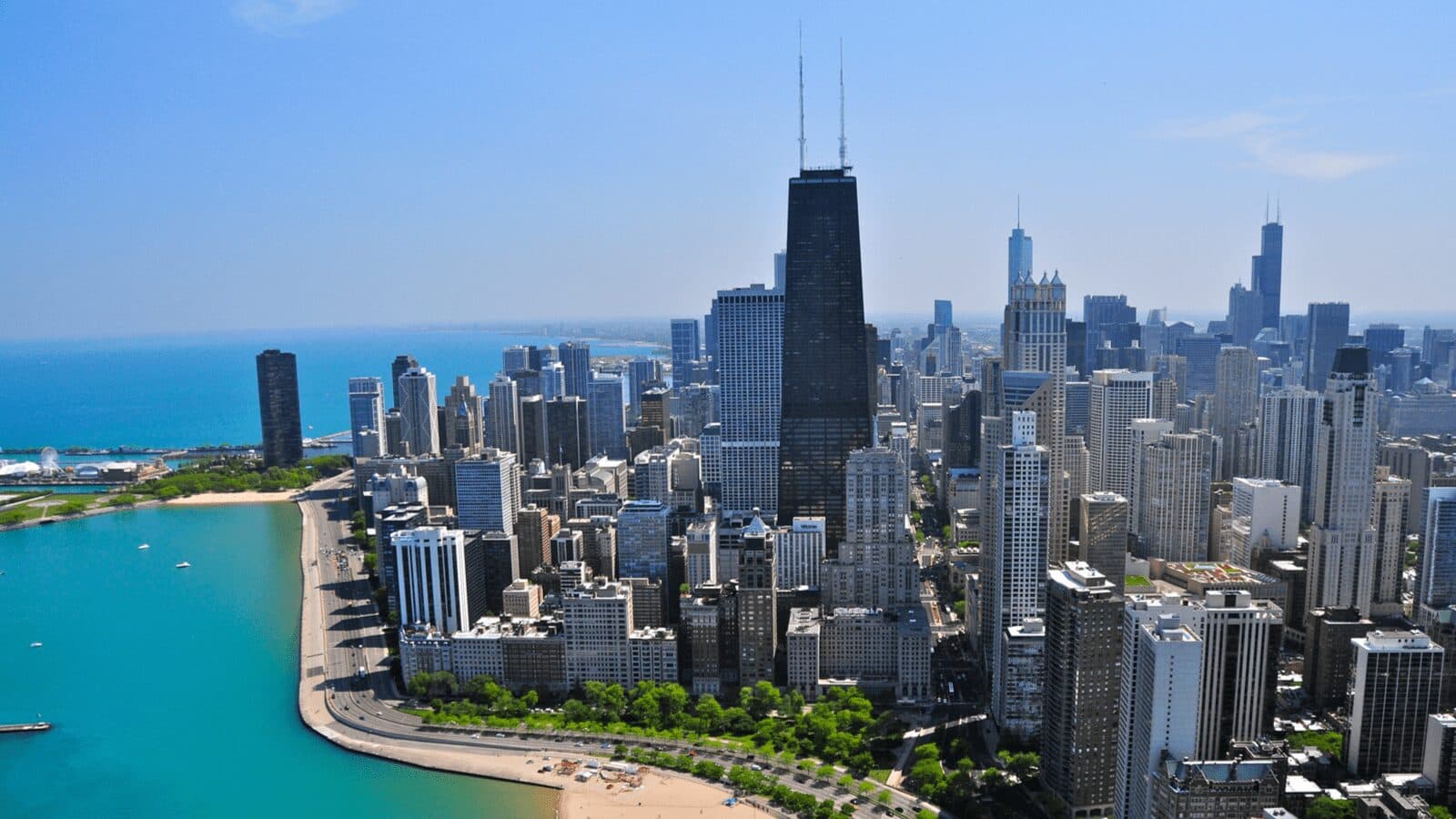
Chicago skyline | Source: Shutterstock
- The company will provide $500 per month, financial literacy education, a zero-fee bank account and a Visa debit card to 100 Chicagoans
- As for future programs, FTX.US and the city are exploring how they could support Chicago residents with global remittances
The US affiliate of Bahamas-based crypto exchange FTX has made Chicago its headquarters and is set to pilot a program focused on supporting the city’s underbanked communities.
FTX.US President Brett Harrison told Blockworks some of the largest exchanges, trading firms, hedge funds, fintechs and venture capital firms are based in Chicago, making it an ideal — if competitive — spot for recruiting.
The company is aiming to offer financial relief and economic mobility to residents in the city’s less-affluent Austin, Englewood and West Garfield Park neighborhoods.
FTX.US is partnering with nonprofit organization Equity and Transformation (EAT) in a one-year program to offer $500 per month in supplemental income, financial literacy education, a zero-fee bank account and a Visa debit card to 100 Chicagoans.
The move follows FTX.US’s closing of a $400 million Series A round in January, which valued the company around $8 billion.
The initiative builds off of the Chicago Resilient Communities Pilot, a $31.5 million commitment from the city to combat pervasive poverty.
The program, which provides 5,000 Chicagoans with $500 per month for one year, is the largest municipal cash assistance program in the US, according to Samir Mayekar, Chicago’s deputy mayor of economic and neighborhood development.
“To be focusing truly on making their products and services accessible to those in need in Chicago, it’s a very innovative way to feature some of the unique benefits of blockchain technology in a way that can make a difference on the ground here in neighborhoods,” Mayekar told Blockworks.
An academic partner will conduct a research study examining the effect of the monthly $500 payments and financial inclusion services on residents’ financial stability and economic mobility.
“We’ll be studying this program and seeing if this is a viable, scaling program to continue in this city in a larger way,” Harrison said.
Phase 2
Going forward, FTX and the city are looking into an additional program that would focus on how it could support Chicago residents with global remittances, which could launch before year end.
Chicago is an “immigrant friendly” city with many residents sending money to families in other countries, Mayekar said. He added such transactions can carry fees of 20% or more.
“Looking at a remittance pilot and leveraging the kind of power of the FTX platform to have basically no-fee cash transfers across borders where you’re also able to kind of hedge from volatile currencies, this could be incredibly powerful,” Mayekar said.
Get the news in your inbox. Explore Blockworks newsletters:
- The Breakdown: Decoding crypto and the markets. Daily.
- 0xResearch: Alpha in your inbox. Think like an analyst.
