Selling shares in yourself is so hot right now
Hasn’t history already taught us how bad it is to assign monetary value to humans?
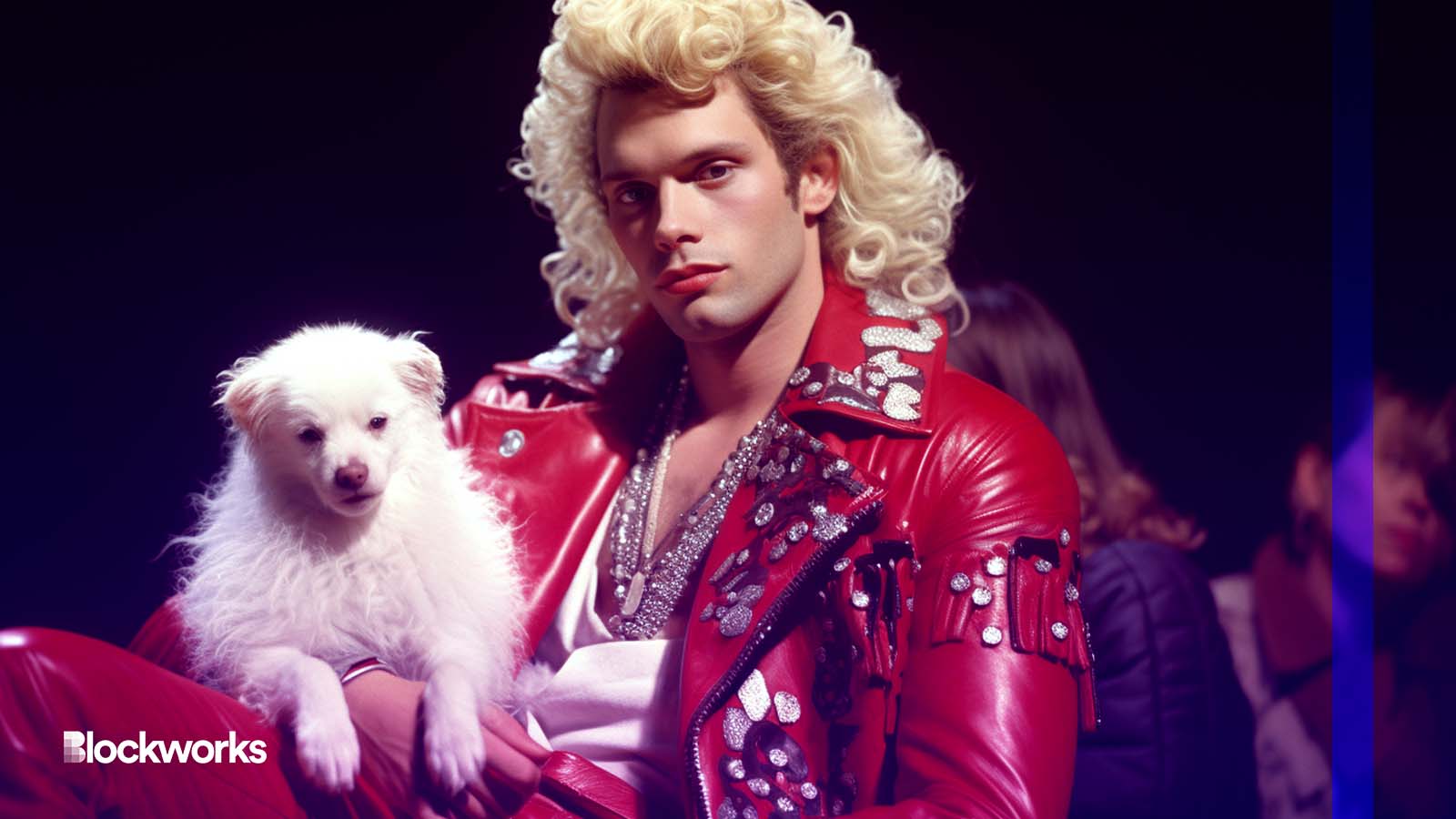
Midjourney modified by Blockworks

For the past two days, I have officially been on sale.
Because as part of my shtick where I try out weird crypto projects so that you don’t have to, I’ve registered myself on crypto’s new “killer app” — Friend.tech.
Granted, the act of linking my X account and sending a minimal amount of ETH to a new app is a lot less invasive and weird than getting my eyeballs scanned. But it is at least potentially just as much of a privacy issue: If you click on Friend.tech’s privacy policy, it simply declares: “Coming soon!”
Up until now, crypto apps — of which there are thousands — have only appealed to the very native audience. There are already decentralized versions of the App Store, Spotify, Google Maps out there, but no one besides crypto diehards can be bothered to go through the complex processes it takes to use them.
Which is why I’ve chosen to give space in my non-crypto, crypto column to look at what is being proffered this time…and to tell you why I don’t think that buying and selling online versions of people is going to be the app that finally succeeds in bridging that chasm from crypto to the rest of the world.
At least, I hope it’s not.
More than a just bad idea
A career in crypto can distort the reality around you. It’s a bit like living in an echo chamber; if you stay inside too long, you’ll start to believe that everyone else out there also firmly believes in a decentralized future, a utopia where we own our own data and dance on the graves of third-party custodians.
Working in crypto’s mutual admiration society — this is the only non-offensive term that Google gave me for “echo chamber” — also means that it’s easy to forget that not everyone is as strong of a believer in capitalism. I’m not saying that the world is secretly overrun by communists, but it’s fair to say that people working non-crypto jobs and living non-crypto lives might not spend as much time thinking about how to gamify and financialize everything.
And the appeal of Friend.tech — which allows you to not only put bits of yourself up for sale, but to also buy and sell pieces of your friends — inherently relies on the notion that people are eager and willing to commodify themselves.
The assumptions continue: that normal people, out there in the world beyond crypto, will be totally comfortable with putting a price tag on their online presence. That celebrities, influencers and content creators will want direct messaging access from any fan that can afford a piece of them.
Haven’t we learned how bad it is yet to assign monetary value to humans?
The highs and the lows that I’ve felt whenever anyone has bought or sold a piece of me — three people, now four, now I’m worth almost a dollar instead of a mere 40 cents — mark the start of a slippery slope. An app like Friend.tech opens possibilities for the worst parts of human nature to come out.
Plus, the ethics of being able to sell yourself online are incredibly hazy. If a journalist gets on Friend.tech, will angry readers buy and then dump their “keys” if the journalist writes an article they don’t like? What if a potential op-ed contributor buys shares of Molly Jane Zuckerman in an attempt to get a byline?
Friend.tech is still just a niche app with a predominantly crypto audience. You don’t yet have to worry about your non-crypto friends signing up and badgering you to buy “keys” of themselves to raise their value (notice that they are no longer called “shares,” which could attract unwanted SEC attention). And there is no shorting feature, so no “key” holders have any incentive to start putting each other on blast just yet.
But you should probably keep an eye on your crypto friends, because I already know one person who chose to buy a “key” of one of his crypto heroes instead of groceries.
I don’t care much about tech, I don’t care a whole lot about finance, either. I care about writing stories and watching weird things unfold. And that’s why I’ve ended up in crypto.
But because I’m missing that passion for what crypto and blockchain are all about — finance, tech, privacy, yadda yadda — I’m going to write instead about what I am actually interested in. Everything about crypto that has very little to do with crypto.
That’s what this column will be about. All the tangential stories that come out of the blockchain and crypto space, what I think about them, and how I navigate it all as a skeptical former Russian literature major.
It’s precisely my perch as an outsider that lets me do what I do: Opine on all sides of any crypto issue, no strings attached, no skin in the game.
If you want to talk crypto with me, let’s go off topic.