FDIC says more than 85 businesses are lying about being insured
This year, the FDIC’s annual risk review includes a section on crypto
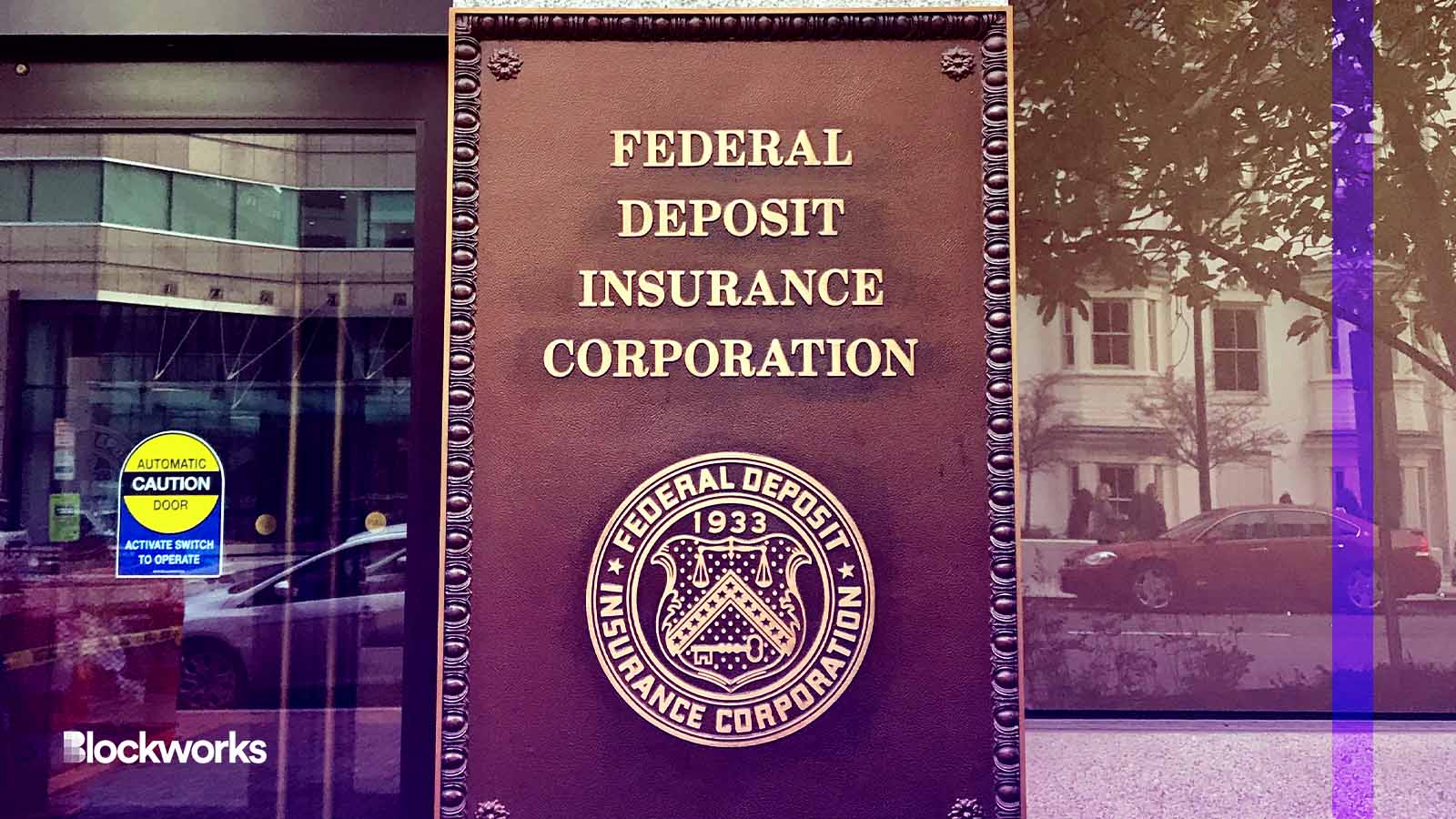
DCStockPhotography/Shutterstock modified by Blockworks
In its latest risk review, the Federal Deposit Insurance Corporation has doubled down on its crypto warnings.
Digital assets pose “novel and complex risks,” the FDIC said, making it challenging to fully assess how capital markets and banking institutions will be impacted.
The FDIC’s risk review is an annual summary the agency publishes to inform community banks and other institutions about potential threats to stability and stressors on the banking system. The 2023 report, published Monday, includes a section on digital assets for the first time.
“The FDIC, in coordination with the other federal banking agencies, continues to closely monitor crypto-asset-related activities of banking organizations,” the agency wrote in the report. “As warranted, the FDIC will issue additional statements related to engagement by banking organizations in crypto-asset-related activities.”
The review also notes that the FDIC has taken action against more than 85 businesses and entities that have misrepresented the “nature, extent, or availability of deposit insurance,” an issue the agency has cracked down on this summer.
In June, the Consumer Financial Protection Bureau (CFPB) released warnings that “popular digital payment apps,” such as Venmo and PayPal, which recently launched its own stablecoin, are inherently dangerous because users are not entitled to FDIC coverage. “Billions of dollars” are currently stored in apps like Venmo and PayPal, the release said, but if these platforms were to go under, there is no guarantee clients would be made whole.
Also in June, the FDIC issued a letter to crypto exchange OKCoin and demanded that it stop making allegedly misleading claims about being insured. The agency said there were three instances where the exchange made false claims, including advertising that OKCoin is “licensed across the US with FDIC insurance.”
Read more: FDIC warns OKCoin about deceiving customers with protection claims
In addition to putting a stop to false claims, the FDIC is primarily concerned with the “dynamic” nature of crypto, as it can lead to increased fraud, legal uncertainties and poor risk management, due to a “lack of maturity and robustness,” the agency wrote.
The FDIC expects to continue issuing statements and warnings to investors and banking institutions involved in crypto assets as it monitors the space and identifies areas of risk.
“The FDIC also has developed processes to engage in robust supervisory discussions with banking organizations regarding proposed and existing crypto-asset-related activities and provide case-specific supervisory feedback,” the review added.
Get the news in your inbox. Explore Blockworks newsletters:
- The Breakdown: Decoding crypto and the markets. Daily.
- 0xResearch: Alpha in your inbox. Think like an analyst.
