EU Lawmakers About To Vote on Sweeping Crypto Regulations
The European Union may be about to see comprehensive crypto regulations in the form of MiCA, which has been years in the making
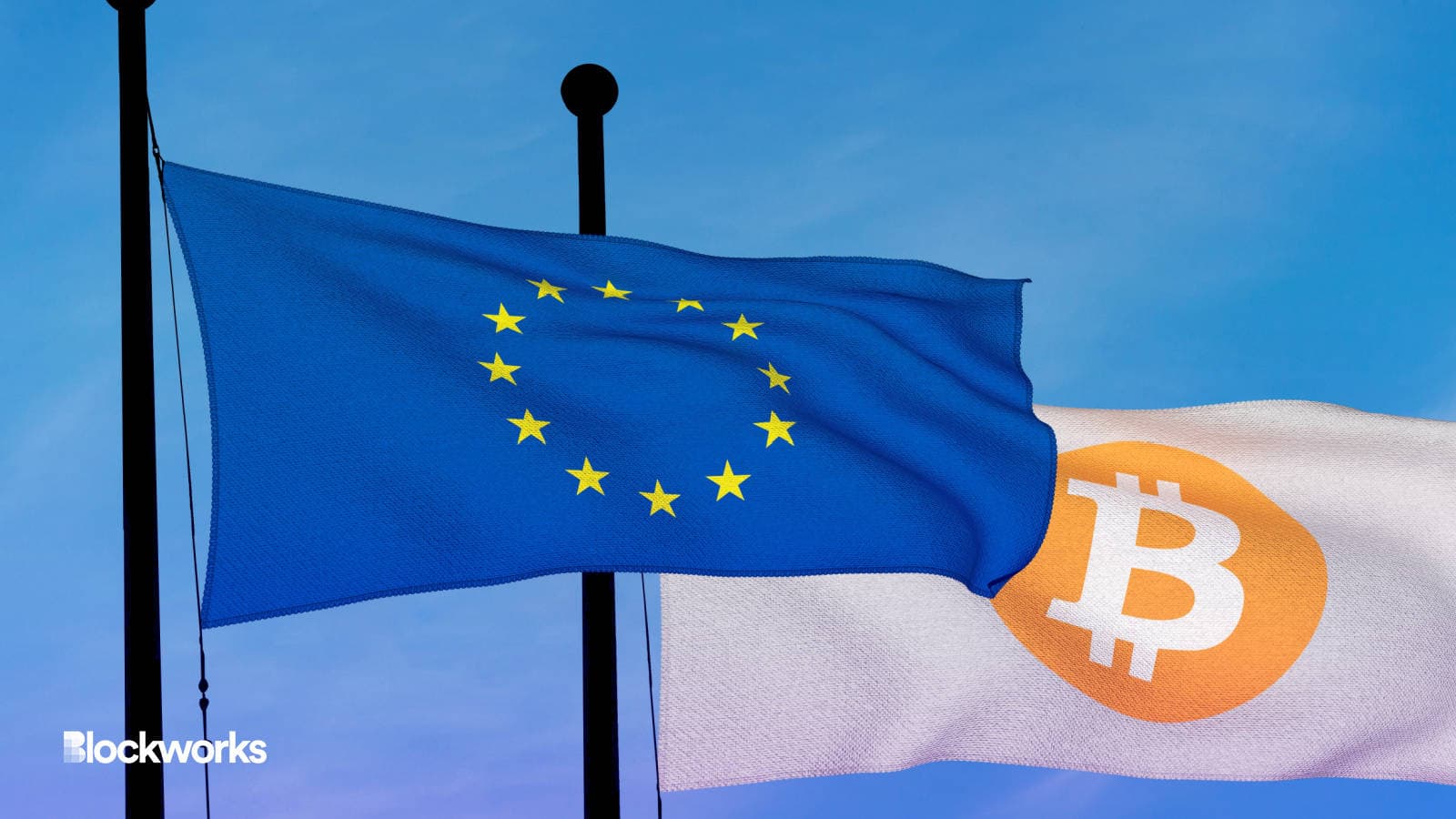
Marc Bruxelle/Shutterstock, modified by Blockworks
European lawmakers passed the Markets in Crypto Assets (MiCA) act today, ushering in a new era of crypto regulation across the bloc.
Officials had debated the finer points of the bill, publicly voicing their support for a licensing regime specifically for digital asset service providers. The bill passed 517 to 38.
The transfer of funds provision has drawn particular attention. It aims to support tracking suspicious digital asset activity — money laundering and terrorist financing — across the European Union.
Transfers exceeding EUR 1,000 ($1,097) from an unregulated or self-hosted platform are expected to be restricted.
“Adding regulatory clarity and clear rules for sure will reduce risks for the business and customers, especially in areas not covered by consumer protection rules,” Ilya Volkov, CEO and co-founder of YouHodler told Blockworks.
MiCA will install supervisory provisions for digital assets, consumer protections and even environmental safeguards.
While a vote was initially slated for February, the bill was delayed until April to allow industry-related firms additional preparation time.
The bill, first introduced in 2020, should come into effect 12 to 18 months after being added to the EU’s registry.
Unintended impact of European Union crypto regulations
In October, the Union’s standing committee reached a preliminary deal (28-to-1), installing the European Securities and Markets Authority as the primary watchdog for digital assets falling outside normal financial regulatory bounds.
In addition to a licensing regime, MiCA intends to establish a system ensuring stablecoin issuers maintain sufficient reserves to support redemptions — a subtle nod to last year’s collapse of Terra’s algorithmic stablecoin, UST.
Joey Garcia, head of public affairs at bitcoin custodian Xapo Bank, told Blockworks that while he welcomes raising standards for digital asset service providers, there was concern that MiCA would govern the asset class too closely.
“What will the implications be for DeFi integrations and crossovers? Similarly, while the categorization of virtual assets in new categories is also constructive and forward-looking, are the rules proportionate to the industry?”
The regulation has been viewed by some as a means to limit the potential for crypto to flourish, though others still believe it could provide a model for competing jurisdictions, including the US.
“There is a widely held misconception within the crypto space that regulation’s purpose is to stifle progress and innovation,” Albert Isola MP, Gibraltar’s Minister for Digital and Financial Services, told Blockworks.
“Importantly maintaining market integrity is paramount and must be considered from the outset.”
Updated Apr. 20, 2023 at 8:46 am ET: Updated to reflect that MiCA was passed.
Get the news in your inbox. Explore Blockworks newsletters:
- The Breakdown: Decoding crypto and the markets. Daily.
- 0xResearch: Alpha in your inbox. Think like an analyst.
