EU to Vote on Revised Regulation Targeting Crypto Transfers
The European Parliament is expected to vote Thursday on an amendment to AML legislation that seeks to regulate “unhosted wallets”
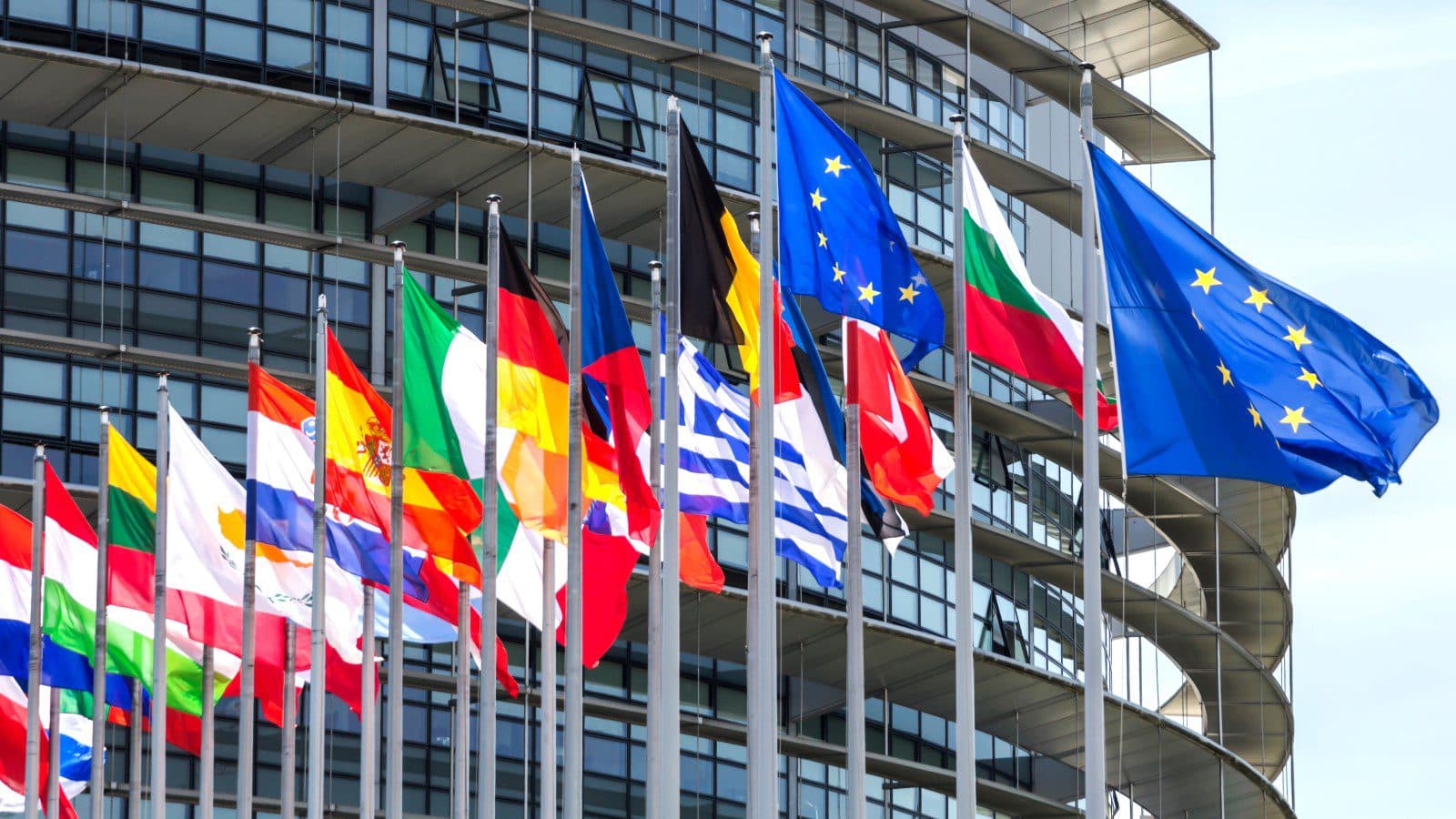
Credit: Shutterstock
- Several amendments within the EU’s Transfer of Funds Regulation are taking aim at the way crypto transactions from so called “unhosted wallets” are handled
- Policymakers are also proposing that for every crypto transfer from an unhosted wallet over 1,000 euro are reported to relevent authorities
The European Parliament is expected to vote on revised anti-money laundering (AML) legislation this week that would force crypto exchanges to share details of their customer’s anonymous transactions.
In a draft report of the EU’s Transfer of Funds Regulation (TFR), policymakers are seeking new amendments that regulate the way unhosted digital wallets are treated within the bloc.
Unhosted wallets, such as Metamask, refer to digital wallets not under the purview of the Financial Action Task Force (FATF) and its definition of a licensed virtual asset service provider (VASP).
Another provision within the document also seeks an obligation of financial institutions to accompany transfers of funds with information of the payer and recipient, even when the recipient isn’t a customer of a particular VASP.
Under Amendment 124 Section 29(a) the document states:
“In cases of a transfer of crypto-assets made from a distributed ledger address not linked to a crypto-asset service provider, known as an ‘unhosted wallet,’ the crypto-asset service provider of the beneficiary should have to obtain information from the beneficiary both on the originator and the beneficiary,” the draft reads.
The amendments, which have already been criticized by several major industry figures, are expected to be voted on by no later than Thursday. According to major crypto exchange Coinbase’s Chief Legal Officer Paul Grewal, the changes are based on “bad facts” in the way regulators view crypto as a vehicle for criminal activity.
“Among the worst of the proposed provisions are new obligations on exchanges to collect, verify and report information on non-customers using self-hosted wallets,” said Grewal. “For instance, one provision requires exchanges to not only collect personal data about wallet users who are not their customers, but to also verify the data’s accuracy before allowing a transfer to one of their customers.”
“If adopted, this revision would unleash an entire surveillance regime on exchanges like Coinbase, stifle innovation, and undermine the self-hosted wallets that individuals use to securely protect their digital assets,” Grewal said.
Ironically, Grewal’s comments come amid the exchange’s announcement Friday that will require its customers in Singapore, Japan and Canada, who are sending crypto to another exchange, to provide information about their transfers including recipients’ names and addresses.
In July of last year, the European Commission adopted the FATF’s AML and counter financing of terrorism legislative package in a bid to make it possible to trace crypto transfers.
EU policymakers are claiming the measures are designed to “ensure crypto-assets from potentially dodgy sources do not enter the regulated financial system.”
To pass legislation within the EU, the Parliament, representing European citizens, and the Council, representing the governments of the 27 EU member states, must reach an agreement on an identical text of a given bill.
According to a tweet thread by Patrick Hansen, DeFi wallet Unstoppable Finance’s head of growth, the EU’s proposed measures would seek to limit or otherwise force a soft ban on unhosted wallet usage.
“For every crypto-transfer from an unhosted wallet over 1k EUR, companies are obliged to inform the “competent AML authorities”. For ALL these transactions, even if there is no sign/suspicion of money laundering. This is an absolute violation of privacy rights,” said Hansen.
“The consequence of this…is that most crypto companies won’t be able or willing to transact with unhosted wallets anymore in order to stay compliant,” he said.
Get the news in your inbox. Explore Blockworks newsletters:
- The Breakdown: Decoding crypto and the markets. Daily.
- 0xResearch: Alpha in your inbox. Think like an analyst.
